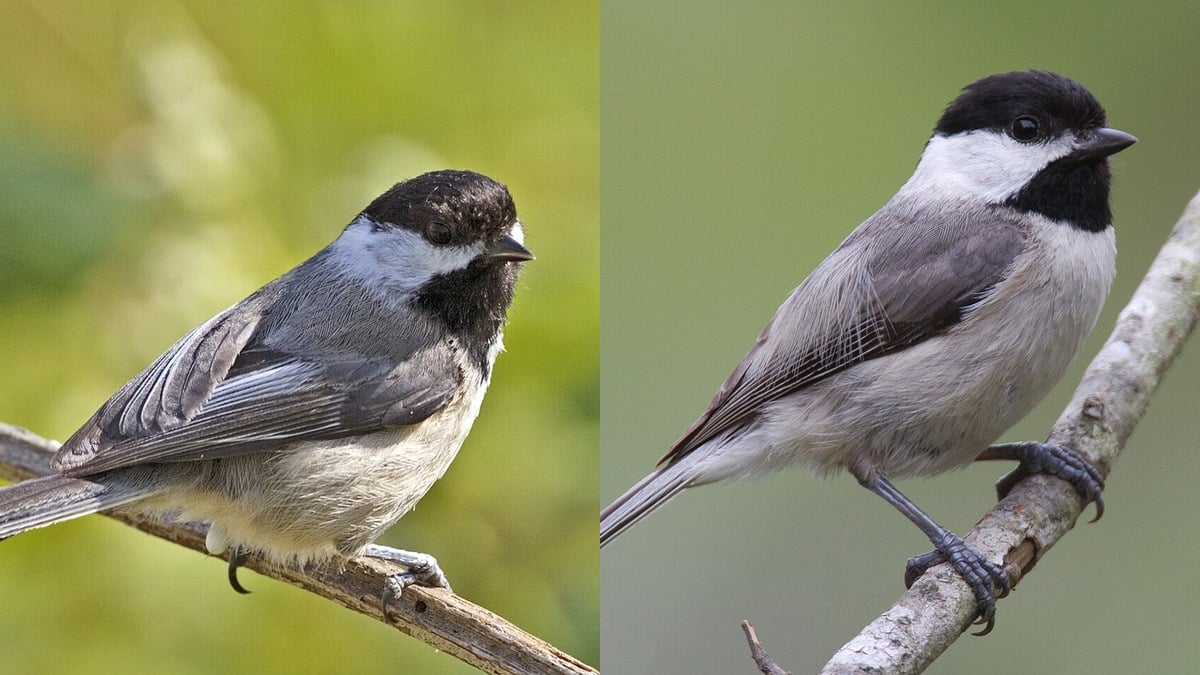
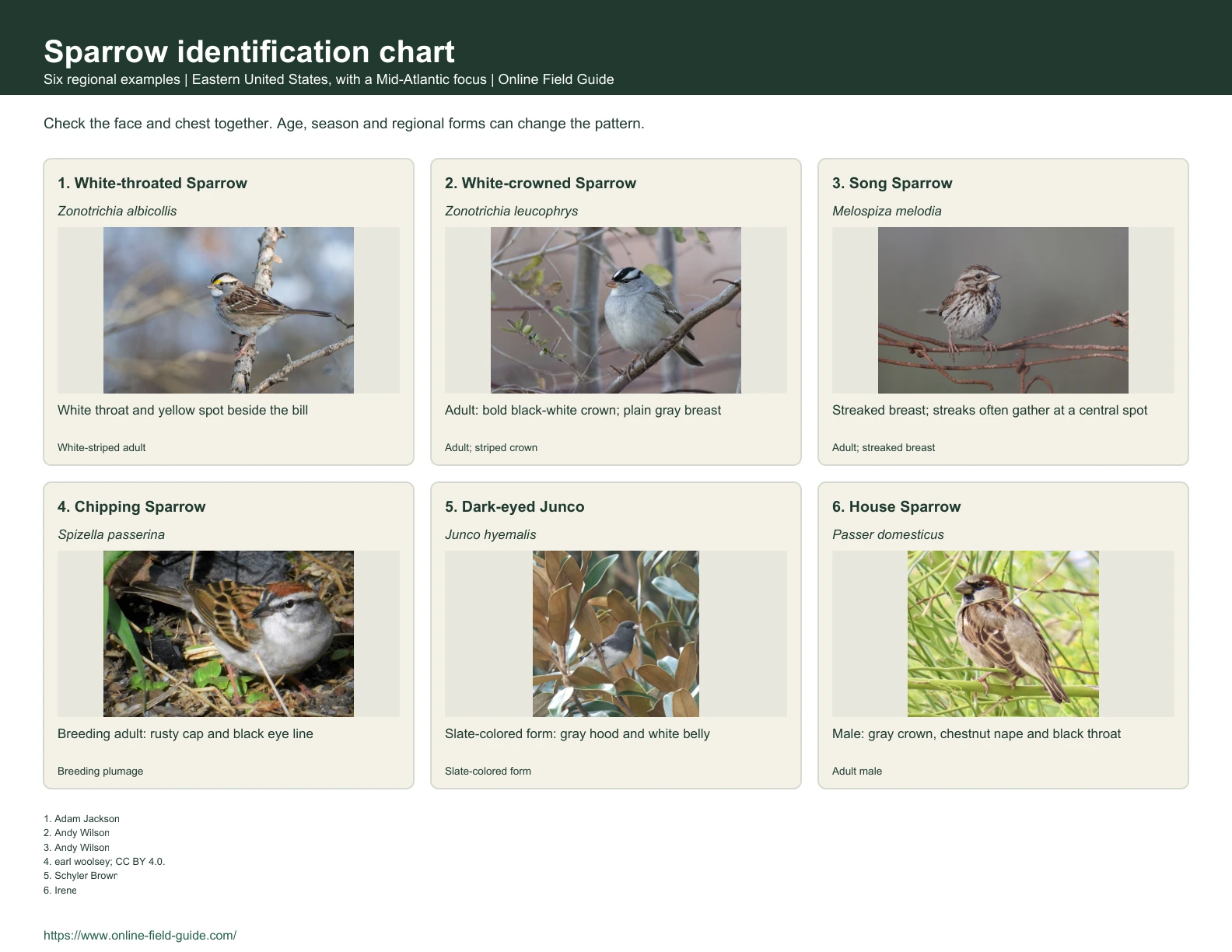
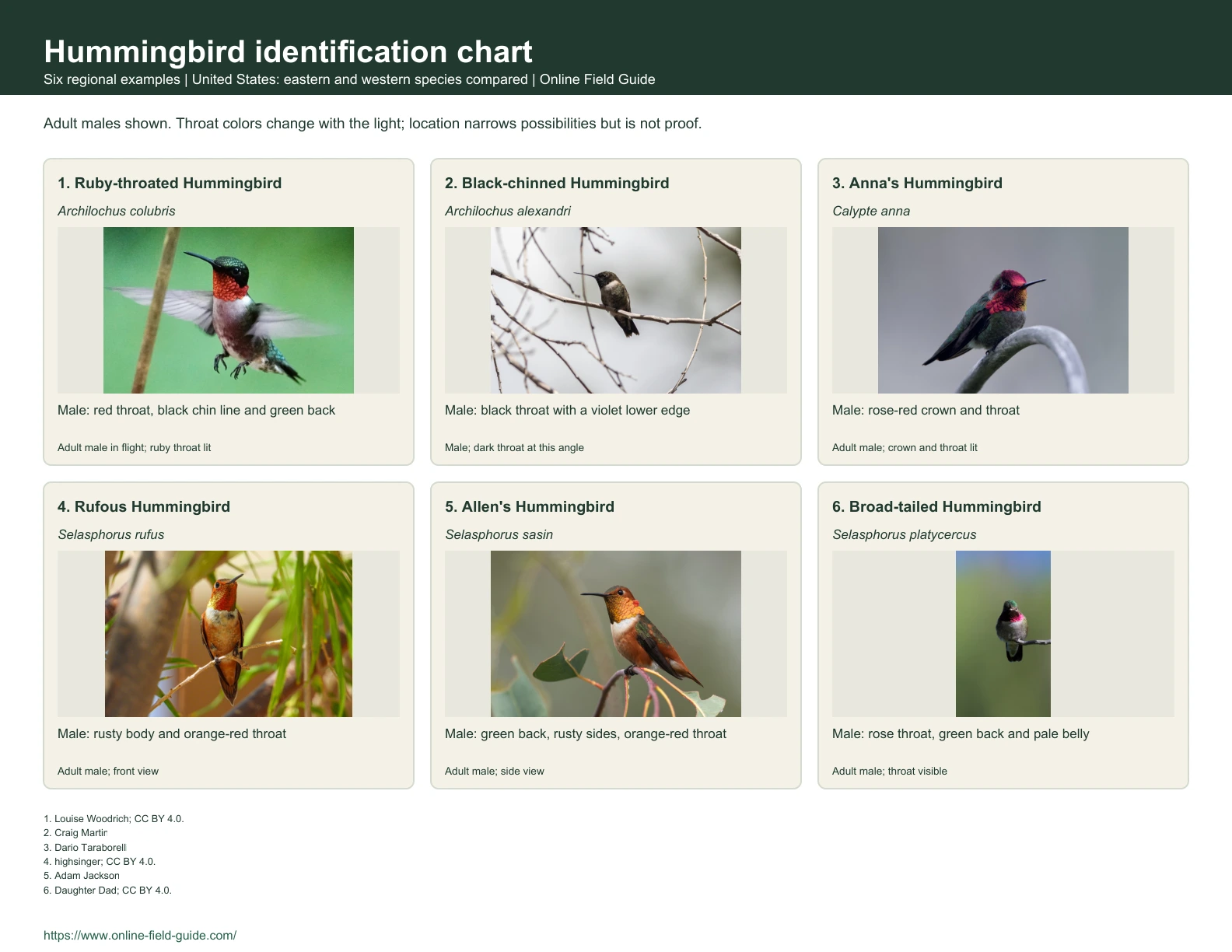
Start with location when separating Black-capped and Carolina Chickadees. Away from their contact zone, range is often the strongest clue. Where they meet, compare wing edging, the nape and voice together, and accept that some birds cannot be identified confidently from a photograph.
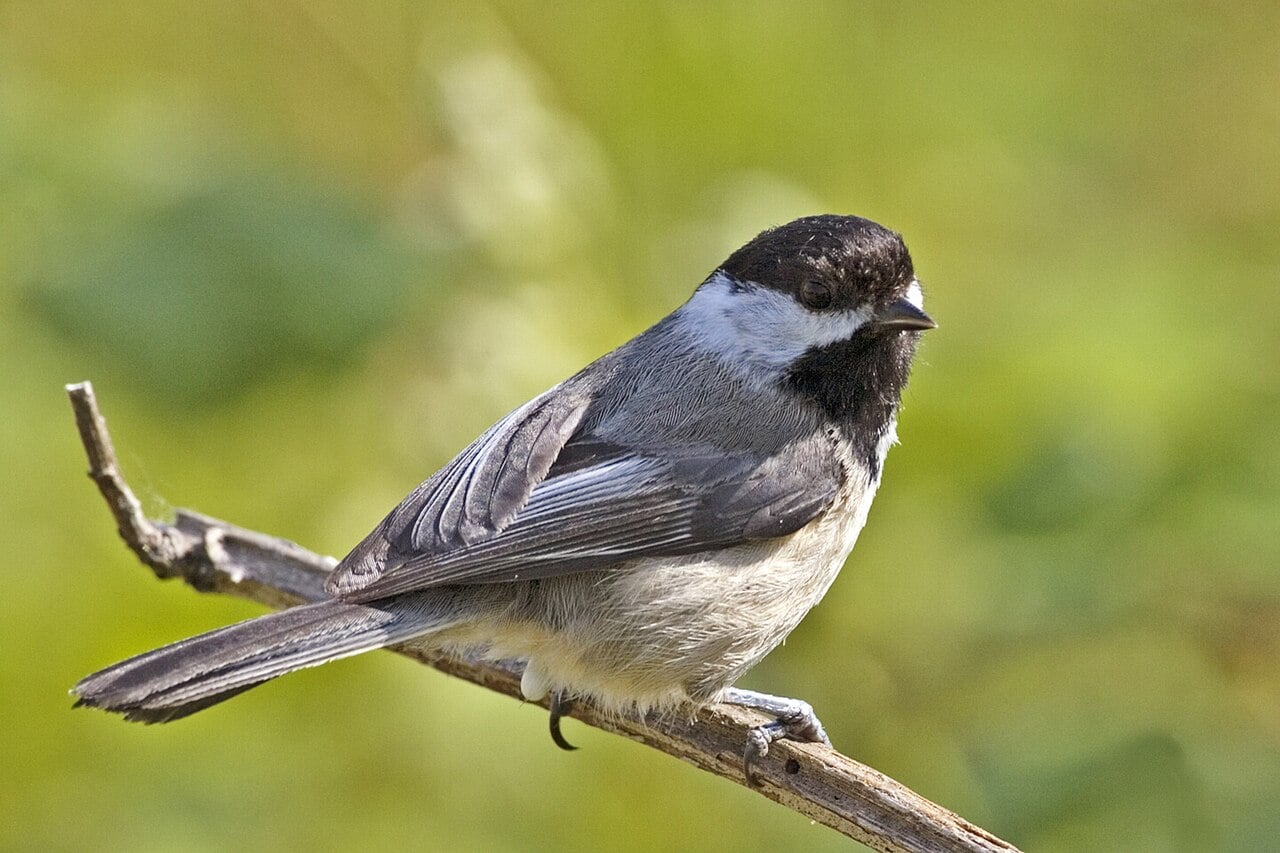
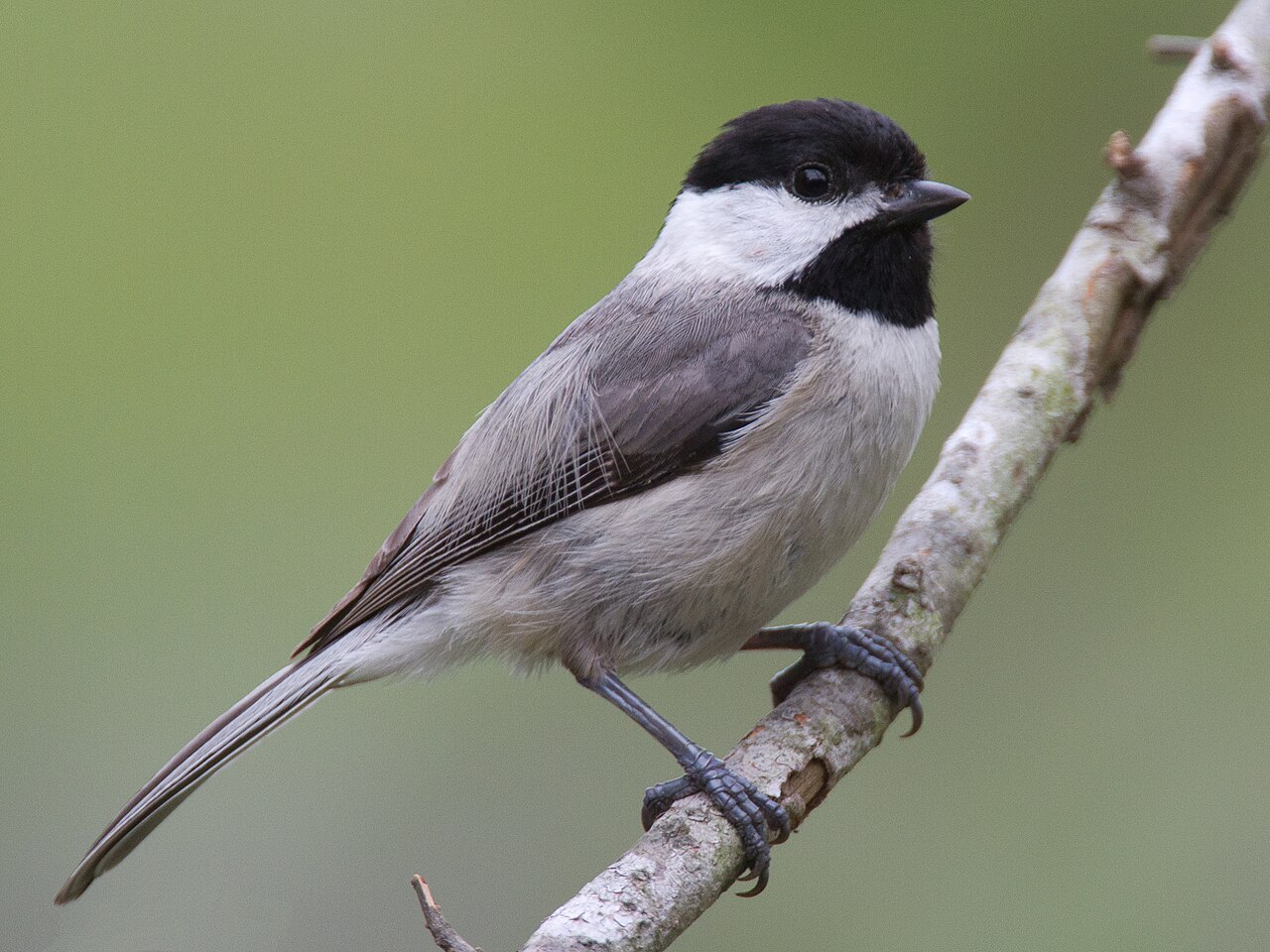
Black-capped Chickadee. Look at the pale edges on the folded wing and the light side of the nape. Their prominence changes with wear and viewing angle. Alan D. Wilson · CC BY-SA 2.5Carolina Chickadee. Compare the plainer gray wing and nape. No single pale feather rules out this species or a bird from the contact zone. Dan Pancamo · CC BY-SA 2.0
Quick Identification Comparison
Feature
Black-capped Chickadee
Carolina Chickadee
Broad North American pattern
Northern areas; also farther south in some mountains
Southeastern United States
Fresh folded wing
Usually stronger white edging
Usually plainer gray
Side of nape
Usually whiter
Usually grayer
Typical whistled song
Often two main notes
Often four main notes
Contact-zone caution
Hybrids and learned songs complicate identification
Hybrids and learned songs complicate identification
Check the Range Before the Feathers
Black-capped Chickadees occupy much of northern North America; Carolina Chickadees are southeastern birds. Their boundary is more useful than a broad state label, particularly around mountains. Check a local range map and the actual place of the observation.
The two species meet in a contact zone across the east-central United States and can hybridize. A location in that zone makes the question harder, not easier. Cornell’s FeederWatch comparison recommends leaving uncertain birds as Black-capped/Carolina Chickadee.
Compare the Folded Wing and Nape
Fresh Black-capped Chickadees generally have stronger white edges on the wing feathers, creating a brighter panel. Carolina Chickadees usually look plainer and grayer there. A side view can also show the whiter side of a Black-capped’s nape compared with the grayer nape of a Carolina.
These are relative differences. Worn feathers, a folded wing in shadow and an overexposed photograph can reduce or exaggerate the pale markings. Audubon’s identification discussion explains the difficulty of birds near the boundary. Do not identify a possible hybrid by counting one or two white feather edges.
Use Size and Bib Shape Carefully
A Black-capped often looks slightly larger and longer-tailed. Its bib can have a less tidy lower edge. A Carolina often looks more compact, with a smaller, neater bib. Individual variation and pose make both of these supporting clues.
Cornell’s Black-capped Chickadee account shows the wing pattern and buffy sides. Its Carolina account provides a useful comparison. A puffed-up bird on a cold day may look rounder than the same bird a moment later, so apparent bulk is weak evidence in isolation.
Listen, but Do Not Use Song as a Password
A typical Black-capped song has two clear whistled notes, while a typical Carolina song has four. These are songs, rather than the familiar chick-a-dee calls that give the birds their name. A short recording can preserve detail that is difficult to remember.
Near the contact zone, birds may learn each other’s songs and hybrids can give unusual combinations. A recording therefore adds evidence without guaranteeing a species identification. A bird that sings both patterns should not be assigned from whichever song you happened to hear first.
What to Record for an Uncertain Bird
Keep the date and precise location, a side photograph showing the folded wing and nape, and a recording if the bird sings naturally. Avoid repeated playback just to obtain another response. When location, plumage and voice disagree, retain the combined identification rather than forcing the bird into one species.
This guide covers the Black-capped/Carolina problem. In other parts of North America, Mountain, Boreal or Chestnut-backed Chickadees may need consideration. Confirm that the pair is appropriate for your region before using the table.