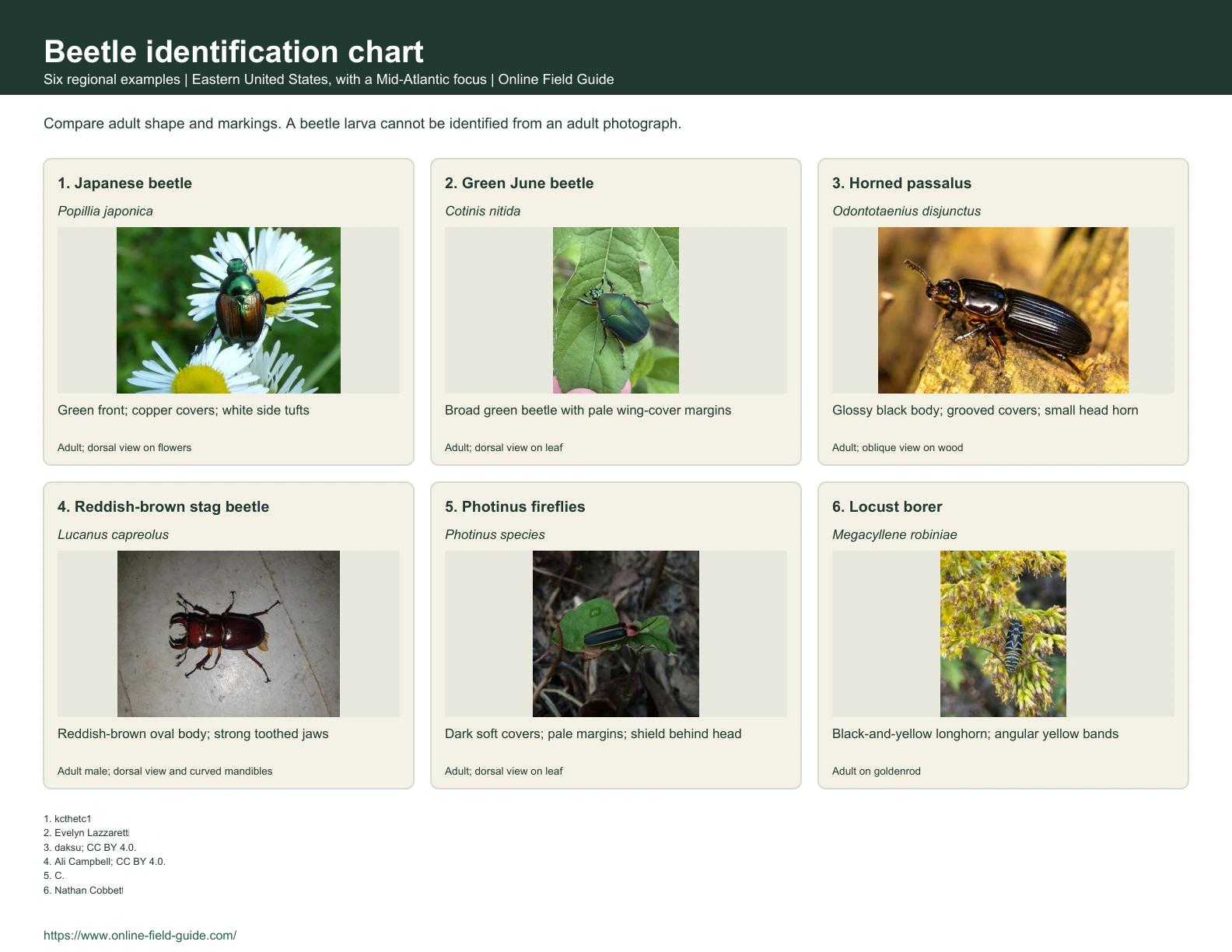
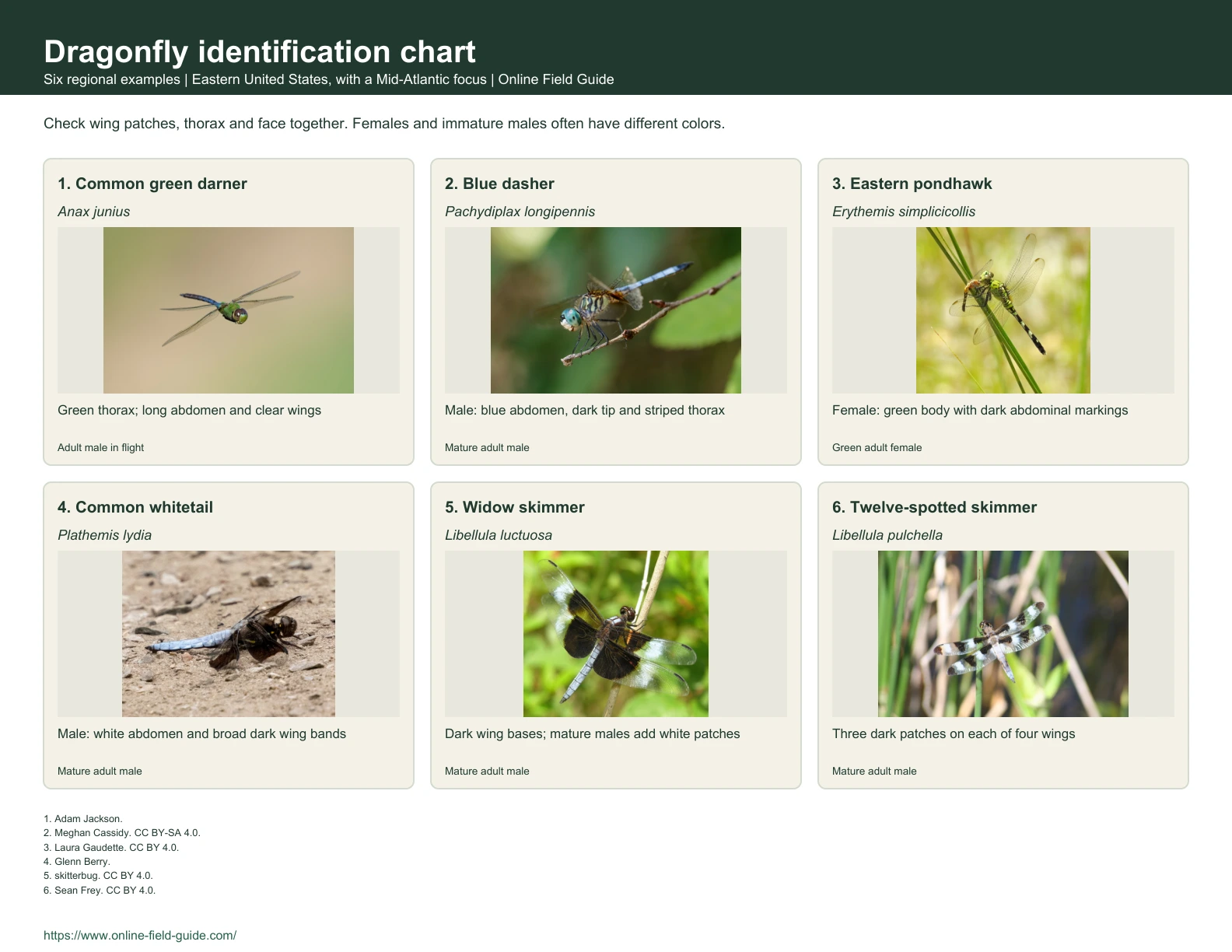
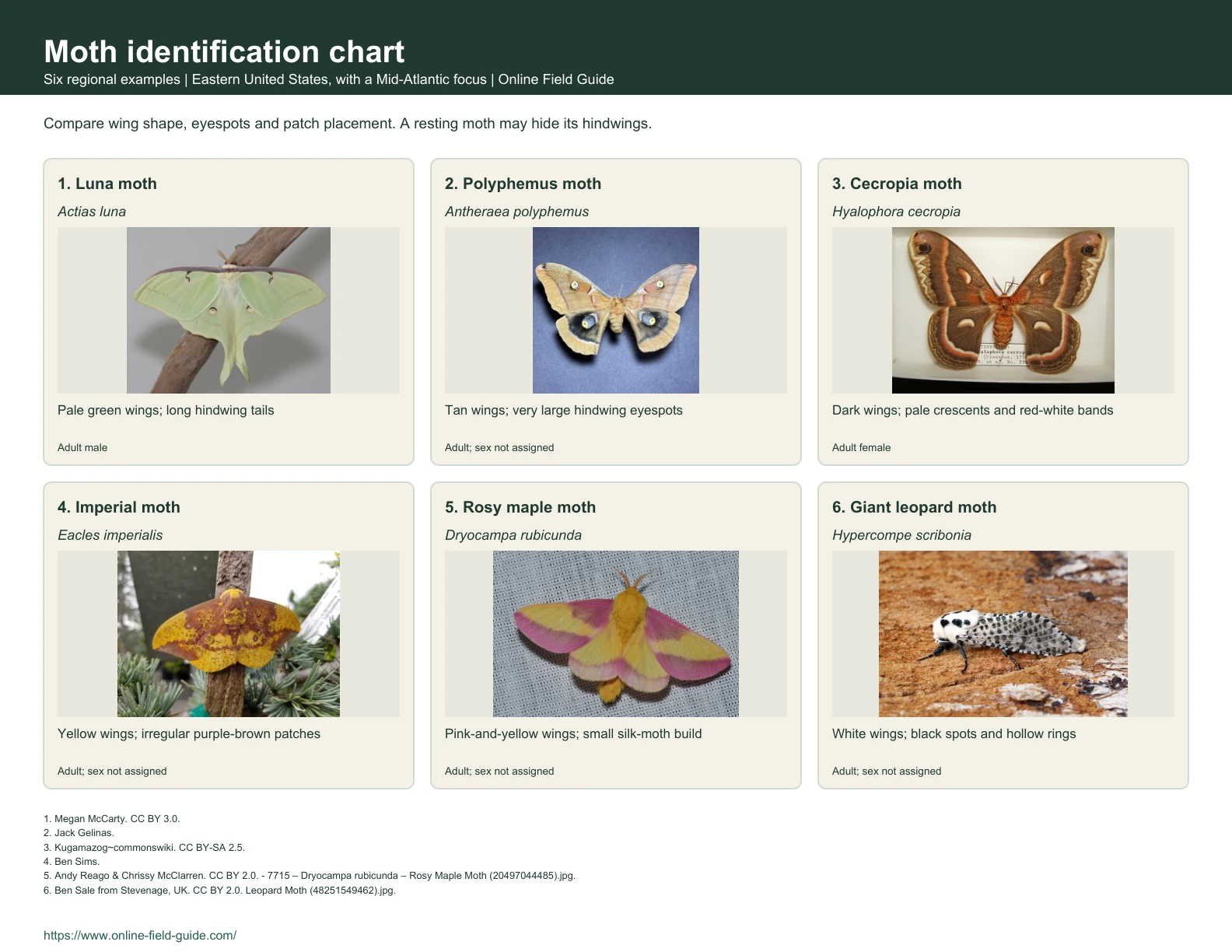
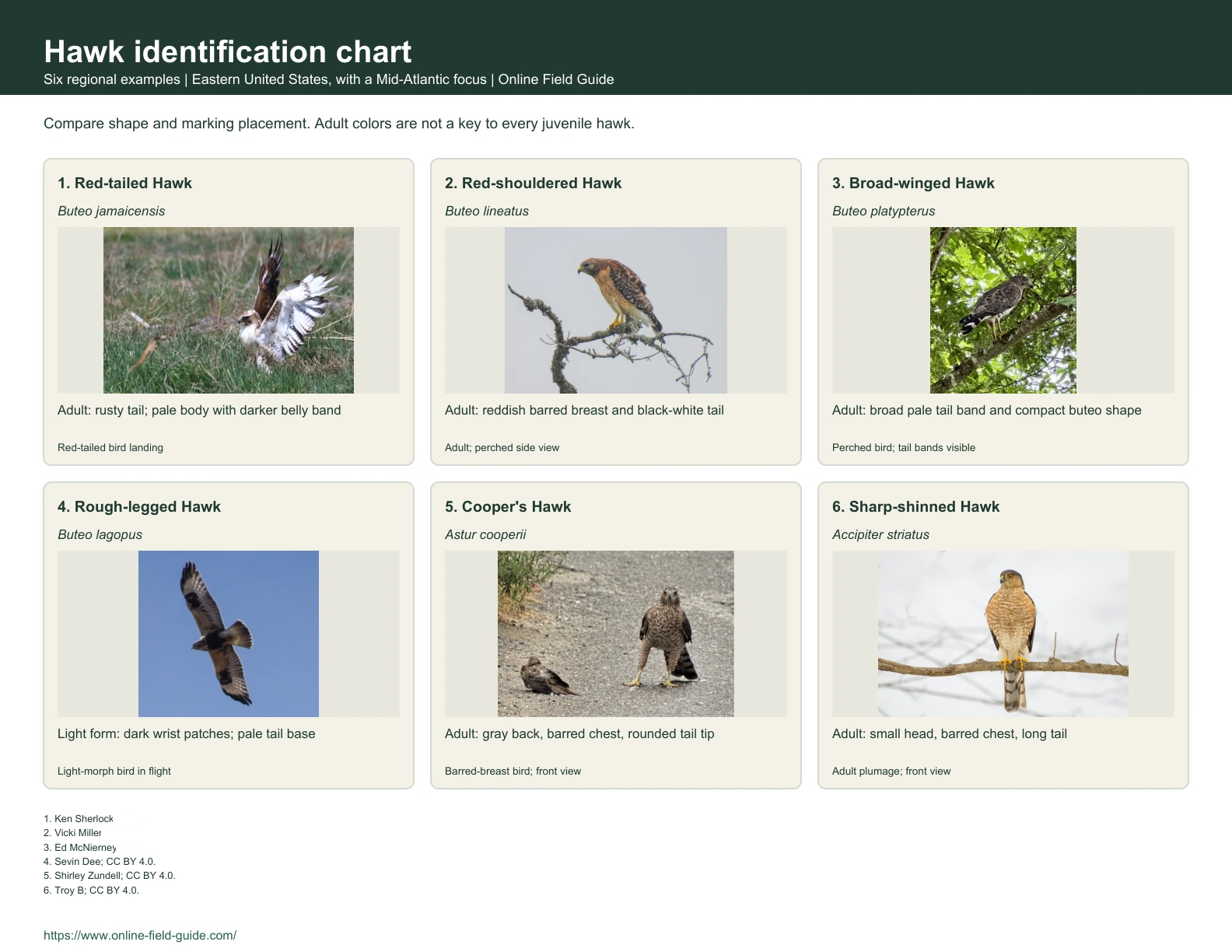
Identify a ladybug by comparing the markings behind its head, the shape of its wing covers and the arrangement of spots. A pale area with a dark M or W often points toward an Asian lady beetle. Two converging pale lines behind the head point toward a convergent lady beetle.
Ladybug, ladybird beetle and lady beetle are names for the same beetle family. This chart compares six adult species found in eastern North America, with a Mid-Atlantic focus. Some are widespread and others are harder to find locally. It includes both native and introduced species.
Select the chart to open a larger view. Original photo sources, creators and licenses appear in the cards below and in the printable PDF.
Ladybug identification at a glance
These entries describe adults. The pronotum is the plate immediately behind the head; it is often more useful than counting spots. Seasons are broad periods when active adults may be seen. On a small screen, scroll the table sideways.
Eastern-US ladybug comparison: appearance, habitat and season
Open a photograph for a larger view. Read the photo label before comparing the markings.
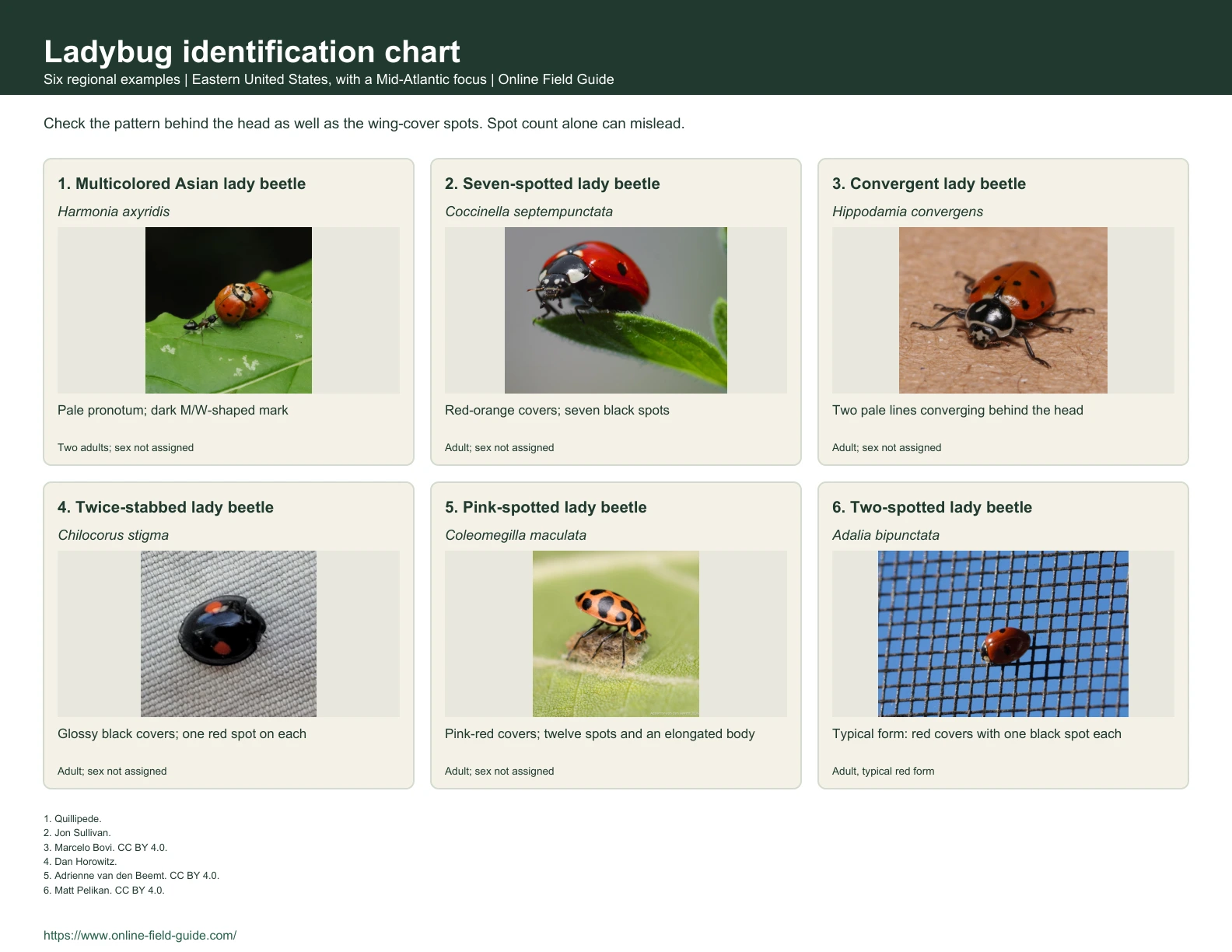
Two adults; sex not assigned
Species candidate
1. Multicolored Asian lady beetle
Harmonia axyridis
Often a dark M or W on the pale pronotum
Wing-cover color and number of spots vary
Look behind the head for a pale area containing a dark M or W. The mark can be partly filled in, and the wing covers may be orange, red or black, with many spots, a few spots or none. This variation is why spot count alone is unreliable. Asian lady beetles are introduced in North America and may gather around buildings in autumn.
Lookalikes: Native lady beetles can also be orange and spotted. Compare the pronotum and body outline before labelling every orange ladybug as Asian.
Where to look: Gardens, trees and buildings in fall. Adult activity: Spring through fall.
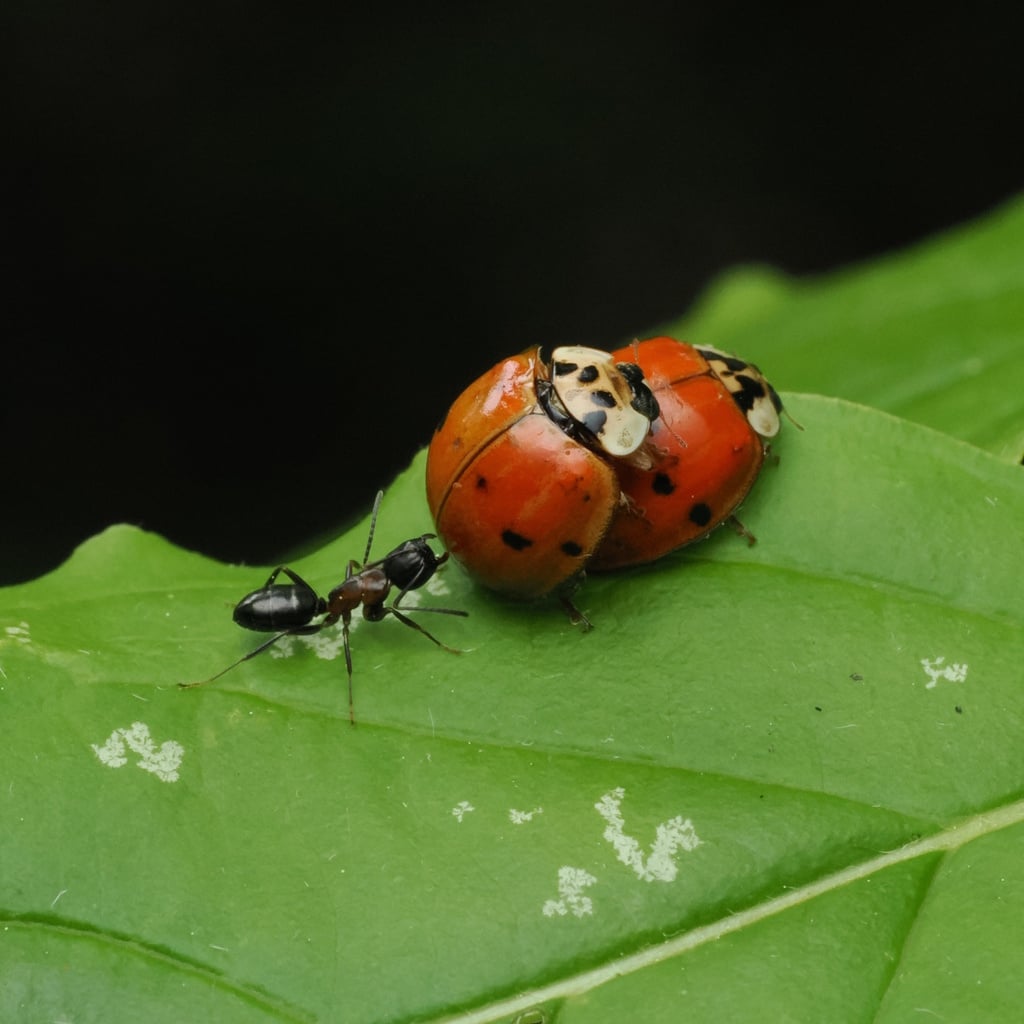
Three spots on each wing cover plus one shared near the front
Black pronotum with pale front-side markings
This introduced lady beetle usually has seven black wing-cover spots: three on each side and one near the front that straddles the central seam. Check the whole pattern rather than counting visible dots on a tilted beetle. Its rounded body and black pronotum help distinguish it from the more elongated convergent and pink-spotted lady beetles.
Lookalikes: Other spotted species can overlap in a quick photograph. The central spot can appear divided by the seam, and one side may be hidden.
Where to look: Gardens, meadows and crops. Adult activity: Spring through fall.
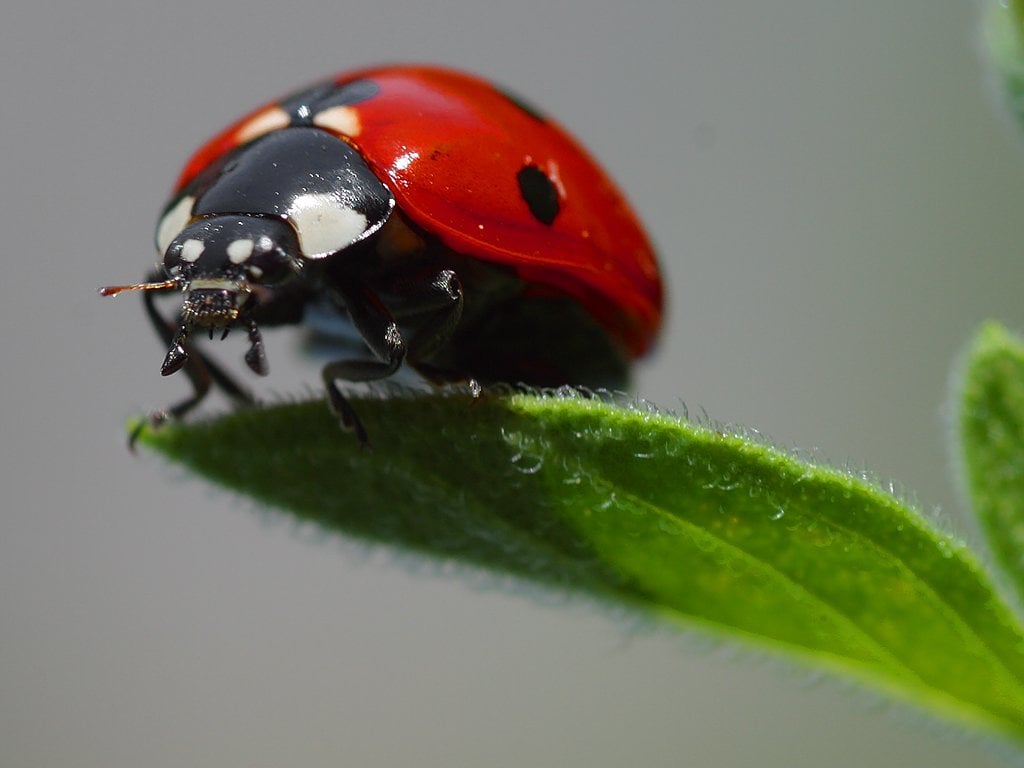
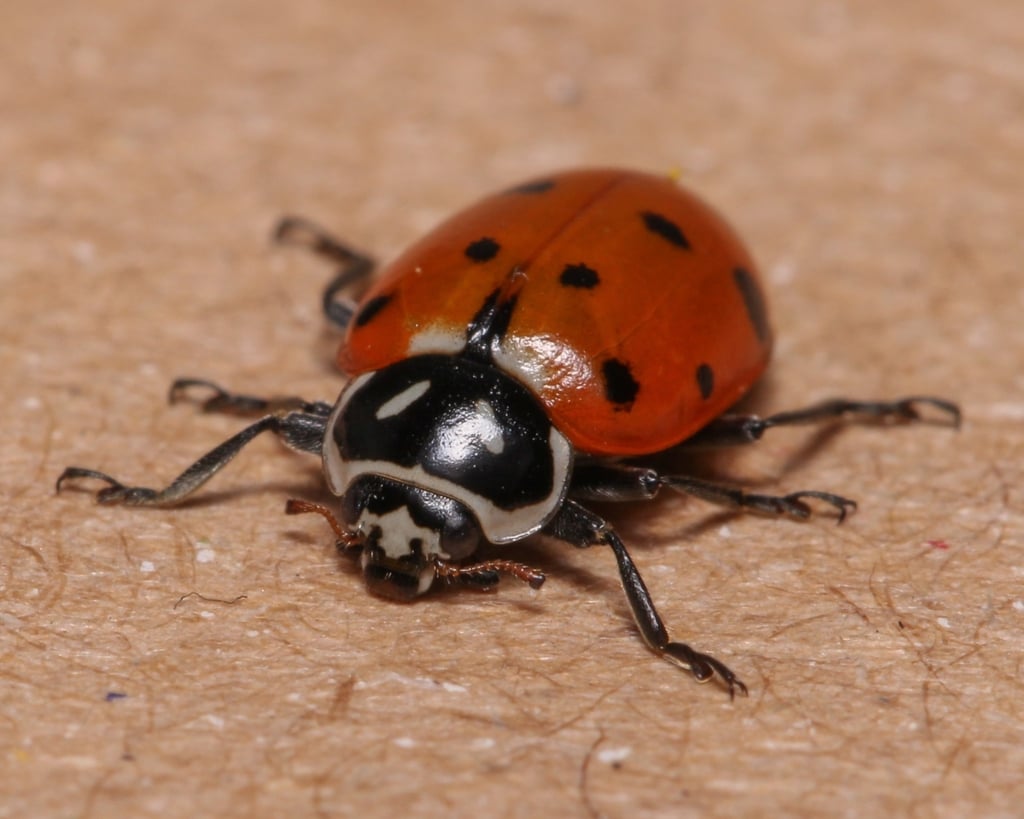
Two pale lines angle together on the black pronotum
Slightly elongated orange-red body; variable black spots
The two pale lines on the pronotum converge toward the back, giving this native species its name. Its body is a little more elongated than a very round Asian lady beetle. Black wing-cover spots vary in number and prominence. A sharp photograph of the plate behind the head is usually more helpful than trying to count every dot on the orange-red covers.
Lookalikes: Other Hippodamia species can look similar. Check both pronotal lines and the wing-cover pattern; retain a genus-level label if these features are unclear.
Where to look: Open vegetation, gardens and crops. Adult activity: Spring and summer; into fall.
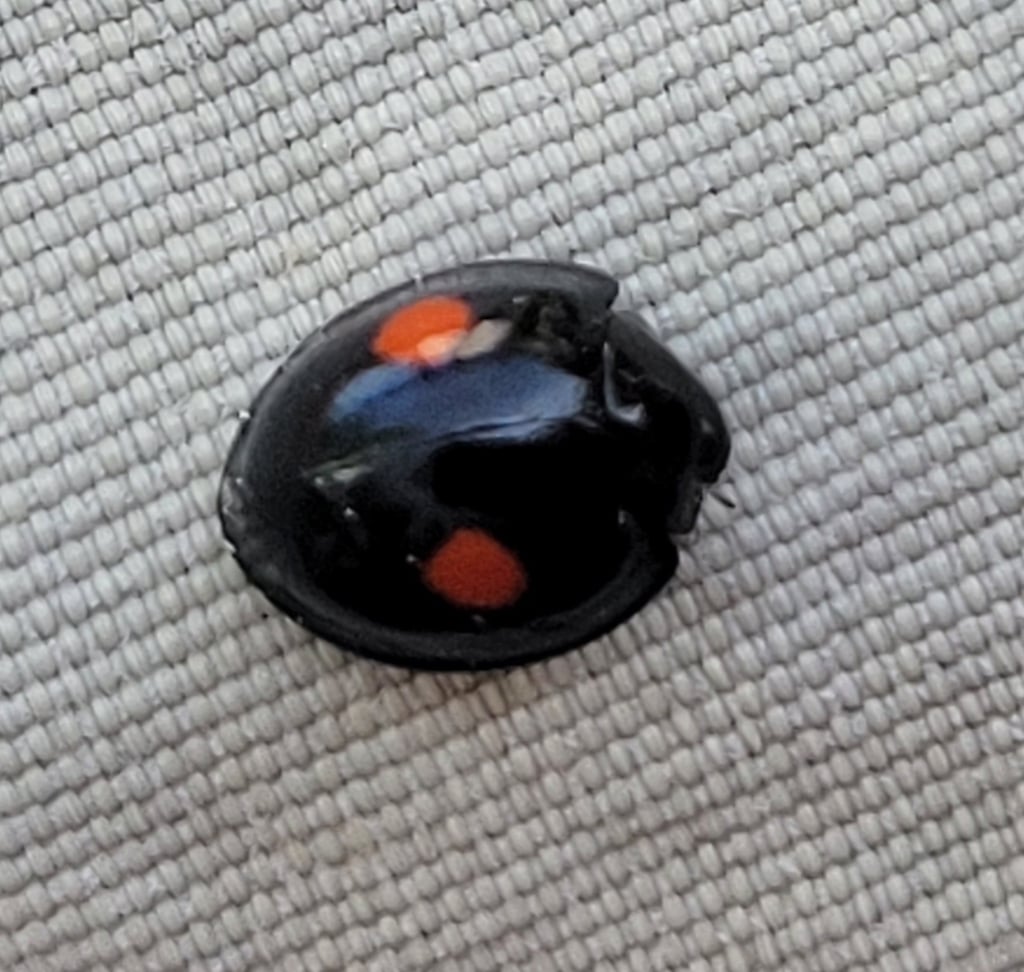
This lady beetle reverses the familiar red-with-black-spots pattern. The upper surface is glossy black, with a red spot on each wing cover. It is rounded and strongly domed. The photograph is labelled Chilocorus stigma, a native species, but a black lady beetle with two red spots is best treated as a candidate until the rest of its features are checked.
Lookalikes: Other Chilocorus species and some unrelated lady beetles have similar red-on-black patterns. Two red spots alone do not confirm the species.
Where to look: Trees and shrubs; often near scale insects. Adult activity: Warm months.
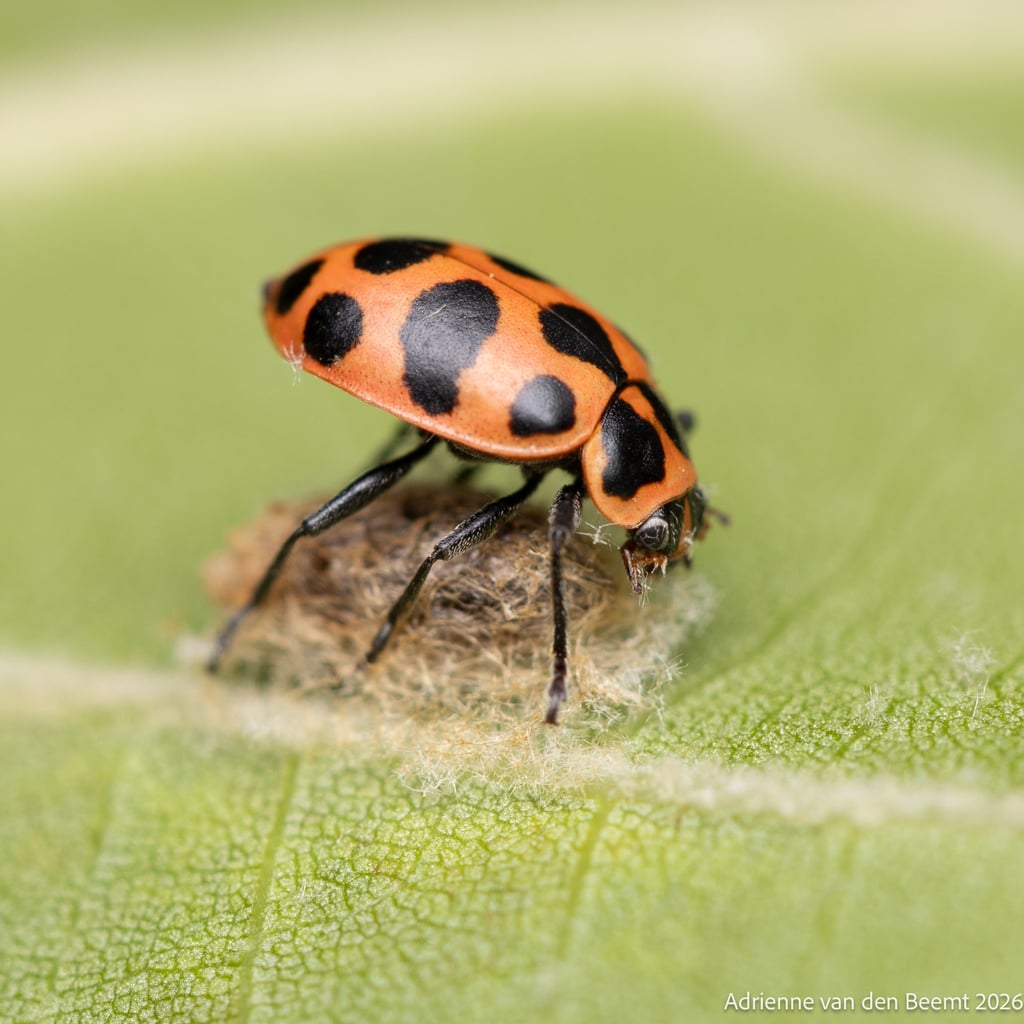
Pink-spotted lady beetles are oval and relatively elongated, with pink-to-red wing covers bearing six dark spots on each side. The area behind the head is also pale or pinkish, with two large dark marks. This native beetle eats aphids and other small prey, but also feeds on pollen. Its lengthened outline helps separate it from rounder red lady beetles.
Lookalikes: Convergent lady beetles can also look elongated. Compare the two large pronotal marks with the convergent species' paired pale lines.
Where to look: Gardens, fields and crops. Adult activity: Spring through fall.
Pronotum combines pale side areas with a dark center
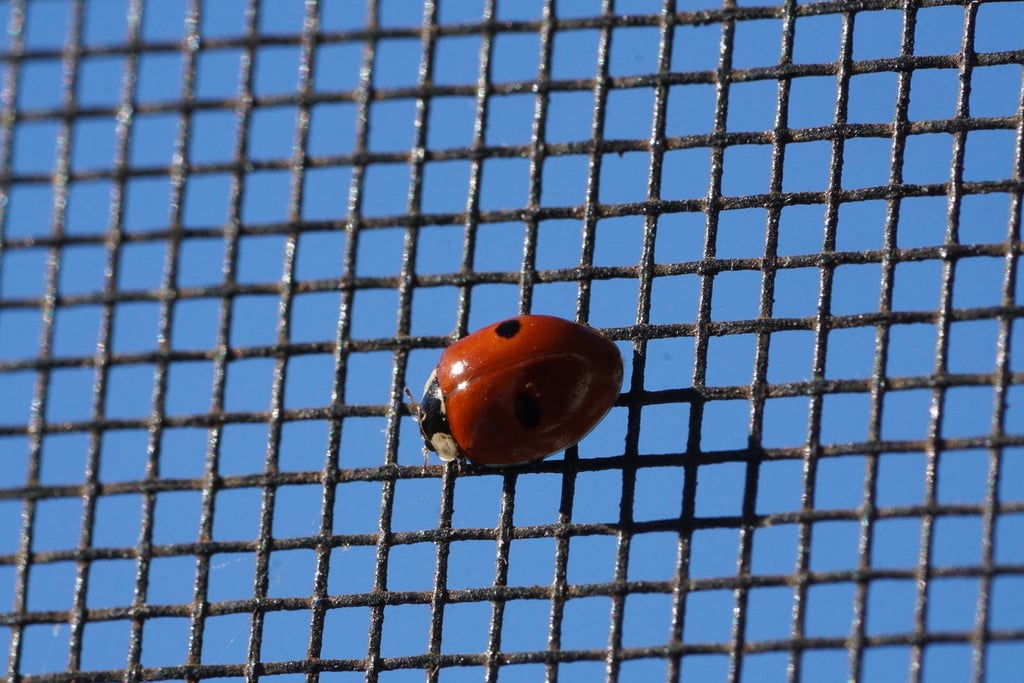
The familiar red form has one black spot on each wing cover. Look at the pronotum as well: pale side areas contrast with its dark center. Dark color forms also exist, so the common name does not describe every individual. This native North American species has become difficult to find in some regions; the chart does not imply it is common in every Mid-Atlantic garden.
Lookalikes: A lightly spotted Asian lady beetle may also have two prominent spots. Compare the pronotum and outline, rather than assigning a name from the number alone.
Where to look: Trees, shrubs and gardens. Adult activity: Warm months.
Asian lady beetles are ladybugs. The terms describe the same family, Coccinellidae. The useful distinction is between species, such as the introduced multicolored Asian lady beetle and the native convergent lady beetle.
Do the spots tell a ladybug's age?
No. Spot patterns help compare species and color forms; they are not an age counter. Some Asian lady beetles have no spots, while others have many. Count spots only after checking the pattern behind the head and the shape of the beetle.
What does a ladybug larva look like?
Many predatory lady beetle larvae have elongated bodies and dark coloring with pale, orange or yellow markings. They do not resemble the rounded adults in this chart. Photograph the entire larva and use a life-stage guide rather than matching it to an adult spot pattern.
How to take an identification photograph
Get a view from above that includes the head, pronotum and both wing covers. A second view from the side helps show the body outline. Record the location, date and plant. Avoid assuming that a beetle on a damaged leaf is the insect that caused the damage.