A Cooper’s Hawk usually looks larger-headed and broader-shouldered than a Sharp-shinned Hawk. In adults, its dark cap contrasts with a paler nape. Check those features together with the tail and posture; size or a single tail shape can mislead.
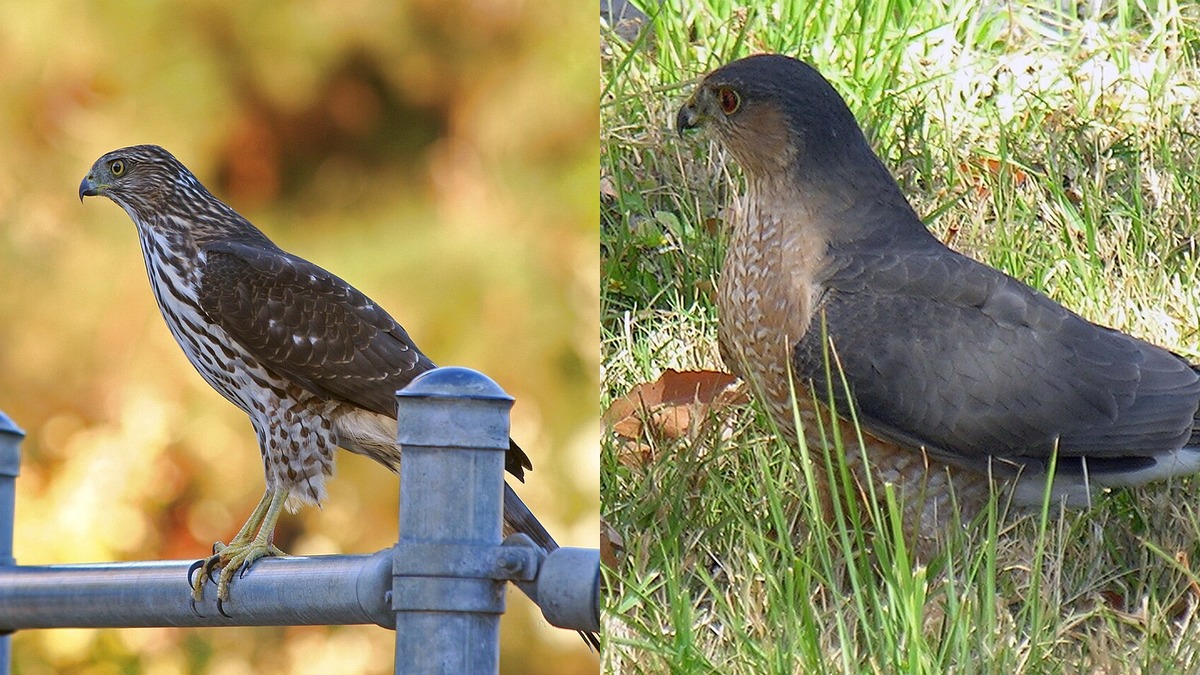
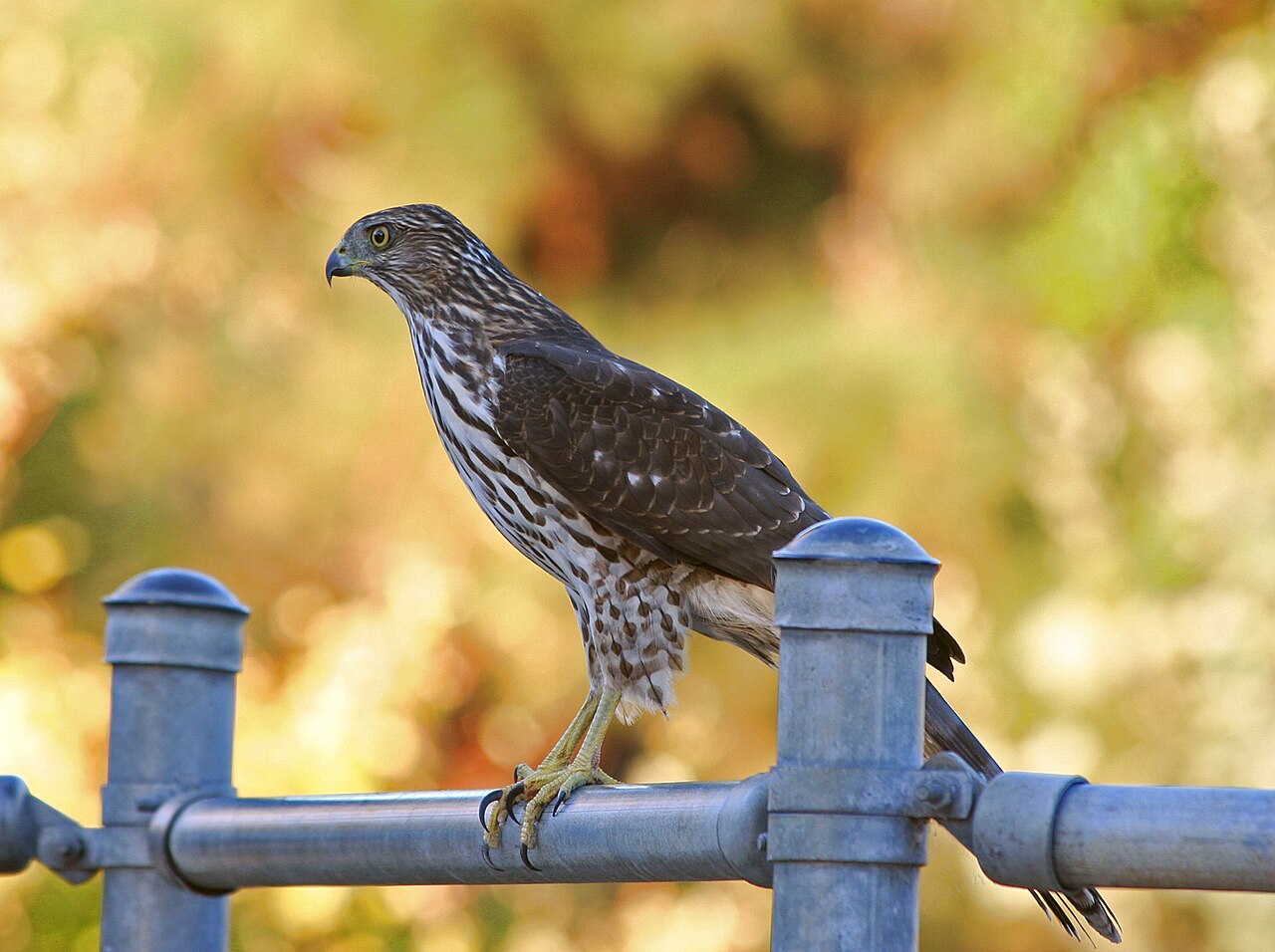
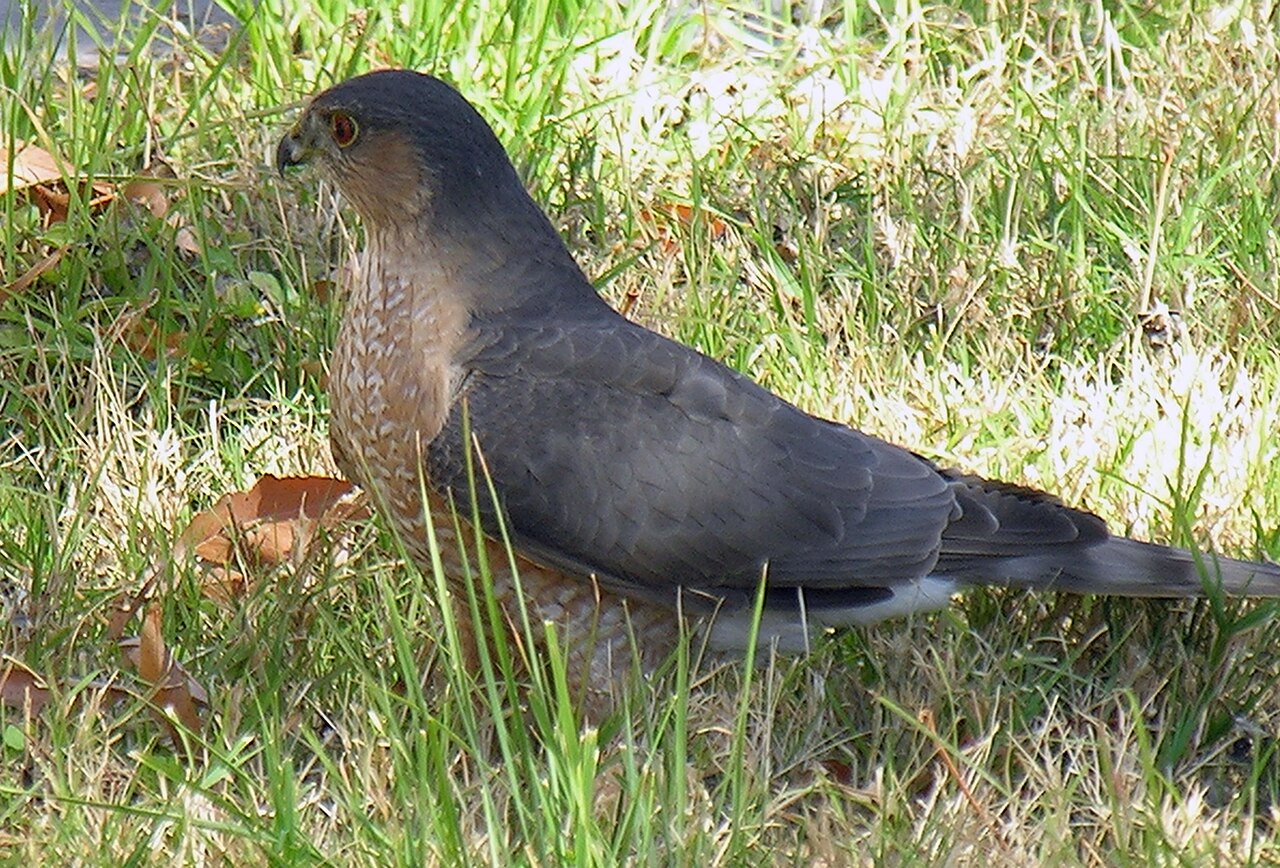
Cooper’s Hawk. This juvenile has a substantial head and streaked underparts. Adult cap-and-nape color rules do not apply to this age. CalibasSharp-shinned Hawk. Compare the smaller-looking head and body proportions. Read the tail only when its feathers are clearly visible. Clinton & Charles Robertson · CC BY-SA 2.0
Quick Identification Comparison
Feature
Cooper’s Hawk
Sharp-shinned Hawk
Head impression
Larger, more projecting
Smaller, tucked into the shoulders
Adult nape
Paler than the dark cap
Darker, giving a more continuous hood
Tail tip at rest
Often rounded, with uneven feather lengths
Often squarer; pose can change the outline
Juvenile breast
Typically finer, clearer streaking
Often heavier, blurrier streaking
Separate Adult and Juvenile Features
Adults of both species can have gray upperparts, reddish bars below and reddish eyes. Young birds are browner above with streaking underneath. Work out which plumage you are looking at before using the color of the nape or the pattern on the chest.
In an adult Cooper’s Hawk, a dark cap and paler gray nape can give the head a capped appearance. Adult Sharp-shinned Hawks tend to have a more uniformly dark head and nape. A rear or side view helps; a photograph that hides the back of the neck cannot settle this feature.
Look at Head Projection and Posture
A Cooper’s often looks strong-necked, with a substantial head. In flight, its head projects farther beyond the leading edge of the wings. A Sharp-shinned usually has a smaller-looking head, and a perched bird can seem more tucked into its shoulders.
Cornell’s Cooper’s Hawk account illustrates the projecting head and broad-shouldered shape. Wind, alertness and a stretched neck can change a bird’s posture, so compare more than one frame if you have a sequence.
Treat the Tail as Supporting Evidence
Cooper’s Hawks often show a rounded tail tip because the central feathers extend farther than the outer ones. Sharp-shinned Hawks often show a squarer end. Spread, angle, feather wear and missing feathers can obscure that difference.
A neat white terminal band can support Cooper’s, but it is not a stand-alone test. Audubon’s comparison explains why a combination of structural clues is more useful than identifying a hawk from a tail silhouette.
Why Size Is Not Enough
Females are larger than males in both species, and a large female Sharp-shinned can approach a small male Cooper’s. A distant bird without a scale reference is particularly difficult. “It looked big” should stay an observation rather than become the whole identification.
For juveniles, look for the quality of the breast streaks alongside head and tail structure. Cornell’s Sharp-shinned Hawk guide shows the age-related patterns. Streaks can blur in a distant photo, so do not turn image quality into a plumage feature.
When to Leave the Hawk Unidentified
This comparison is for the North American birds commonly confused around woodland edges and yards; other hawks remain possible. Record the place, date, head profile, nape and full tail. A brief backlit flight view may support only “Cooper’s/Sharp-shinned Hawk.” That is a better record than a confident species name unsupported by the visible features.