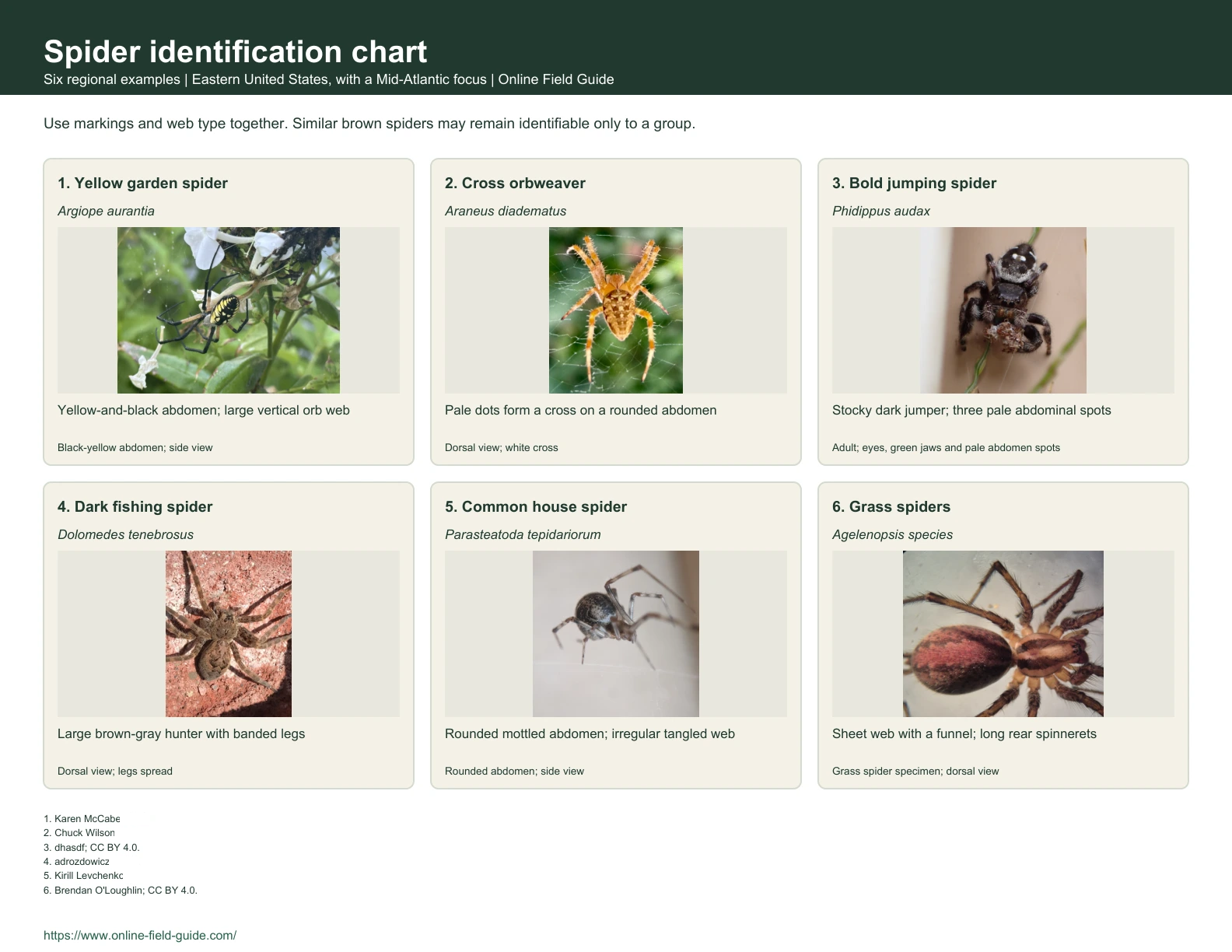
Identify a spider by comparing its body pattern, shape and web, then checking the location. A yellow-and-black spider in a large round web suggests a yellow garden spider; a brown spider beside a funnel in a sheet web suggests a grass spider. Several similar species need closer examination.
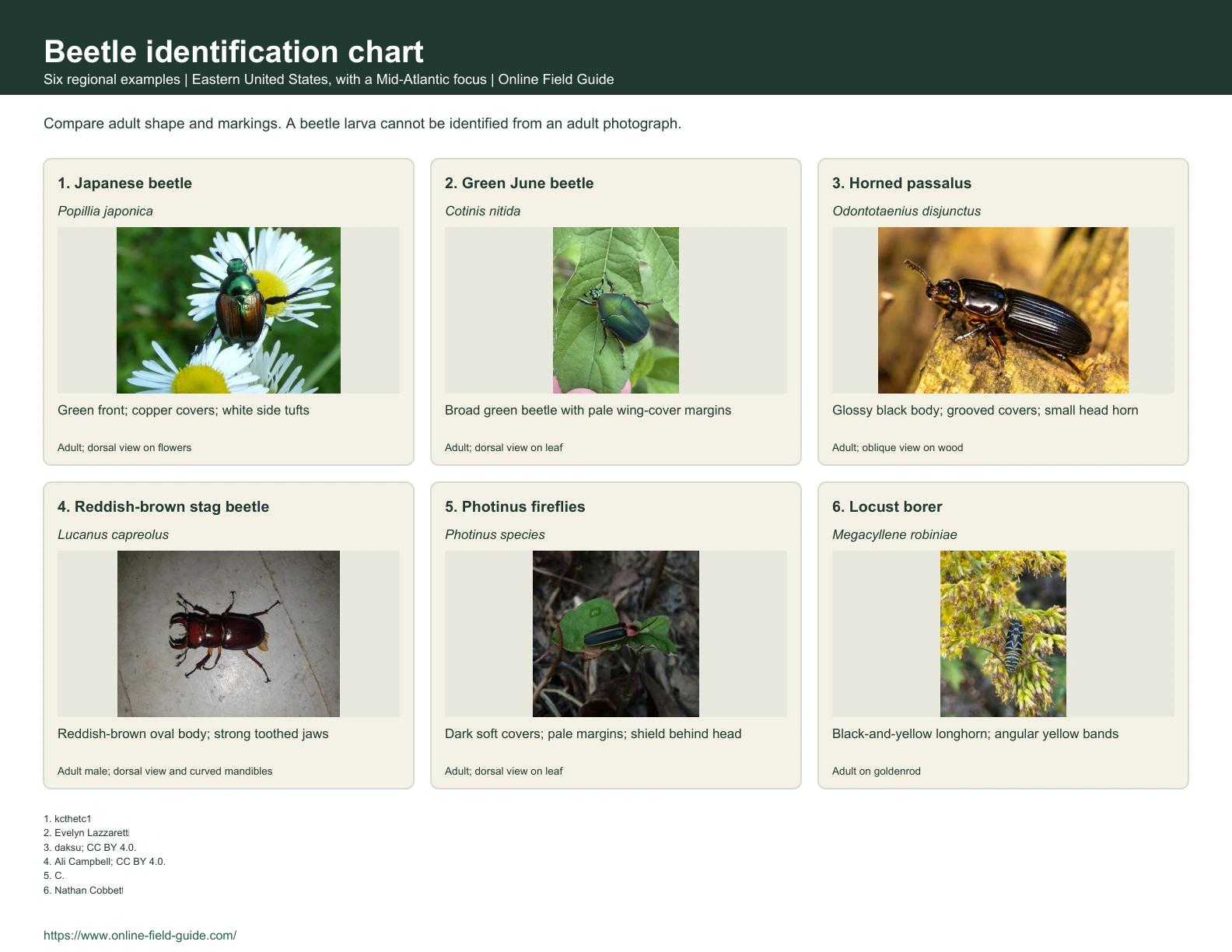
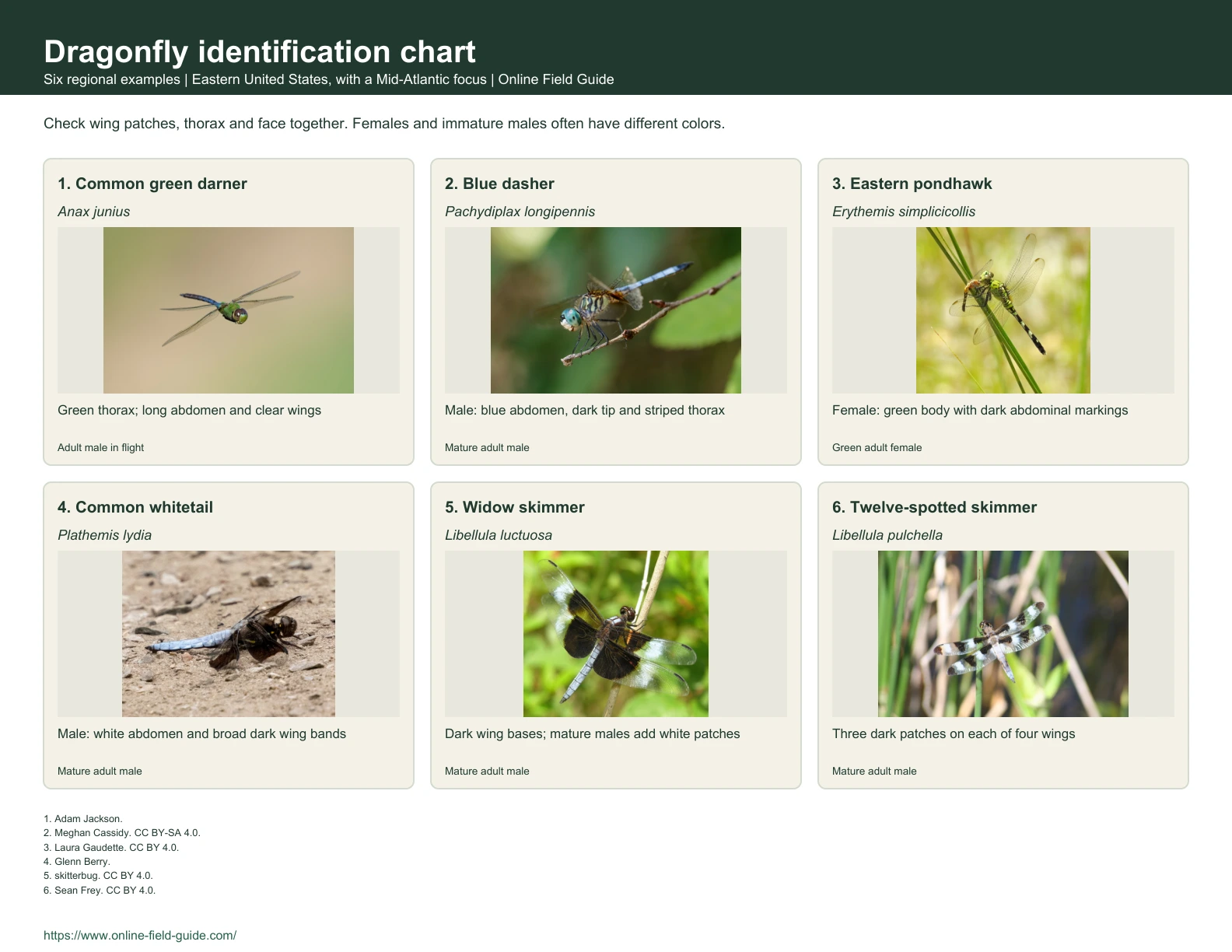
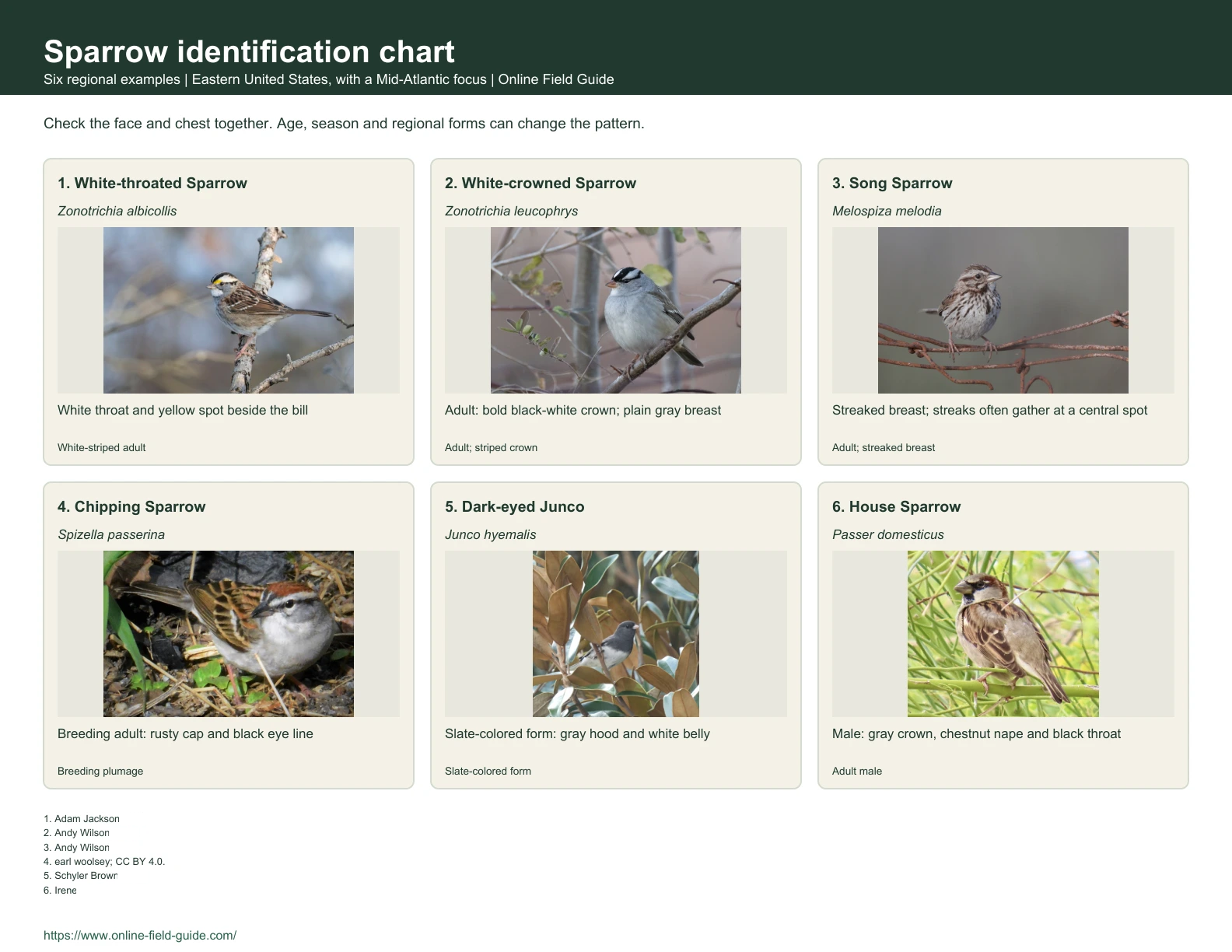
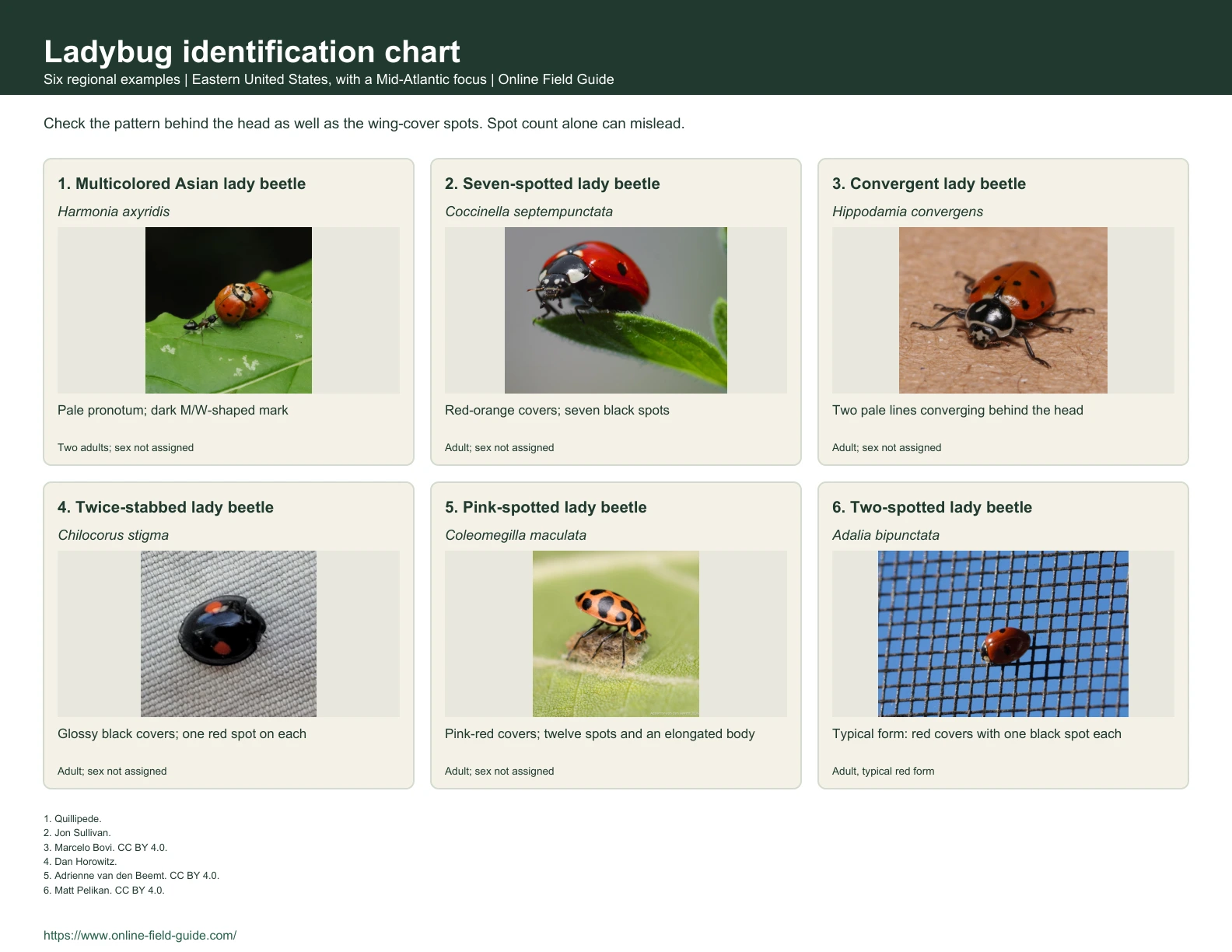
This photo chart covers six spiders and spider groups found in the eastern United States, with a Mid-Atlantic focus. It includes outdoor web builders, active hunters and a house-web species. These are identification clues, not a bite diagnosis or a list of every spider in the region.
Select the chart to open a larger view. Original photo sources, creators and licenses appear in the cards below and in the printable PDF.
Spider identification at a glance
Season describes broad regional adult activity. Indoor conditions can extend sightings, and immature spiders may appear outside these periods. Web shape is useful only when the spider was actually using the web. On a small screen, scroll the table sideways.
Eastern United States, with a Mid-Atlantic focus spider comparison: appearance, habitat and season
Open a photograph for a larger view. Read the photo label before comparing the markings.
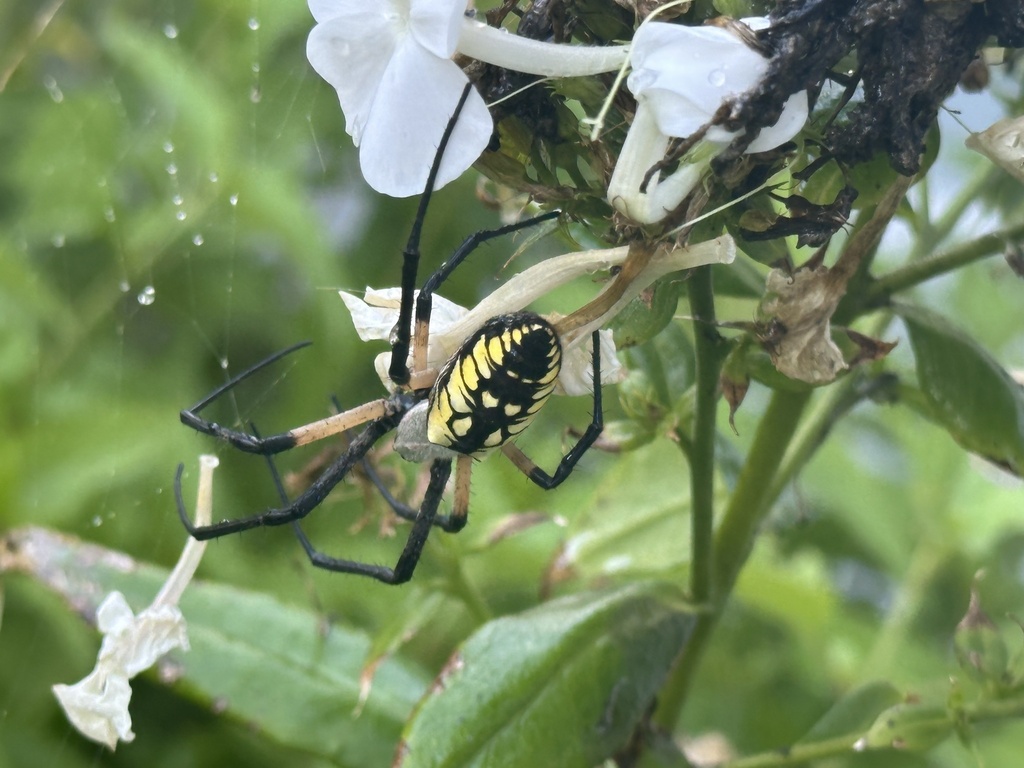
Black-yellow abdomen; side view
Species candidate
1. Yellow garden spider
Argiope aurantia
Elongated abdomen with bold yellow patches
Web may have a white zigzag near its center
An adult female has a bold yellow-and-black abdomen and often sits near the center of a large vertical web. A white silk zigzag may run above or below her resting position. Males are much smaller and do not resemble the large female closely. The web and body pattern together are stronger evidence than either alone.
Lookalikes: Banded garden spiders have numerous narrower abdominal bands; other orbweavers may also add conspicuous silk to a web.
Where to look: Sunny gardens, tall weeds and shrubs. Adult activity: Late summer and fall.
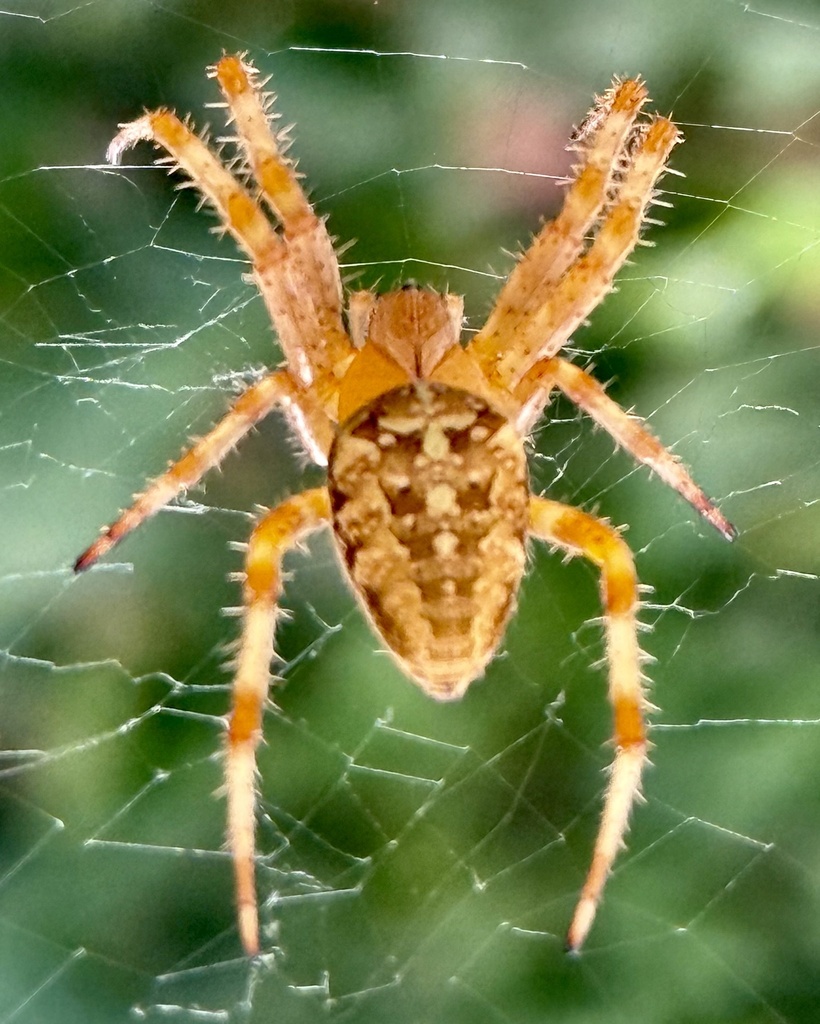
Find the pale marks down the middle of the abdomen and the shorter marks crossing them. The background can range from pale tan to brown, so color alone is a poor test. This introduced orbweaver often builds beside vegetation or buildings. A clear cross-shaped arrangement is useful, although the marking can be weak or atypical.
Lookalikes: Other spotted orbweavers have similar rounded bodies. A photograph hiding the abdomen may leave the species unresolved.
Where to look: Gardens, shrubs and building exteriors. Adult activity: Late summer and fall.
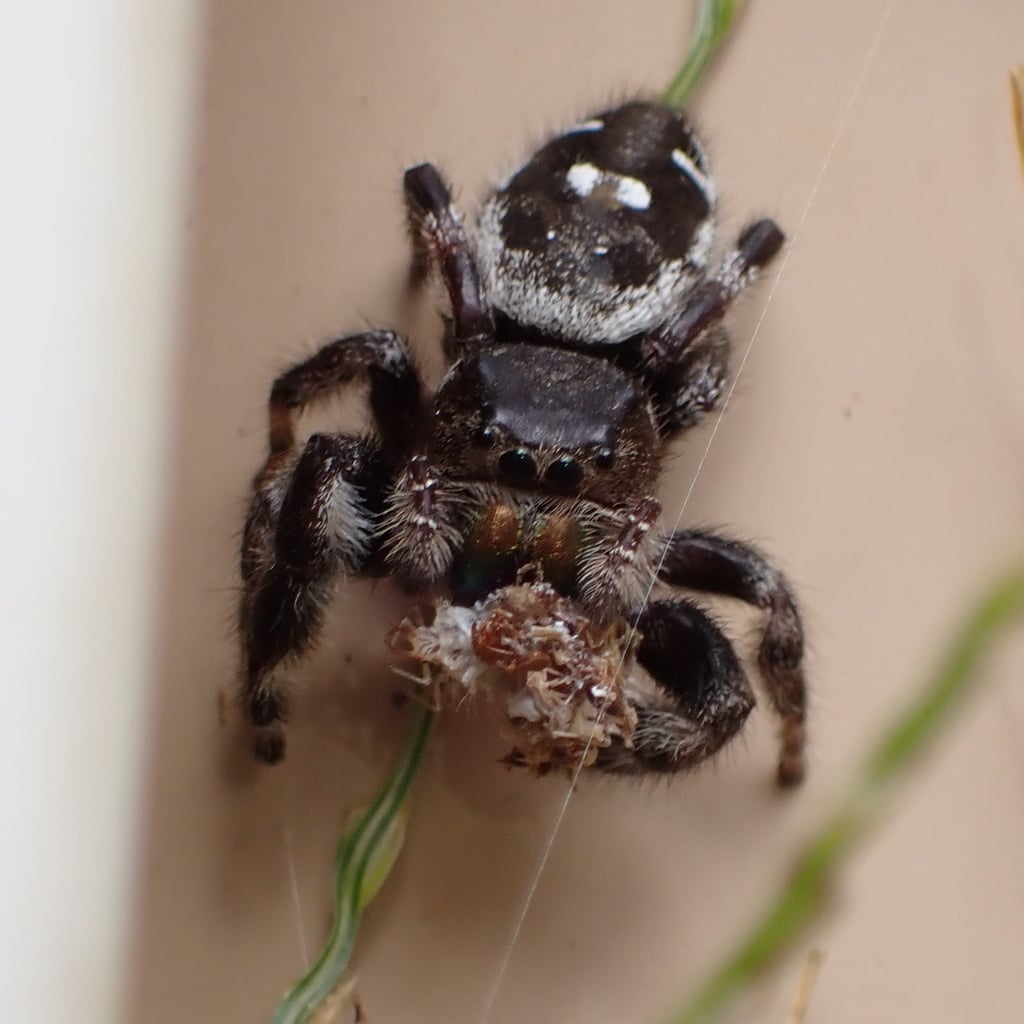
Look for the compact outline of a jumping spider, then the pale spots on the dark abdomen. The conspicuous front eyes are visible in a good face photograph; metallic green mouthparts may also show. Young individuals can have orange rather than white spots. Bold jumpers stalk prey on surfaces instead of waiting in an orb web.
Lookalikes: Other Phidippus jumping spiders can have pale spots and metallic mouthparts. An incomplete view may justify only the genus.
Where to look: Fences, walls, plants and open ground. Adult activity: Spring through fall.
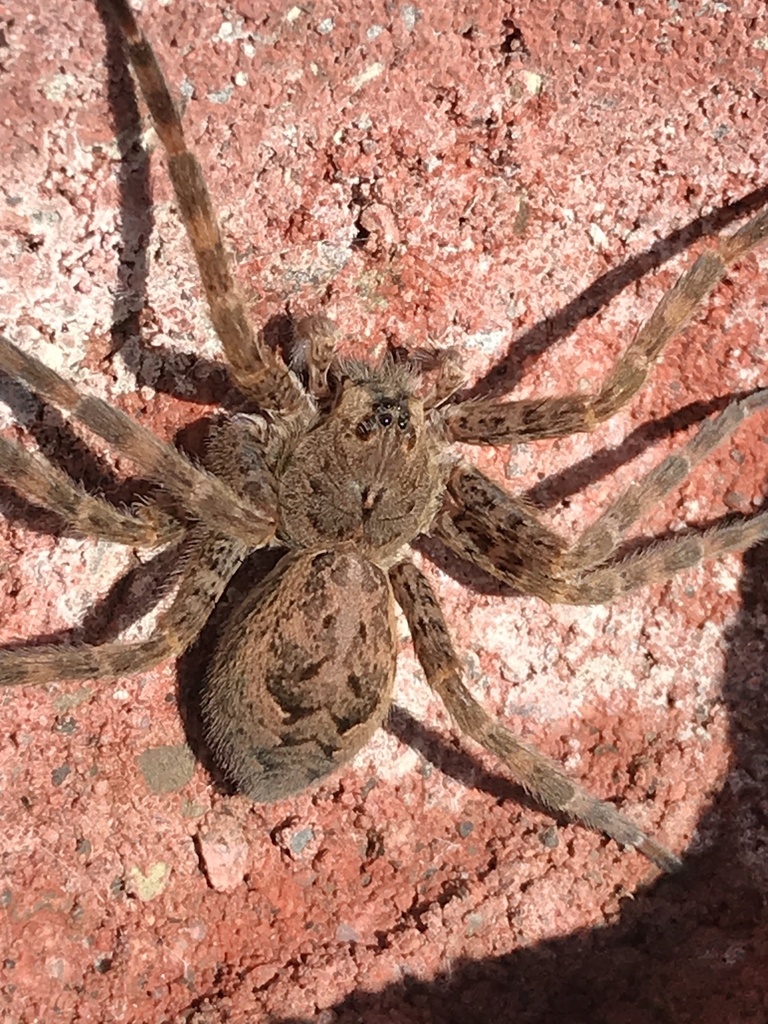
Broad brown-gray body with dark abdominal markings
Long legs with contrasting bands
This fishing spider can occur well away from a pond. It is often noticed on tree trunks or wooded buildings, where its spread legs make it appear especially large. Look at the leg bands and abdominal pattern, then compare other Dolomedes. A photograph of a large brown spider without those details is not enough for an exact species identification.
Lookalikes: Wolf spiders and other fishing spiders overlap in size and color. Size and proximity to water do not settle the name.
Where to look: Woodlands, tree trunks and nearby buildings. Adult activity: Adults spring through late summer.
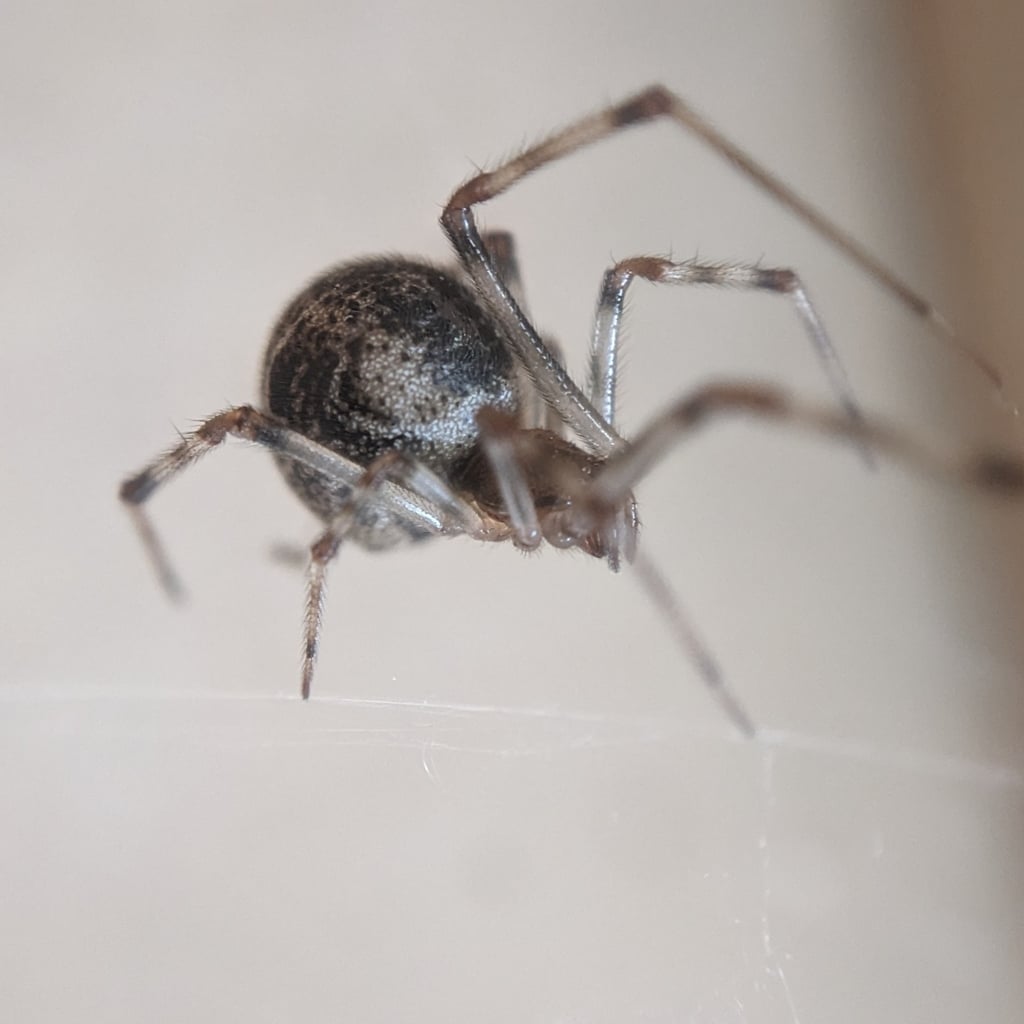
The irregular web is often more obvious than its owner. Common house spiders occupy sheltered corners and can have variable tan, brown and pale abdominal markings. Look for the rounded abdomen and relatively slender legs. A small brown spider in a cobweb is a useful starting point, but several cobweb-spider species share that combination.
Lookalikes: Steatoda and other cobweb spiders can resemble this species. Do not identify a spider by a skin mark or web alone.
Where to look: Building corners, sheds and sheltered outdoor sites. Adult activity: Warm months; indoors year-round.
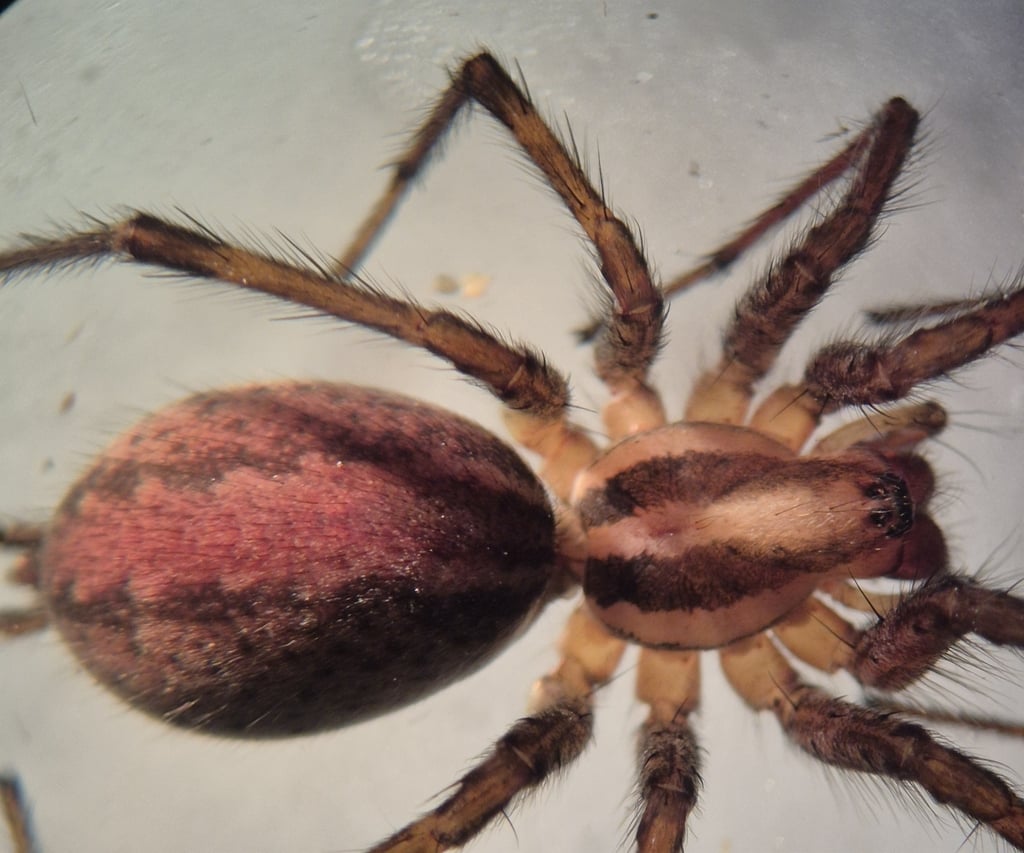
Locate the funnel opening at one side of a broad sheet web. A grass spider may rush across the sheet when an insect lands. In a clear body photograph, the long paired rear spinnerets and striped front body support Agelenopsis. The regional species look similar, and the pictured species should be treated as an example of the genus.
Lookalikes: Wolf spiders lack this characteristic prey-catching sheet-and-funnel web. Other funnel weavers still need a closer comparison.
Where to look: Grass, shrubs and groundcover; sheet webs. Adult activity: Late summer and fall.
Include the abdomen, legs and front of the body in a photograph. A second image of the web can separate an orbweaver, cobweb spider and funnel weaver. Note whether the spider was resting in that web or merely walking nearby. Do not catch a spider to inspect its eyes or underside.
Grass spider or wolf spider?
Grass spiders commonly wait at the entrance of a funnel attached to a horizontal sheet web. Wolf spiders hunt without that kind of prey-catching web. Both can be brown and striped. Long rear spinnerets favor a grass spider, but a blurred brown-spider image often supports only a broader identification.
Why is a female spider larger than the photograph suggests?
Sex and maturity can change a spider's proportions and pattern. Female yellow garden spiders are much larger than males. Young bold jumpers may have orange spots that become white as they mature. Compare the photo label before treating a color difference as proof of another species.
What if the spider does not match?
Keep the identification open. This chart cannot establish the cause of a skin mark, and it does not rule out species omitted from the shortlist. Photograph an unfamiliar spider from a comfortable distance and use a regional extension guide for the next comparison.