Identify a caterpillar by combining its body pattern, hairs or raised knobs with the plant it is feeding on. A striped caterpillar on milkweed suggests a monarch; a green caterpillar with black bands and yellow dots on parsley suggests a black swallowtail. Check the whole pattern before choosing a name.
These six examples occur in the eastern United States, with a Mid-Atlantic focus. The photographs show caterpillars, the larval stage of butterflies and moths. Young caterpillars may look very different from the mature larvae shown. This is a starting comparison, not a complete caterpillar key.
Select the chart to open a larger view. Original photo sources, creators and licenses appear in the cards below and in the printable PDF.
Caterpillar identification at a glance
The months describe caterpillar activity, not adult flight. Host plants help narrow the choices, but a wandering larva may have left its feeding plant. Exact timing changes with latitude and weather. On a small screen, scroll the table sideways.
Eastern United States, with a Mid-Atlantic focus caterpillar comparison: appearance, habitat and season
Open a photograph for a larger view. Read the photo label before comparing the markings.
Mature caterpillar
Mature-larva candidate
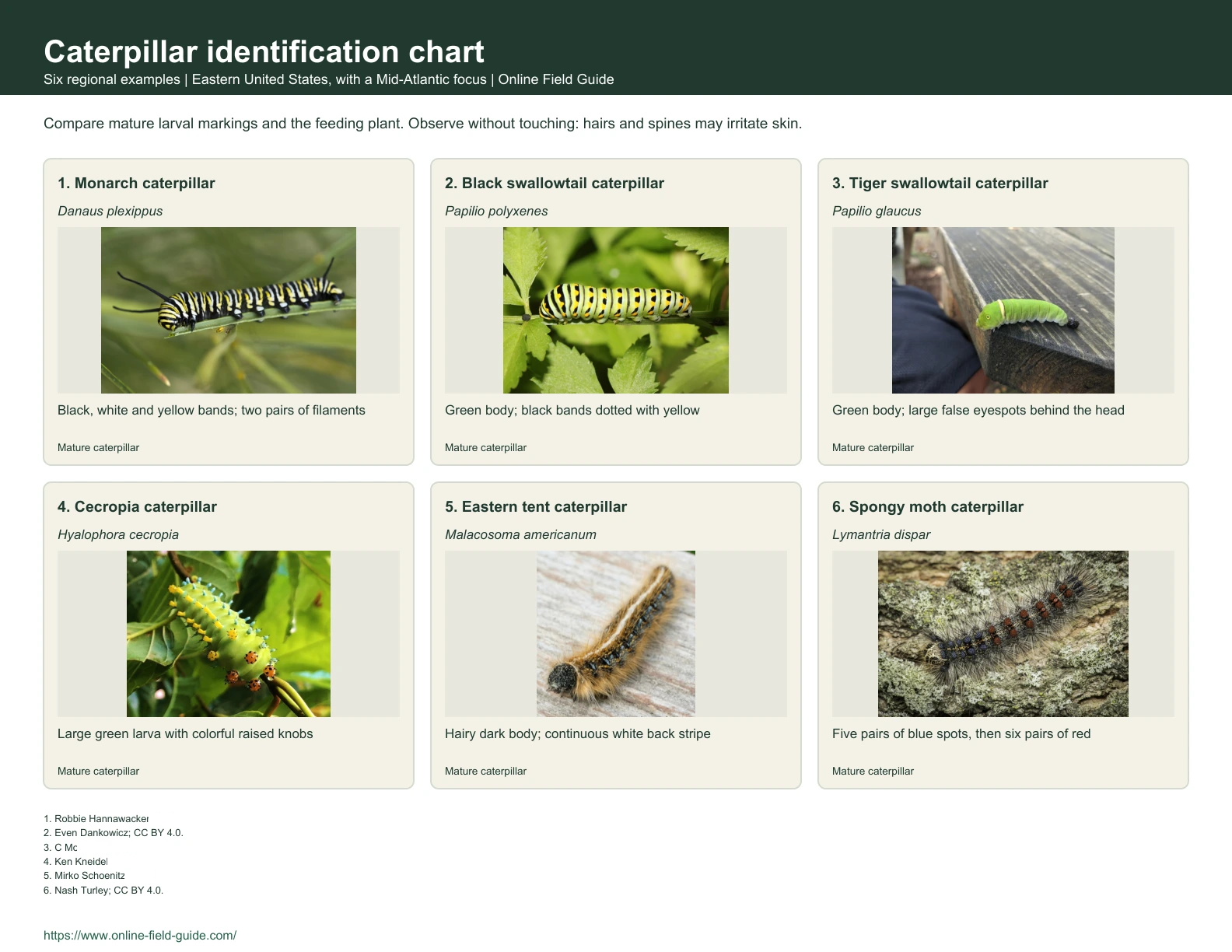
1. Monarch caterpillar
Danaus plexippus
Narrow alternating bands around the body
Two black filaments near each end
Follow the narrow bands around the body, then look for the black filaments near the front and rear. The filaments are flexible projections, not stinging spines. Milkweed is the feeding plant to check. Very small monarch larvae have less distinct markings, so this mature pattern should not be used to reject every tiny caterpillar on milkweed.
Lookalikes: Black swallowtails have green areas between black, yellow-spotted bands and lack the monarch's paired filaments.
Where to look: Milkweed in gardens and open fields. Larval activity: Late spring through early fall.
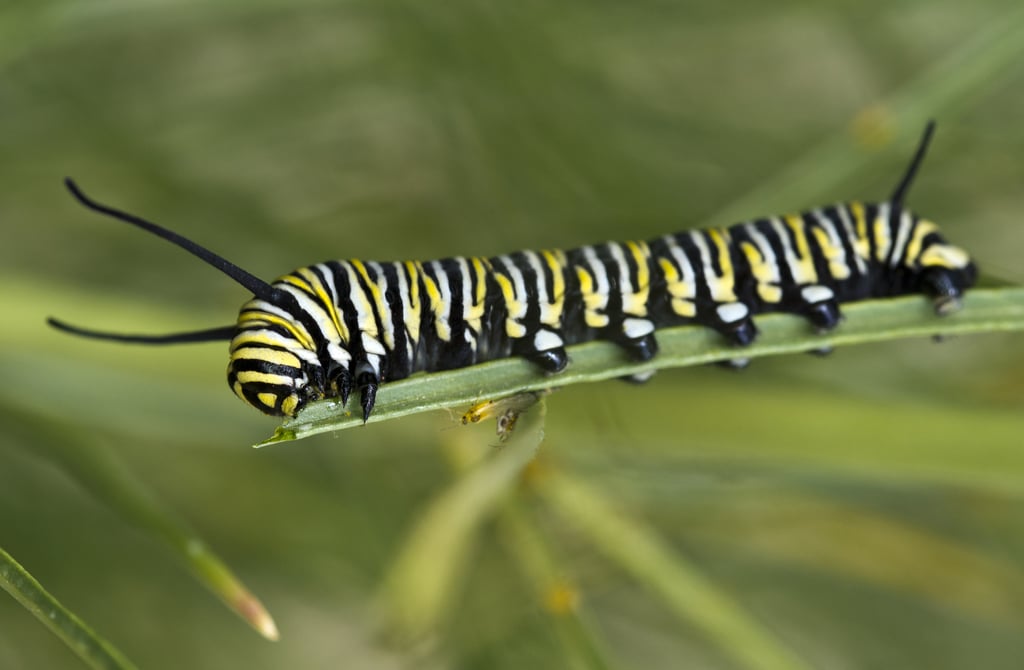
Look for separate yellow dots set within black bands, rather than the monarch's narrow continuous stripes. Parsley and dill are familiar hosts in gardens. Young larvae can be dark with a pale saddle across the back. The forked defensive organ behind the head may appear when disturbed, but there is no need to make the caterpillar display it.
Lookalikes: Other swallowtails change appearance as they grow. Combine the mature pattern with a feeding record on a suitable host.
Where to look: Parsley, dill, fennel and carrot relatives. Larval activity: Late spring through early fall.
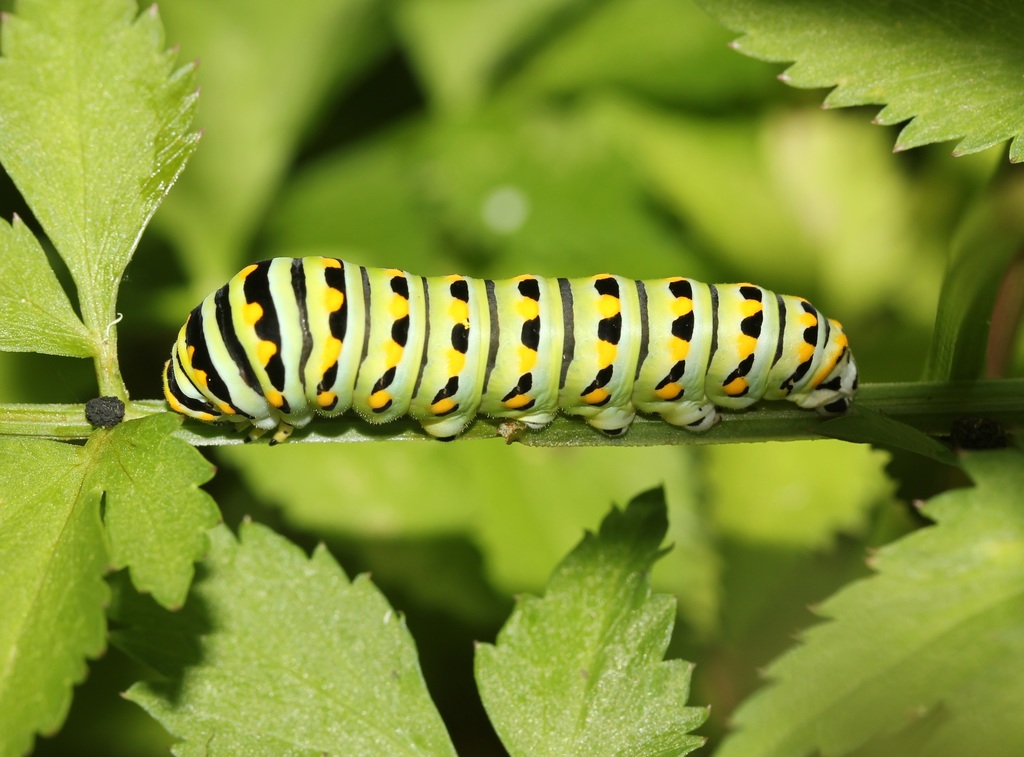
The conspicuous eyespots sit behind the small true head. An older larva can rest on a silk-lined leaf, with the broad front of its body raised. Early stages are brown and white. Host trees and location are helpful because related tiger swallowtails occur near parts of the region and a single green-larva photograph can leave the species uncertain.
Lookalikes: Spicebush swallowtail larvae also have false eyespots. Their host plants and other markings must be checked.
Where to look: Tulip trees, cherries and other tree hosts. Larval activity: Late spring through early fall.
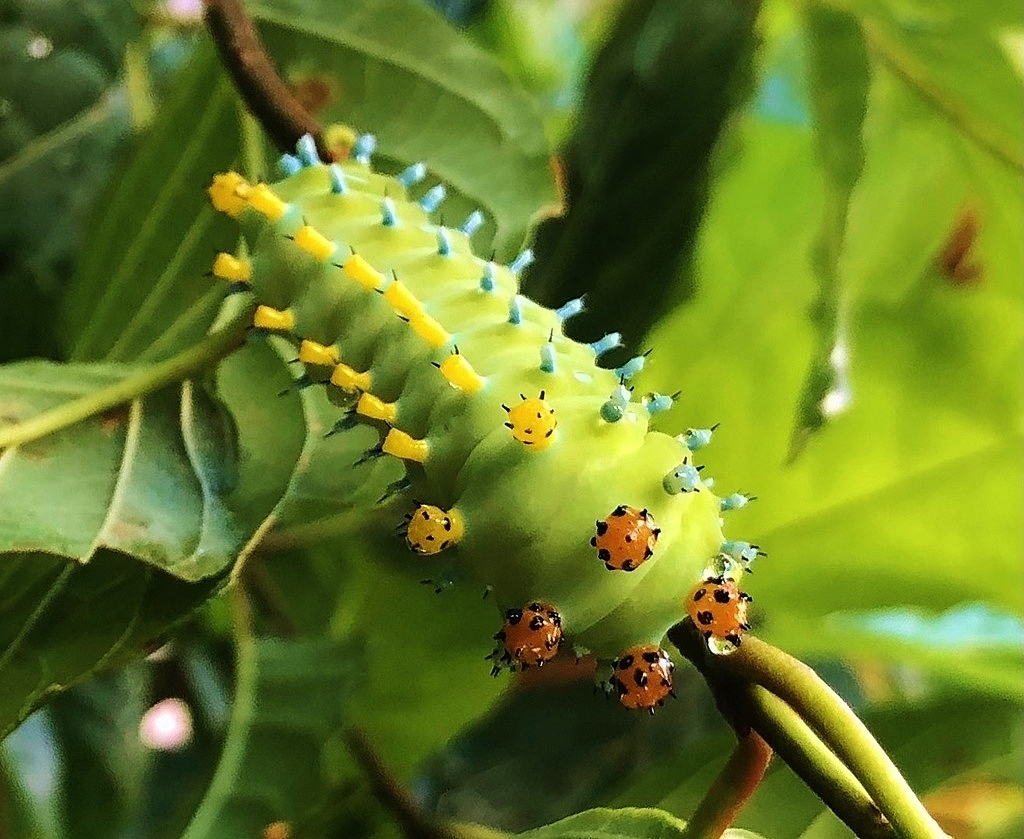
The raised knobs, called tubercles, make a mature cecropia larva stand out among green caterpillars. Compare the arrangement of the knobs along the sides and back, not just one bright color. Early larvae are darker and much smaller. A large larva may be on a trunk or branch when it is searching for a place to spin its cocoon.
Lookalikes: Other giant silk moth larvae are green with knobs or spines. The knob pattern and stage matter more than apparent size.
Where to look: Deciduous trees and shrubs, including maple. Larval activity: Summer into early fall.
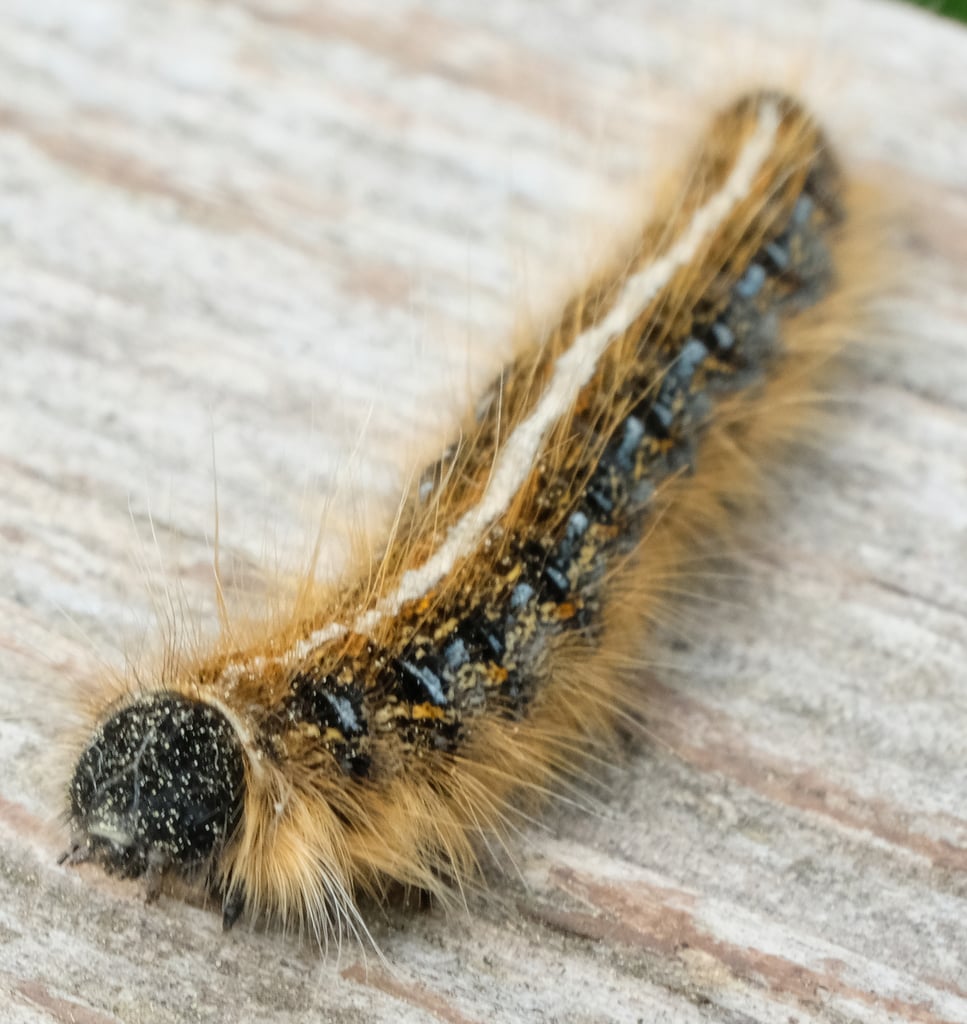
Find the continuous white stripe running along the back of a developed larva. A group feeding near a silk tent in a cherry or crabapple fork supports the identification. The tent is a shared shelter and may contain many caterpillars. Later in spring, mature larvae leave it and wander before making cocoons, so an isolated caterpillar need not be beside a tent.
Lookalikes: Forest tent caterpillars have pale keyhole-shaped spots down the back. Fall webworms enclose branch ends later in the year.
Where to look: Cherry and crabapple trees; branch-fork tents. Larval activity: Spring.
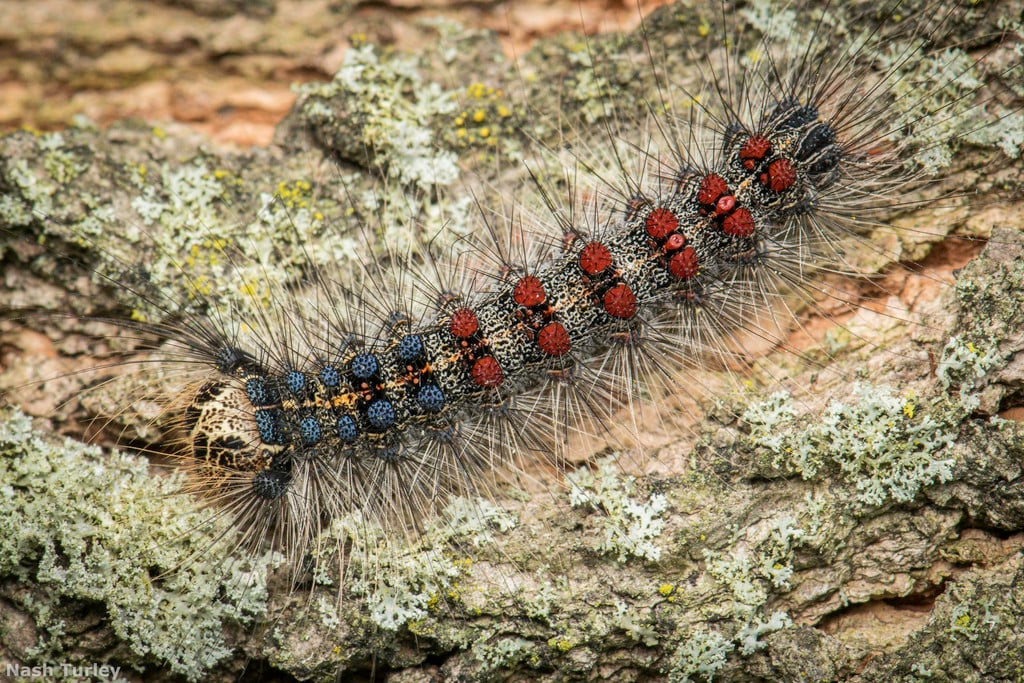
On a sufficiently developed larva, trace the spots from the head toward the tail: five blue pairs followed by six red pairs. Dense hairs and a dark body alone are less useful because many caterpillars share those features. Spongy moth larvae do not build the branch-fork tents used by eastern tent caterpillars. Small newly hatched larvae lack the full obvious spot pattern.
Lookalikes: Tent caterpillars have a white stripe or pale keyhole spots instead of this blue-then-red arrangement.
Where to look: Many deciduous trees, especially oaks. Larval activity: Spring through early summer.
How do you identify a caterpillar from a photograph?
Photograph the back and side without handling the caterpillar. Record the plant if the insect is actually feeding, along with the location and date. Count conspicuous paired spots or knobs only when the whole body is visible. A head-on photograph can hide the stripe or spot arrangement needed for a useful comparison.
Monarch or black swallowtail caterpillar?
Mature monarchs have narrow black, white and yellow bands and two pairs of slender black filaments. Mature black swallowtails have a green background crossed by black bands with yellow spots. Milkweed supports monarch larvae; parsley, dill and fennel support black swallowtails. A caterpillar merely resting on a plant is weaker evidence than one feeding on it.
Why does a young caterpillar look different?
Caterpillars shed their skin as they grow. Each growth stage, or instar, can change the color and arrangement of markings. Young tiger swallowtails resemble small bird droppings, while older larvae are green with false eyespots. Match the stage as well as the species; an early larva may need another photograph after it has grown.
Can you touch a hairy caterpillar?
Leave unfamiliar caterpillars on their plants. Some hairs and spines can irritate skin, and a photograph is enough for this chart. Do not provoke a defensive display to check an identification. If the markings do not fit these six examples, keep the observation unresolved and compare it with a regional caterpillar guide.