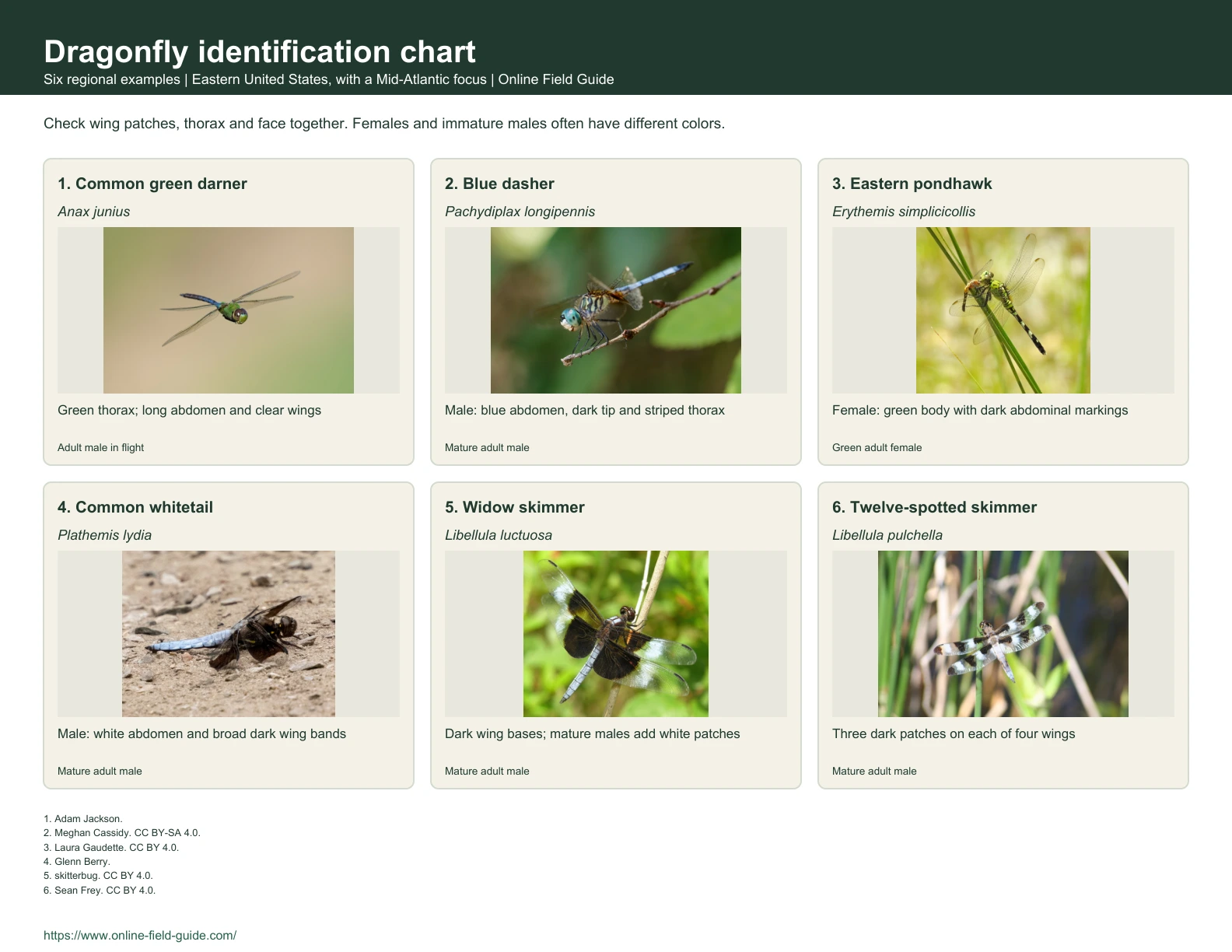
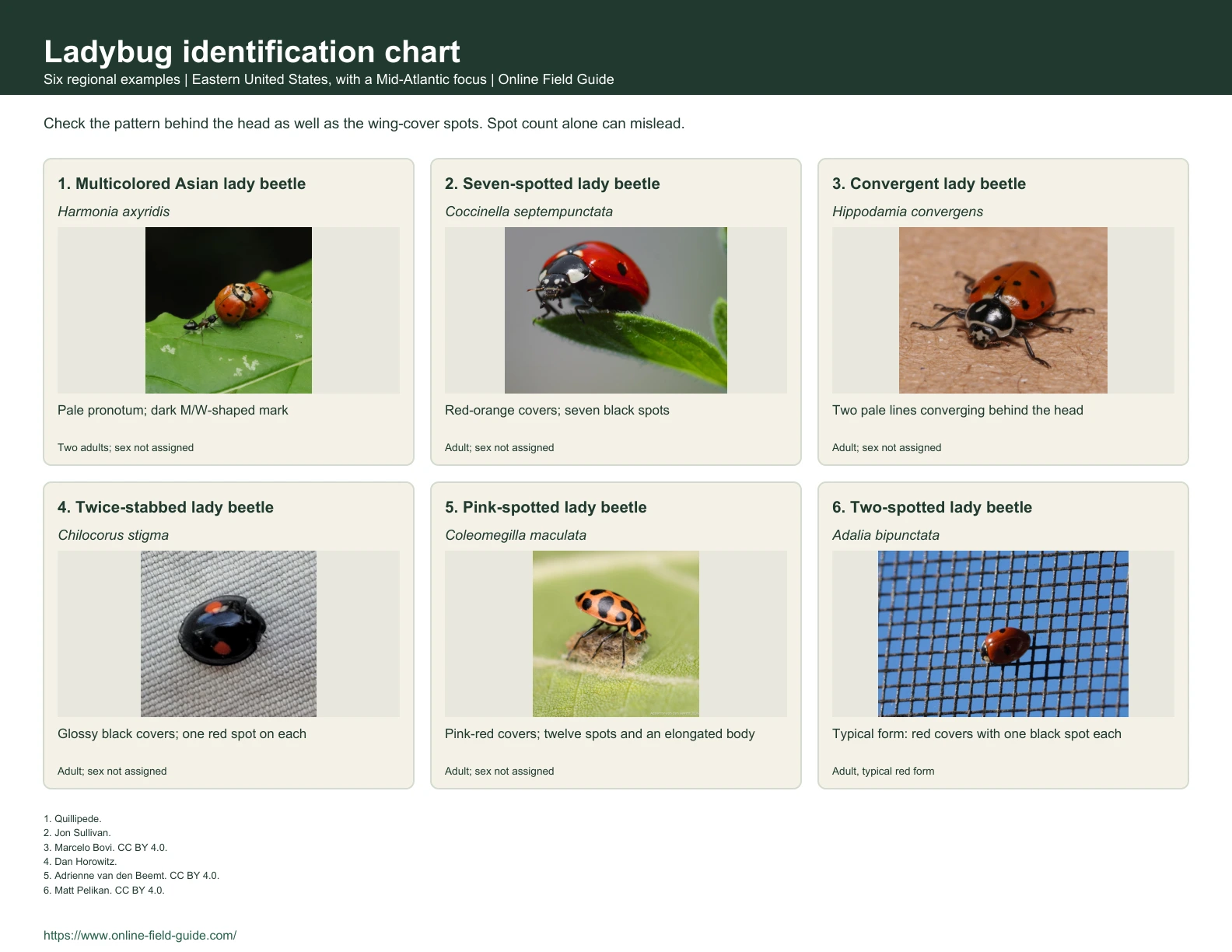
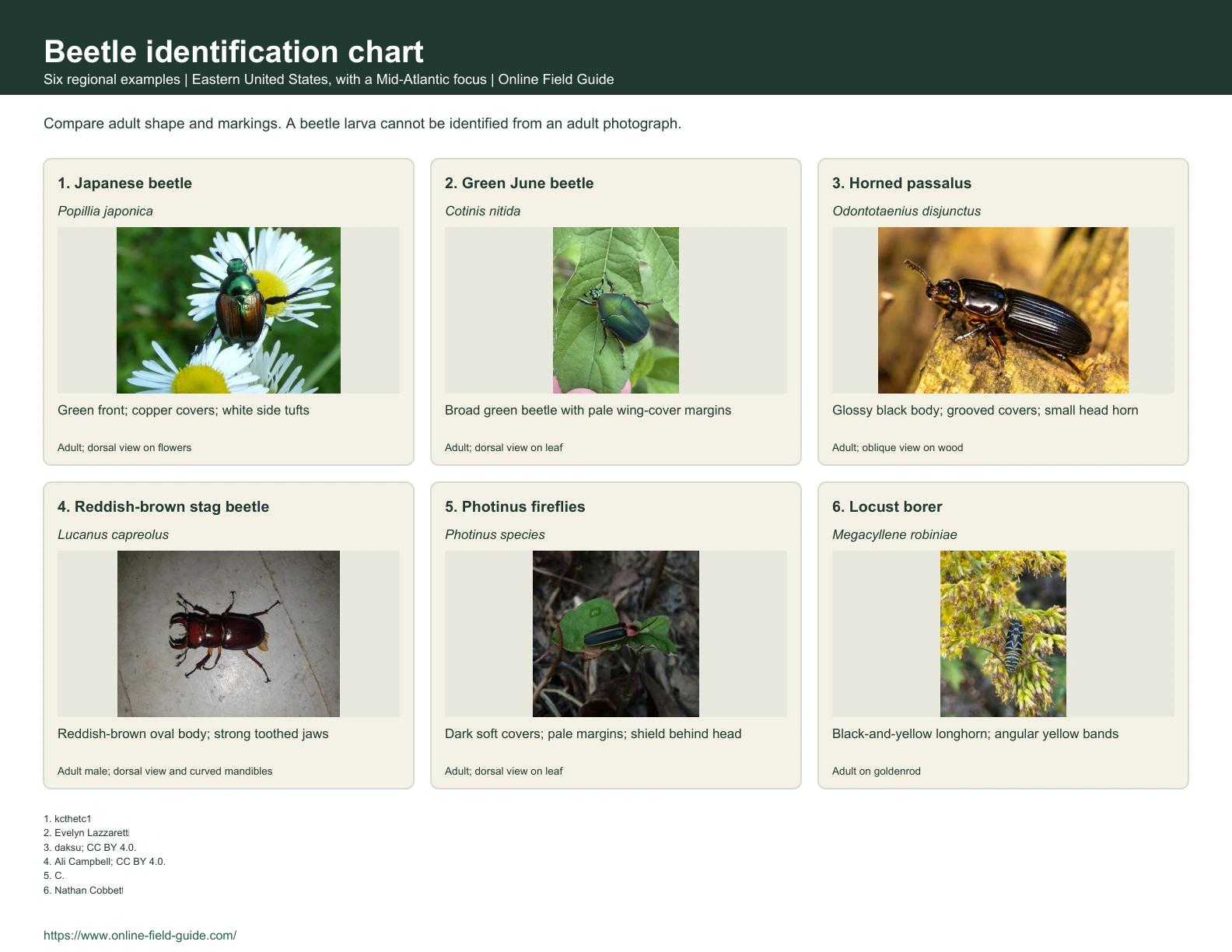
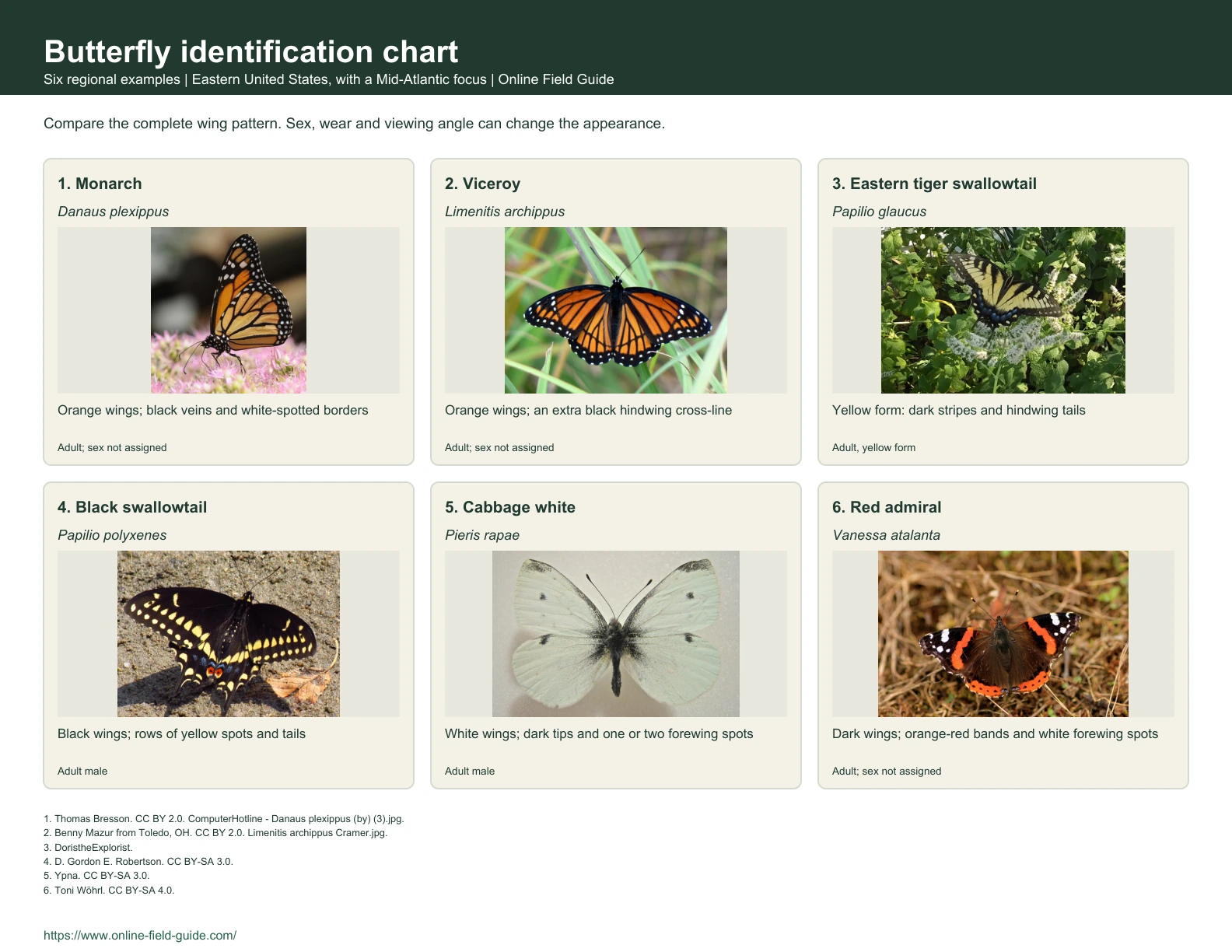
Identify a turtle by comparing its shell outline, shell texture and visible head markings. A high domed shell on a woodland floor suggests a box turtle; a smooth dark shell with red edge marks suggests a painted turtle. Some pond turtles look similar until several features are visible.
These six turtles occur in the eastern United States, with a Mid-Atlantic focus. The chart covers land and freshwater examples rather than sea turtles. Other native turtles and released pet species occur in the region. Observe wildlife without collecting it or lifting it to inspect the underside.
Select the chart to open a larger view. Original photo sources, creators and licenses appear in the cards below and in the printable PDF.
Turtle identification at a glance
Activity is broad regional guidance. Weather and basking conditions affect sightings. A turtle on land may be an aquatic species moving to nest; its current position does not establish its usual habitat. On a small screen, scroll the table sideways.
Eastern United States, with a Mid-Atlantic focus turtle comparison: appearance, habitat and season
Sculptured ridged shell; orange-yellow neck and legs
Clean streams and nearby wooded or grassy ground
Spring through fall
Species candidate
Photo cards: six turtles
Open a photograph for a larger view. Read the photo label before comparing the markings.
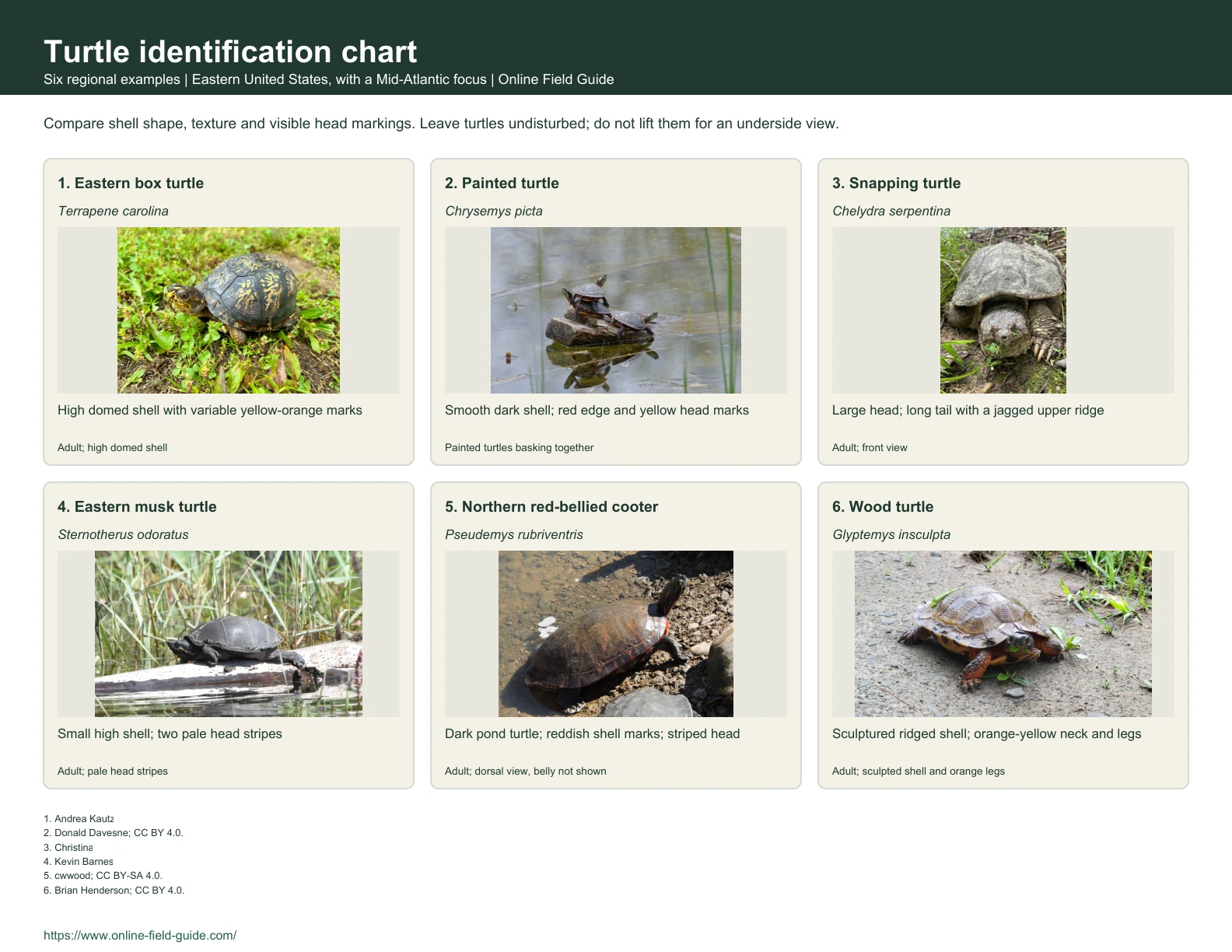
Adult; high domed shell
Regional box-turtle candidate
1. Eastern box turtle
Terrapene carolina
Rounded high shell, often with pale blotches
Usually encountered on woodland ground
The high dome is the best first shell-shape comparison. Yellow and orange lines or patches vary greatly, and some individuals are quite dark. Box turtles usually live on land, but finding a turtle in wet ground does not exclude them. This entry represents the eastern form; a photograph from outside the regional scope may need a different box-turtle comparison.
Lookalikes: Wood turtles have more sculptured scutes and a lower shell. Eye color alone does not reliably assign sex.
Where to look: Moist woods, edges and adjacent meadows. Seasonal activity: Spring through fall.
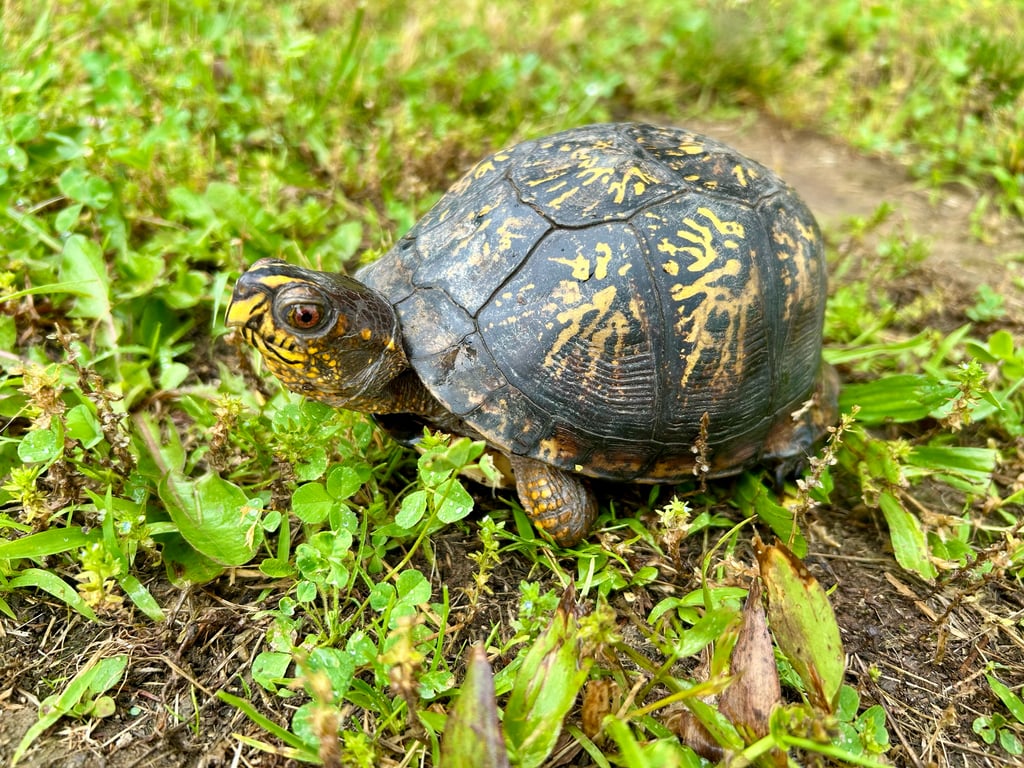
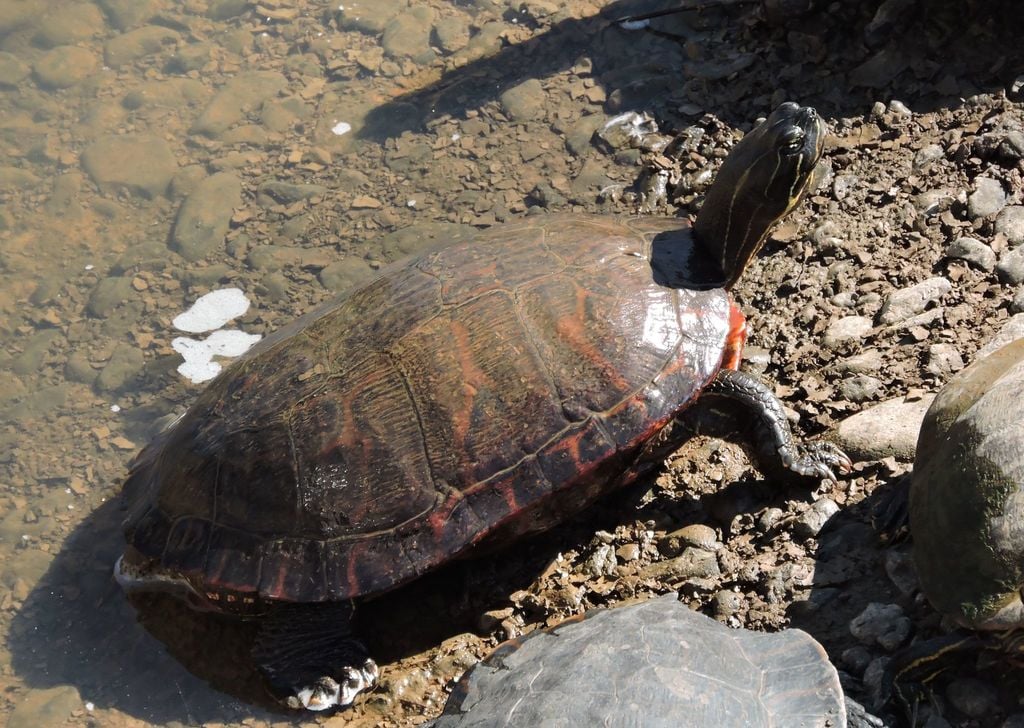
Look at the shell edge as well as the head. Painted turtles typically combine a smooth dark carapace, red or orange edge markings and yellow head markings. The eastern and midland forms meet in parts of the region, so this chart stops at painted turtle rather than assigning a subspecies from one photograph. Shell color can be obscured by mud or algae.
Lookalikes: Sliders and cooters can also have striped heads and colored shells. A distant basking silhouette may remain unresolved.
Where to look: Ponds, marshes and slow water; basking logs. Seasonal activity: Spring through fall.
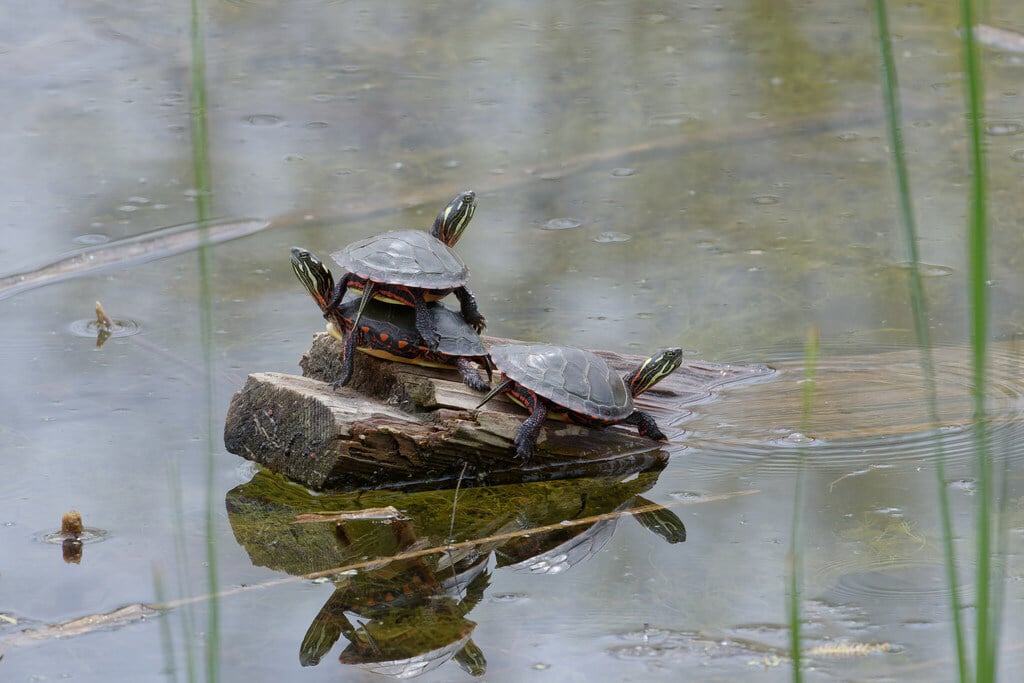
A visible long tail with a saw-toothed ridge is a strong first clue. The head and limbs look substantial, and the shell may be muddy or algae-covered. Adults can leave water during nesting movements. Observe without picking the turtle up; a snapping turtle can reach farther than an observer may expect. A small juvenile has the same general outline but may have stronger shell ridges.
Lookalikes: Alligator snapping turtles have more pronounced shell ridges and a different head; they are not native to Maryland.
Where to look: Ponds, lakes, marshes and slow streams. Seasonal activity: Spring through fall.
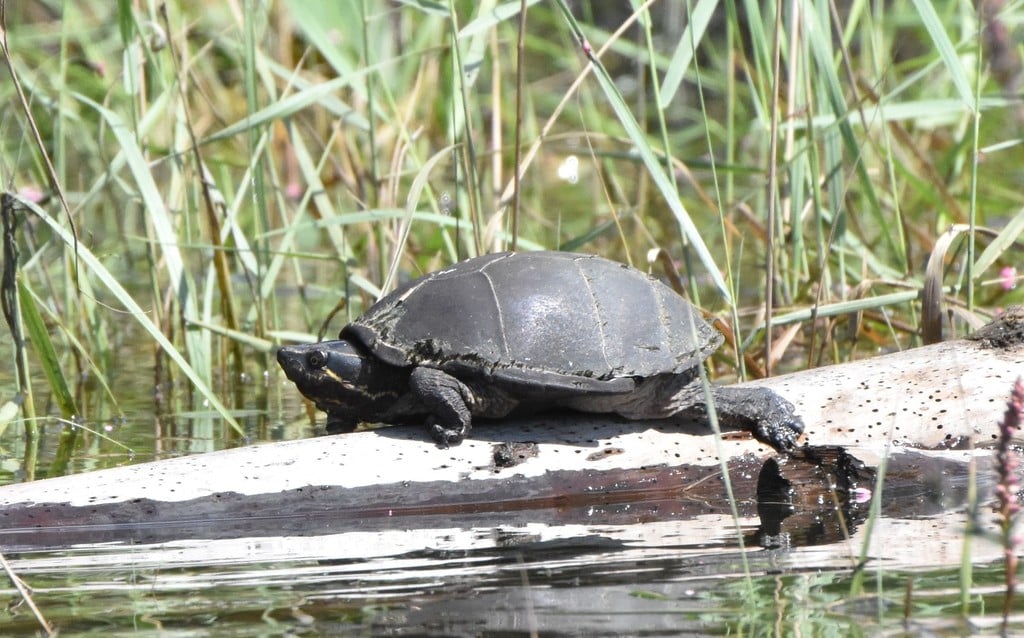
The paired light head stripes help distinguish a visible musk turtle from a small muddy pond turtle. Its rounded shell is relatively high, and algae can hide the original color. Many spend considerable time near the bottom, although they can climb onto basking sites. The common name stinkpot refers to defensive scent, which should never be provoked as an identification test.
Lookalikes: Mud turtles and young pond turtles can be similar. Underside features require specialist comparison, not handling for this chart.
Where to look: Slow freshwater with soft bottoms. Seasonal activity: Spring through early fall.
Yellow head stripes; underside color is not a handling test
Red markings on a dark shell and a striped head can suggest a northern red-bellied cooter, but those features must be compared with other pond turtles. Adults often bask on logs and can look large beside painted turtles. The name refers to underside coloration; do not lift a wild turtle to look for it. Some views support only a cooter-level identification.
Lookalikes: Other cooters, sliders and painted turtles overlap in visible colors. A head-and-shell view is more useful than size alone.
Where to look: Ponds, rivers and freshwater wetlands. Seasonal activity: Spring through fall.
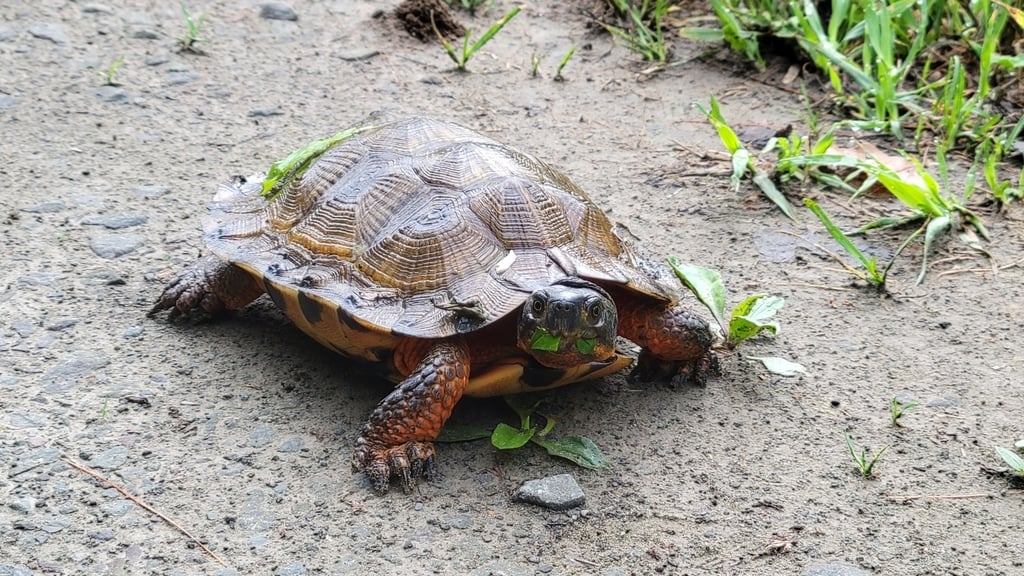
Shell scutes commonly have concentric raised ridges
Orange or yellow skin on neck and limbs
The shell looks sculptured, with ridges around individual scutes rather than a smooth glossy surface. Adult neck and limb skin often show orange or yellow. Wood turtles use streams and surrounding land, so a terrestrial sighting fits their habitat. Young turtles are less colorful and less strongly sculptured. Leave the animal and its habitat undisturbed, and avoid publicly pinpointing the location.
Lookalikes: Box turtles have a higher dome; diamondback terrapins have different skin and occur in coastal brackish habitats.
Where to look: Clean streams and nearby wooded or grassy ground. Seasonal activity: Spring through fall.
Use the top shell, or carapace, outline and surface texture together with the visible head and legs. A side photograph can show the dome, while a top view reveals the arrangement of shell plates, called scutes. Binoculars or a zoom lens let you observe basking turtles without making them retreat.
Box turtle or wood turtle?
Eastern box turtles have a high domed shell with variable yellow or orange markings. Wood turtles have a lower sculptured shell whose scutes often show concentric ridges, plus orange or yellow skin on the neck and limbs. Color alone is unreliable, especially for young animals or muddy shells.
Painted turtle or red-bellied cooter?
Both can show red markings and bask on logs. Painted turtles have smooth dark shells with red or orange marks around the edge and yellow head marks. Red-bellied cooters are larger-looking pond turtles with different shell and head patterns. A distant red-marked shell may support only a pond-turtle identification.
Why is a water turtle walking across land?
Aquatic turtles leave water to nest or move between habitats. Do not put an unidentified turtle into a pond or relocate it to another area. For an injured animal or a turtle in an unsafe situation, contact a licensed wildlife rehabilitator or local wildlife service for guidance. Leave sensitive turtle locations out of public sighting descriptions.