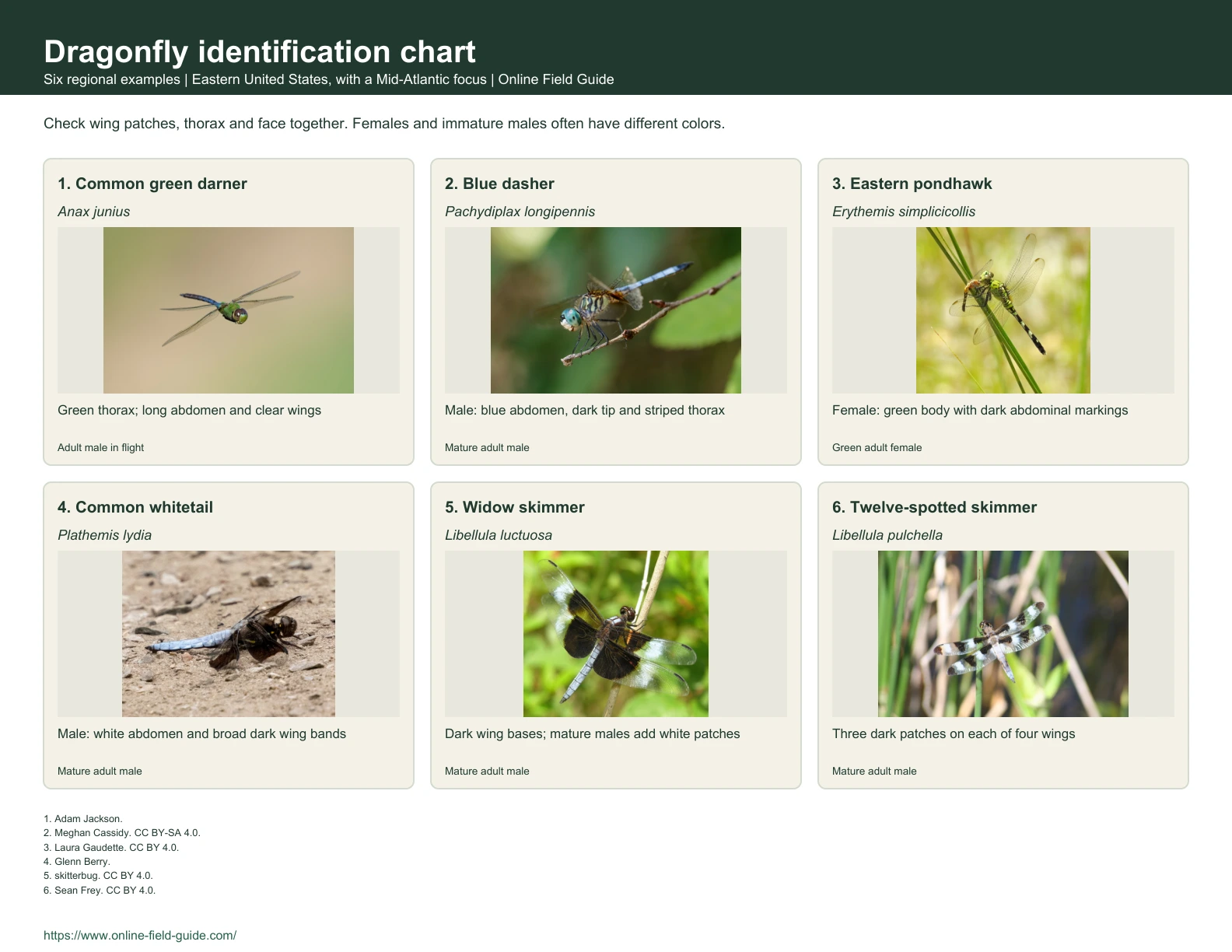
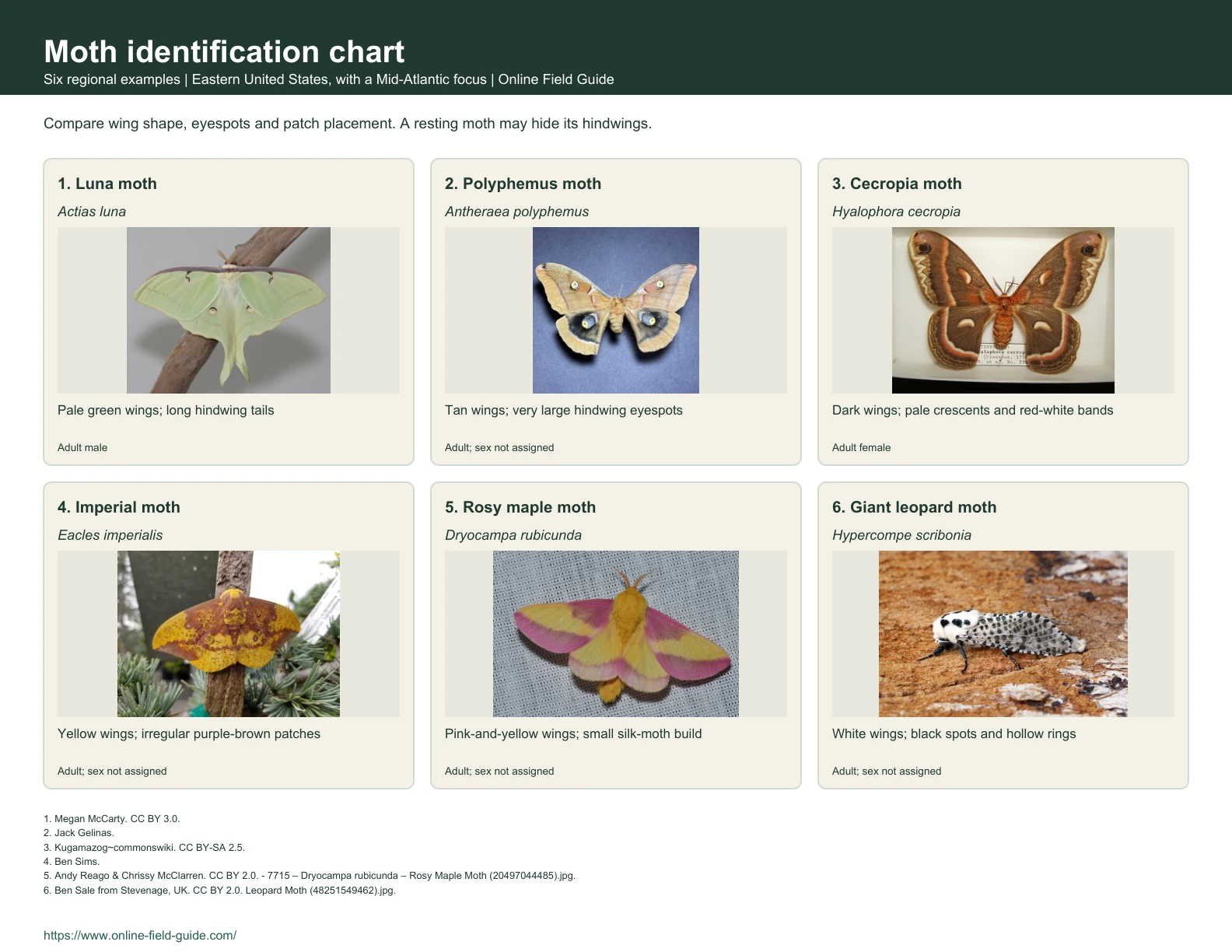
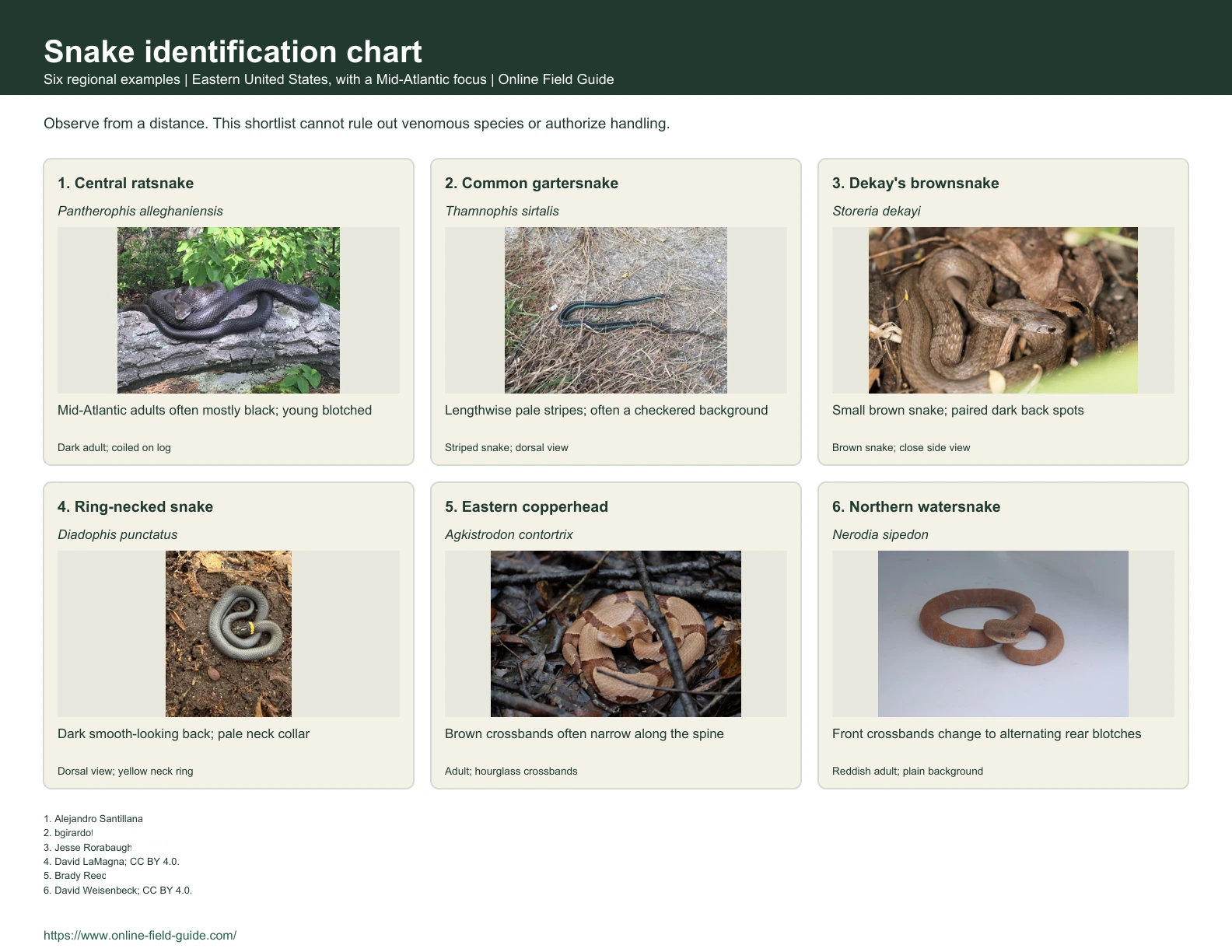
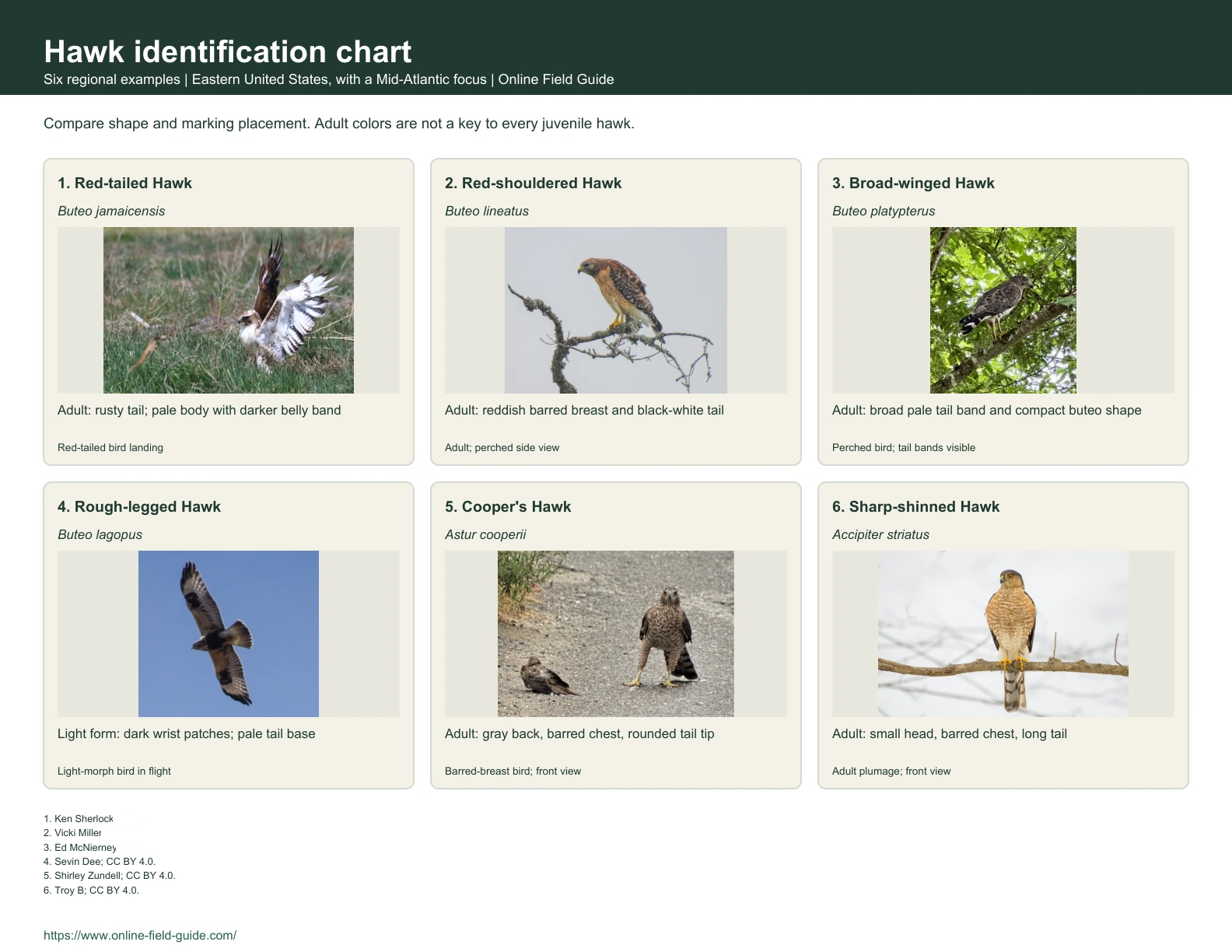
To narrow down an eastern-US wasp, compare its waist, body markings and legs, then use nesting behavior as a supporting clue. Slender paper wasps differ from compact yellowjackets. Large cicada killers and thread-waisted mud daubers are solitary wasps, with different nesting habits from social colonies.
This guide compares six wasps or wasp groups found in the eastern United States, with a Mid-Atlantic focus. Yellowjackets and blue mud daubers are presented at group level, with the photographed species named. Use the chart from a distance; do not approach or open a nest for a closer identification.
Select the chart to open a larger view. Original photo sources, creators and licenses appear in the cards below and in the printable PDF.
Wasp identification at a glance
Nesting is a supporting clue, not an invitation to inspect a nest. A wasp visiting a flower may be far from its nest. Seasonal activity varies with weather and latitude. On a small screen, scroll the table sideways.
Eastern-US wasp comparison: appearance, habitat and season
Open a photograph for a larger view. Read the photo label before comparing the markings.
Adult; sex not assigned
Paper-wasp species candidate
1. European paper wasp
Polistes dominula
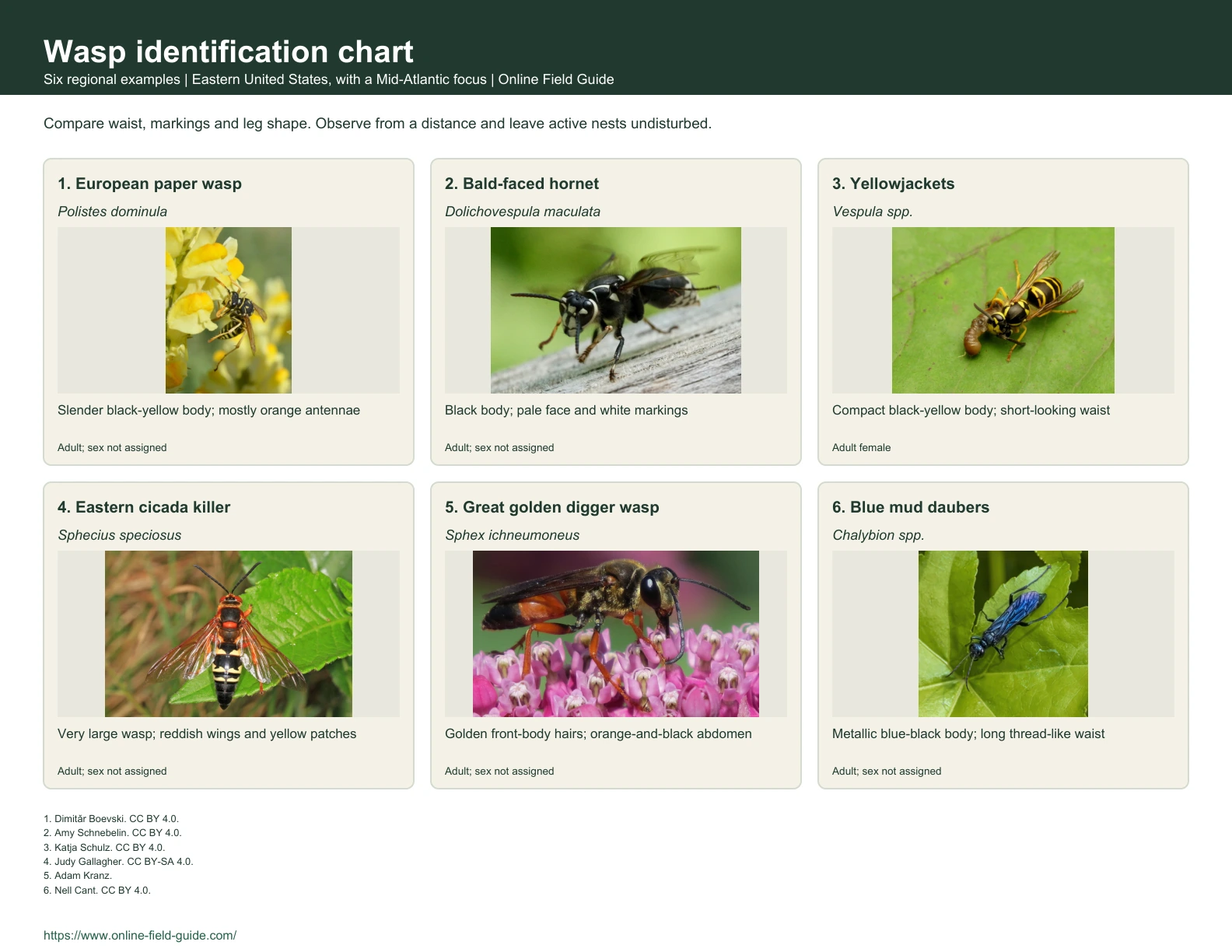
Long legs and a narrow body
Antennae are mostly orange
A European paper wasp has a narrow black-and-yellow body, long legs and mostly orange antennae. The legs often hang down in flight. Its exposed paper nest has open cells and an umbrella-like shape, but compare the insect itself before assigning a name. This species is introduced to North America; many other eastern paper wasps are native.
Lookalikes: Yellowjackets are more compact and have different antenna coloring. Native paper wasps can share the slender shape, so a distant view may support only a paper-wasp label.
Where to look: Open paper combs under sheltered overhangs. Adult activity: Spring through fall.
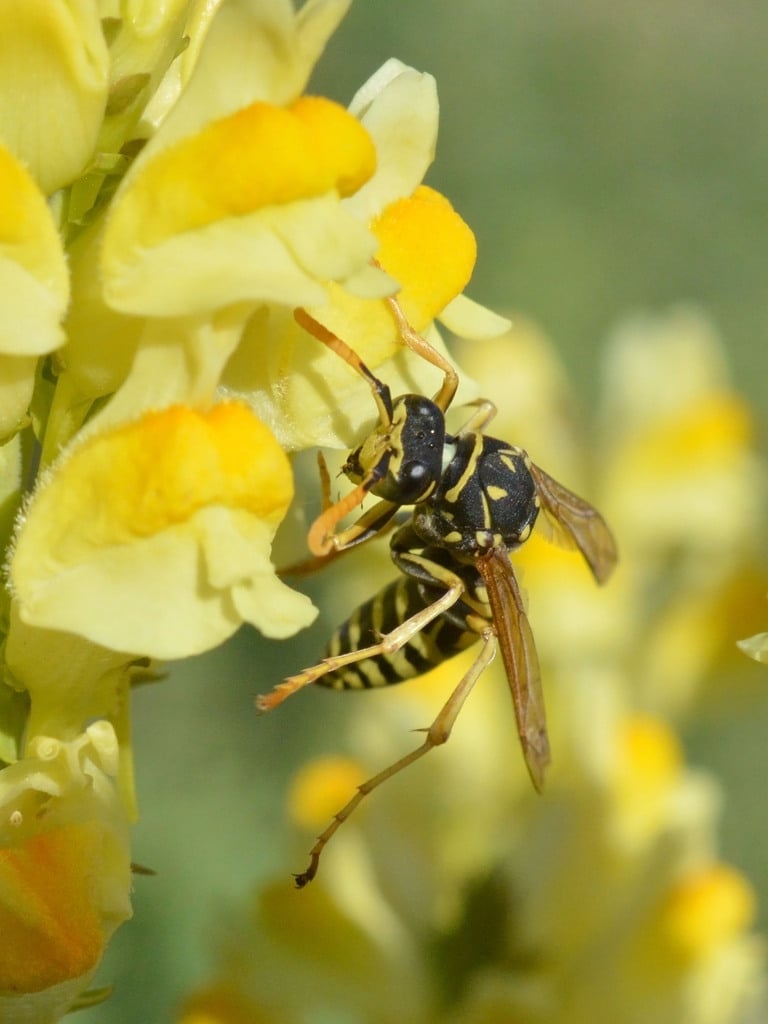
The black-and-white pattern separates a bald-faced hornet from the yellow-marked wasps in this chart. Find the pale face and the pale markings near the rear of the abdomen. Despite the common name, it is an aerial yellowjacket rather than a true hornet. Its social colony builds a paper nest enclosed by an outer envelope.
Lookalikes: Other dark wasps need comparison of the face and abdominal markings. A nest photograph alone may identify a nest type without confirming the insect.
Where to look: Enclosed aerial paper nests. Adult activity: Spring through fall.
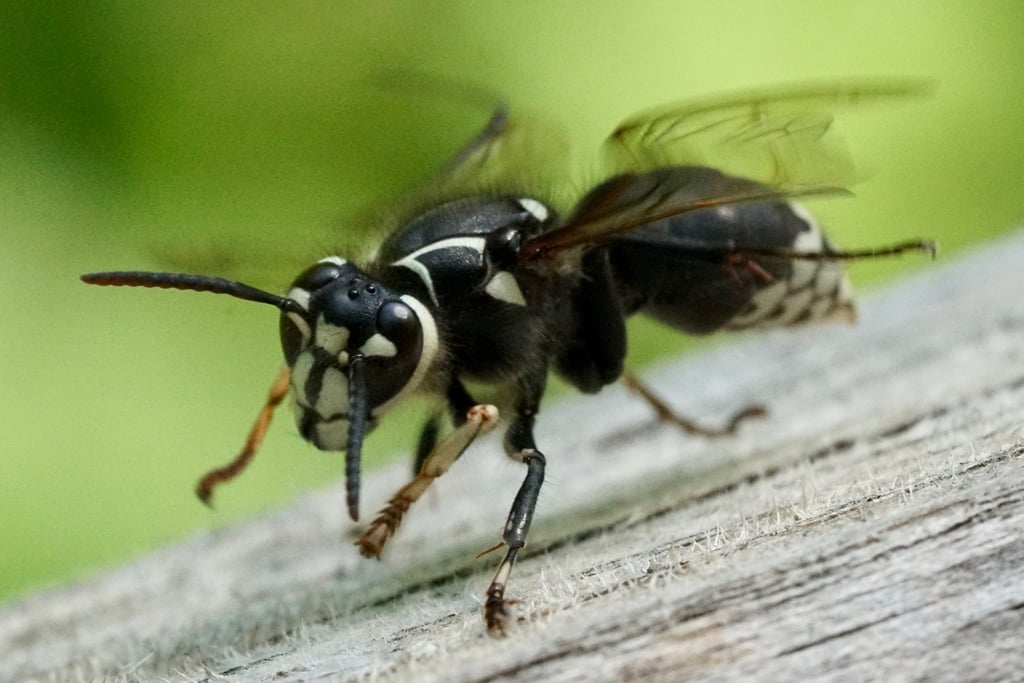
Yellowjackets have a compact shape and sharply contrasting black-and-yellow markings. The photograph shows an eastern yellowjacket, Vespula maculifrons. Several species occur in the region, and the fine differences in face, thorax and abdominal markings need a clear view. A stream of wasps entering one ground opening can suggest a social colony, but stay well back.
Lookalikes: European paper wasps look more slender and long-legged. Honey bees are generally hairier. Neither a ground nest nor yellow stripes identify a yellowjacket species.
Where to look: Social nests; often concealed or underground. Adult activity: Spring through fall; colonies grow through summer.
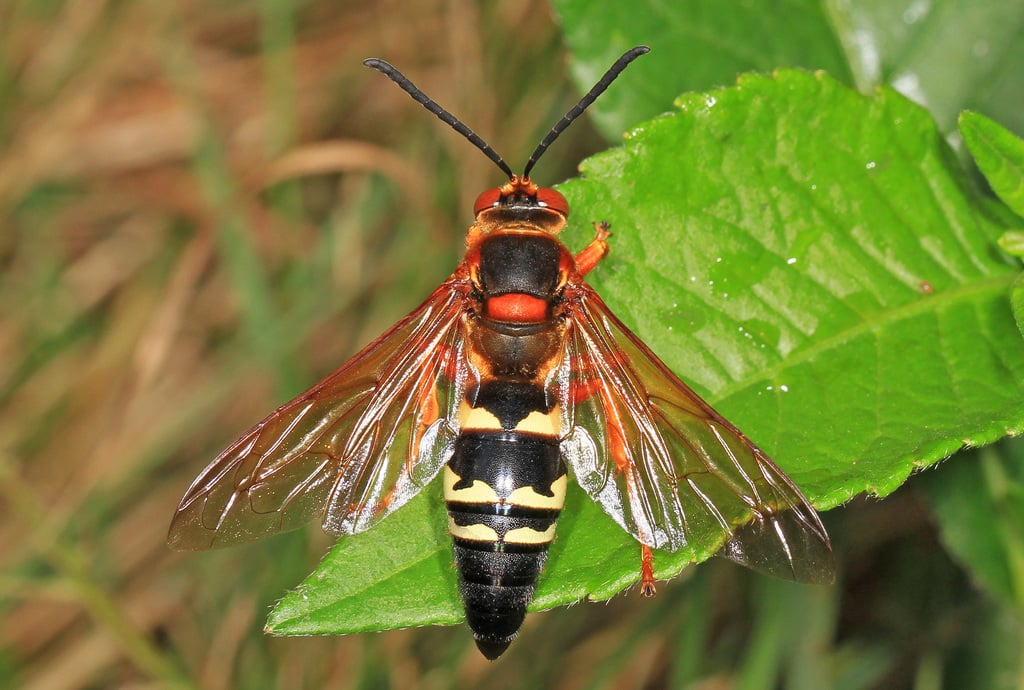
An eastern cicada killer is conspicuously large, with pale yellow abdominal markings and reddish wings. Females carry cicadas to individual soil burrows as food for their young. Many burrows may occur together, but this does not make them one social colony. Males patrol nesting areas and cannot sting; females can sting, so observe without handling them.
Lookalikes: European hornets are also large but have different reddish-brown and yellow patterns. Size alone cannot identify a wasp, especially in a close-up photograph.
Where to look: Individual burrows in sunny, well-drained soil. Adult activity: Summer.
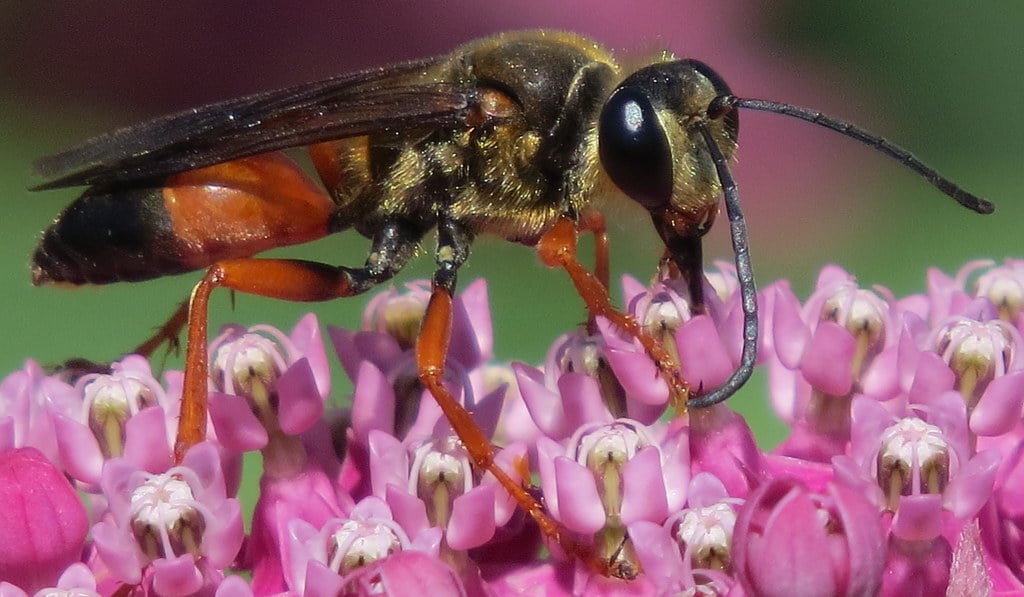
Look for the golden hairs on the head and thorax, followed by an abdomen that is orange-red toward the front and black at the tip. Great golden digger wasps visit flowers for nectar and provision soil nests with insects such as katydids and crickets. Several females can nest near one another while keeping separate burrows.
Lookalikes: Other digger wasps can have orange abdominal areas. Compare the head and thorax hairs as well as the two-part abdominal color pattern.
Where to look: Individual soil burrows in open ground. Adult activity: Summer.
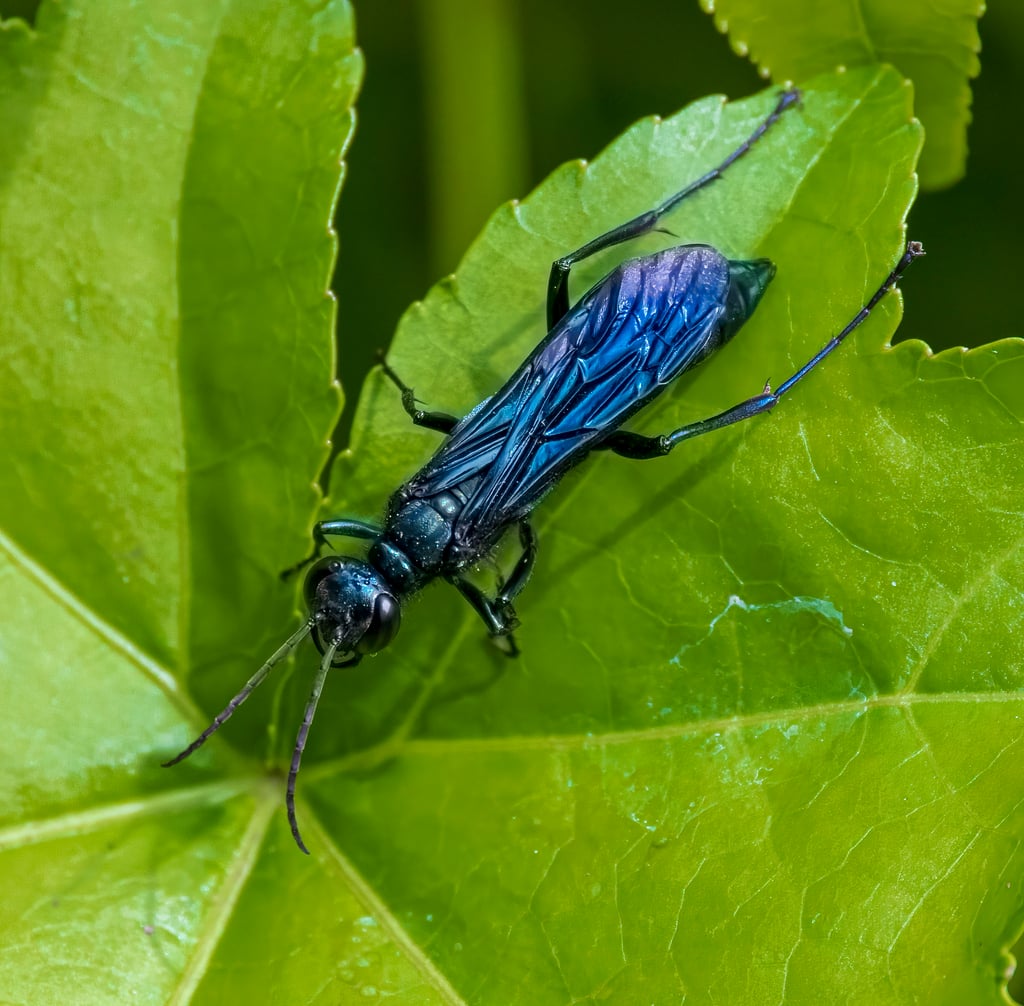
Blue mud daubers have a metallic blue-black body and a long, very thin waist. The photographed species is Chalybion californicum. These solitary hunting wasps provision nest cells with spiders. An insect beside an old mud nest may be using it, inspecting it or merely passing, so the nest should support the body comparison rather than replace it.
Lookalikes: Other Chalybion species and dark thread-waisted wasps can resemble this example. A shiny blue body alone is not enough to confirm the species.
Where to look: Mud nesting sites around sheltered structures. Adult activity: Warm months.
Compare the build and antennae. Paper wasps are slender and long-legged; yellowjackets are more compact. Mostly orange antennae support European paper wasp in this chart. If the insect is moving too quickly to see those details, keep the identification broad.
Does a hole in the ground mean yellowjackets?
No. Cicada killers and digger wasps also nest in soil, and some bees do too. A busy stream using one opening can suggest a social colony; separate holes with one or two occupants can suggest solitary nesters. Watch from a safe distance and do not test a nest by disturbing it.
Are hornets wasps?
Yes. Hornets are wasps. The bald-faced hornet is commonly called a hornet but belongs to the aerial yellowjackets. Common names are useful labels, though they do not always follow the taxonomic grouping.
Can a photograph show whether a wasp is safe to approach?
No. This chart identifies visible features and broad nesting habits. It cannot predict an individual insect's response. Keep away from active nests and do not handle a wasp to check its sex or markings. If a nest affects a doorway or play area, seek local extension or qualified pest-management advice.