
To identify a large eastern-US moth, compare its wing shape, eyespots and the arrangement of colored patches. Green wings with long tails point toward a luna moth; tan wings with large hindwing eyespots point toward a polyphemus moth. White wings with black rings suggest a giant leopard moth.
These six adult moths occur in the eastern United States, including the Mid-Atlantic. They are recognizable examples, not a complete list of local moths or a guide to every small brown species. The chart compares adults; caterpillars need their own identification.
Moth photo identification chart
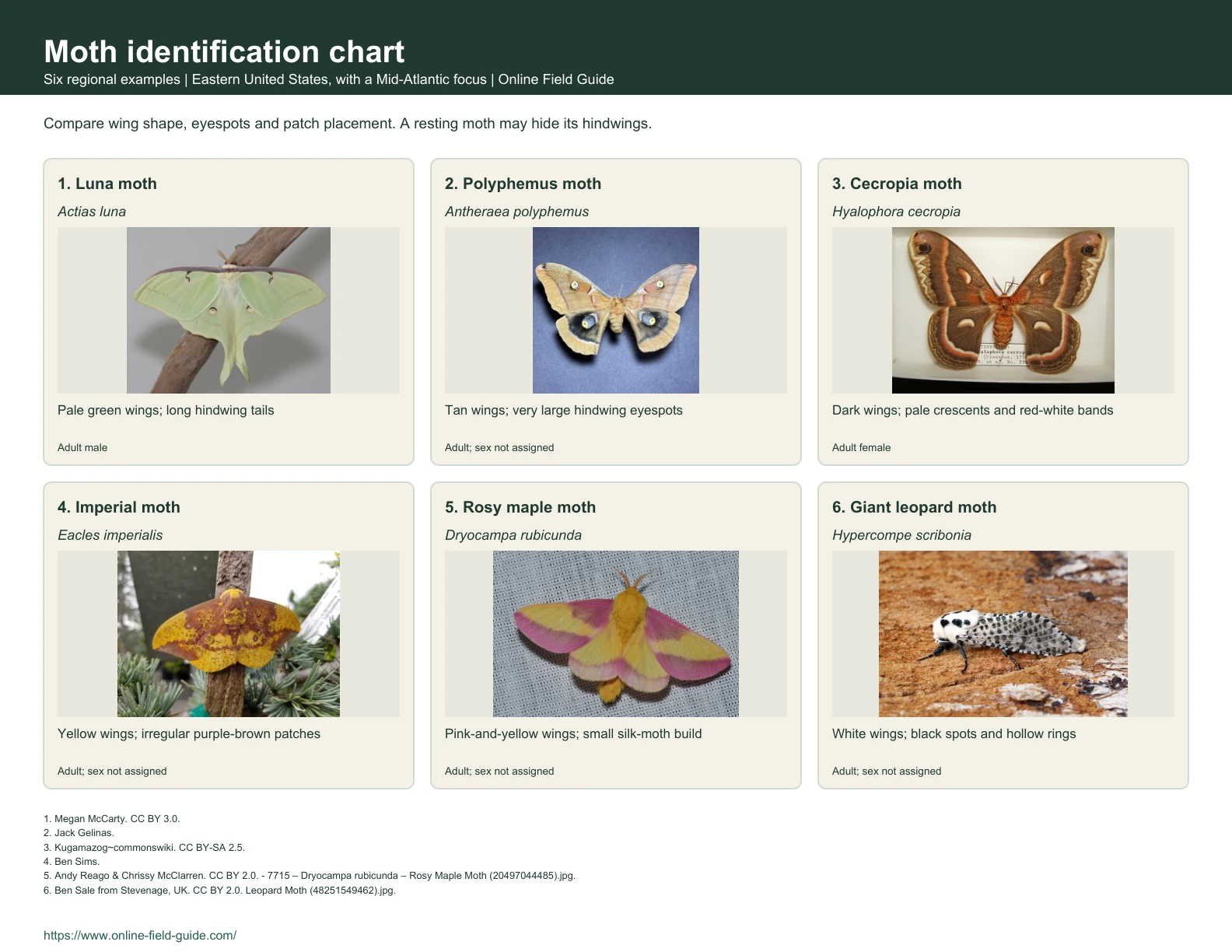
Moth identification at a glance
The season column gives a broad adult flight period. Timing and the number of broods change with latitude and weather. Host plants refer to caterpillar food. On a small screen, scroll the table sideways.
| Moth or group | First visual clue | Habitat or nesting clue | Adult activity | Identification level |
|---|---|---|---|---|
| Luna moth Actias luna | Pale green wings; long hindwing tails | Woodlands; several hardwood hosts | Spring and summer | Species candidate |
| Polyphemus moth Antheraea polyphemus | Tan wings; very large hindwing eyespots | Woodlands and edges; several tree hosts | Spring and summer | Species candidate |
| Cecropia moth Hyalophora cecropia | Dark wings; pale crescents and red-white bands | Woodlands and wooded gardens; several tree hosts | Late spring and early summer | Species candidate |
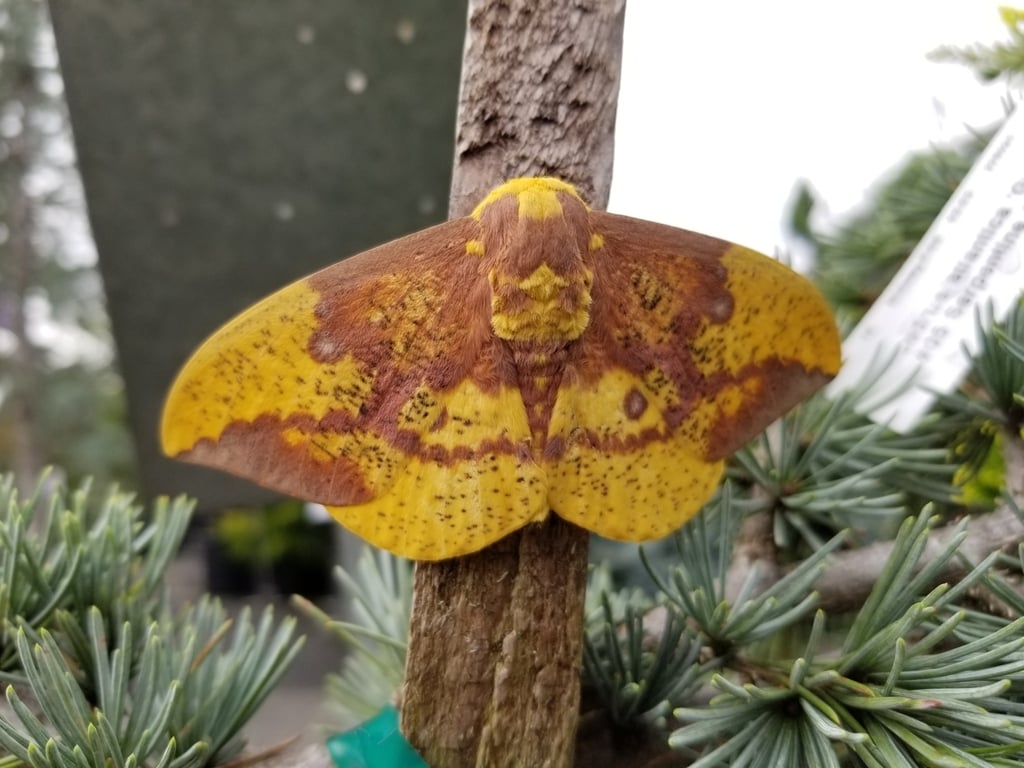
| Imperial moth Eacles imperialis | Yellow wings; irregular purple-brown patches | Woodlands; several tree hosts | Mainly summer | Species candidate |
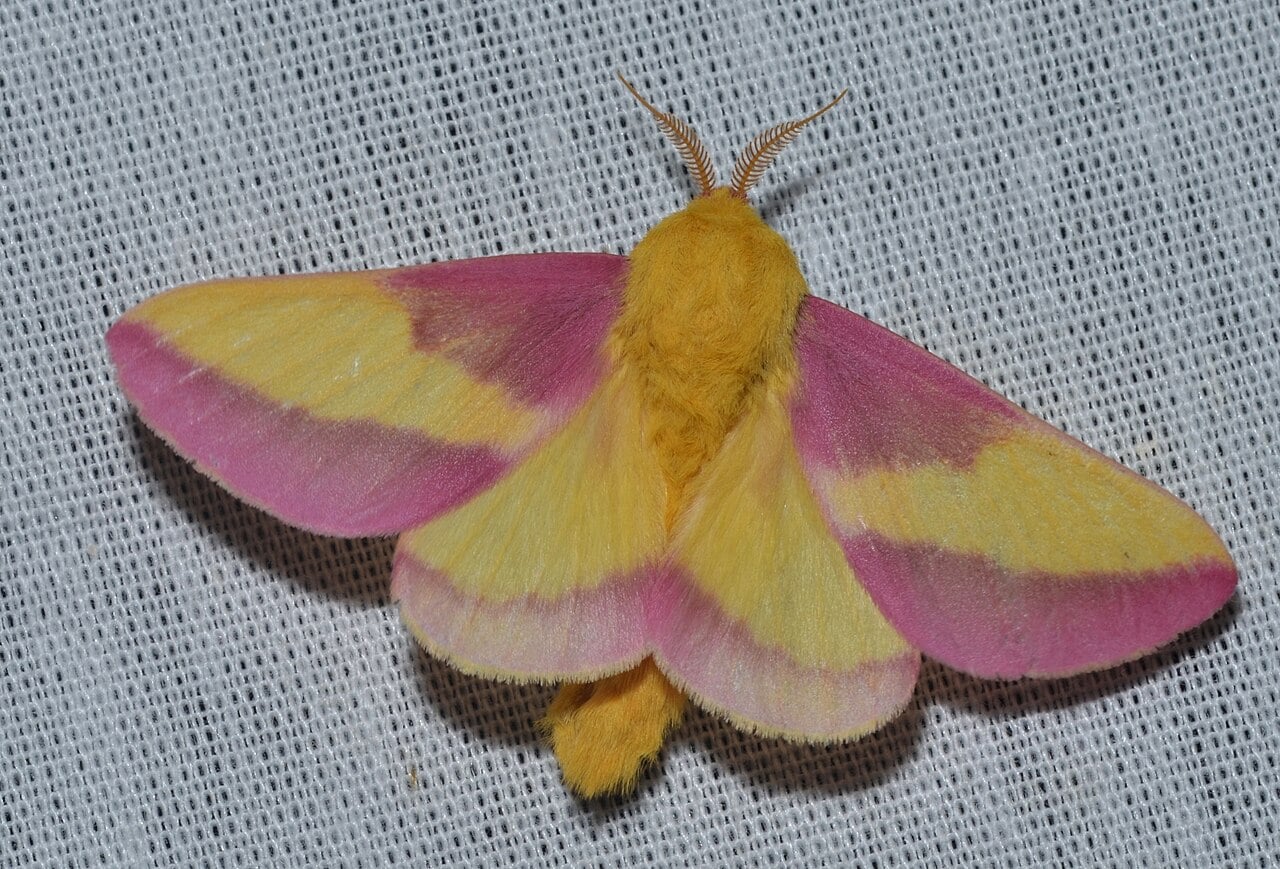
| Rosy maple moth Dryocampa rubicunda | Pink-and-yellow wings; small silk-moth build | Deciduous woodland; maple hosts | Late spring and summer | Species candidate |
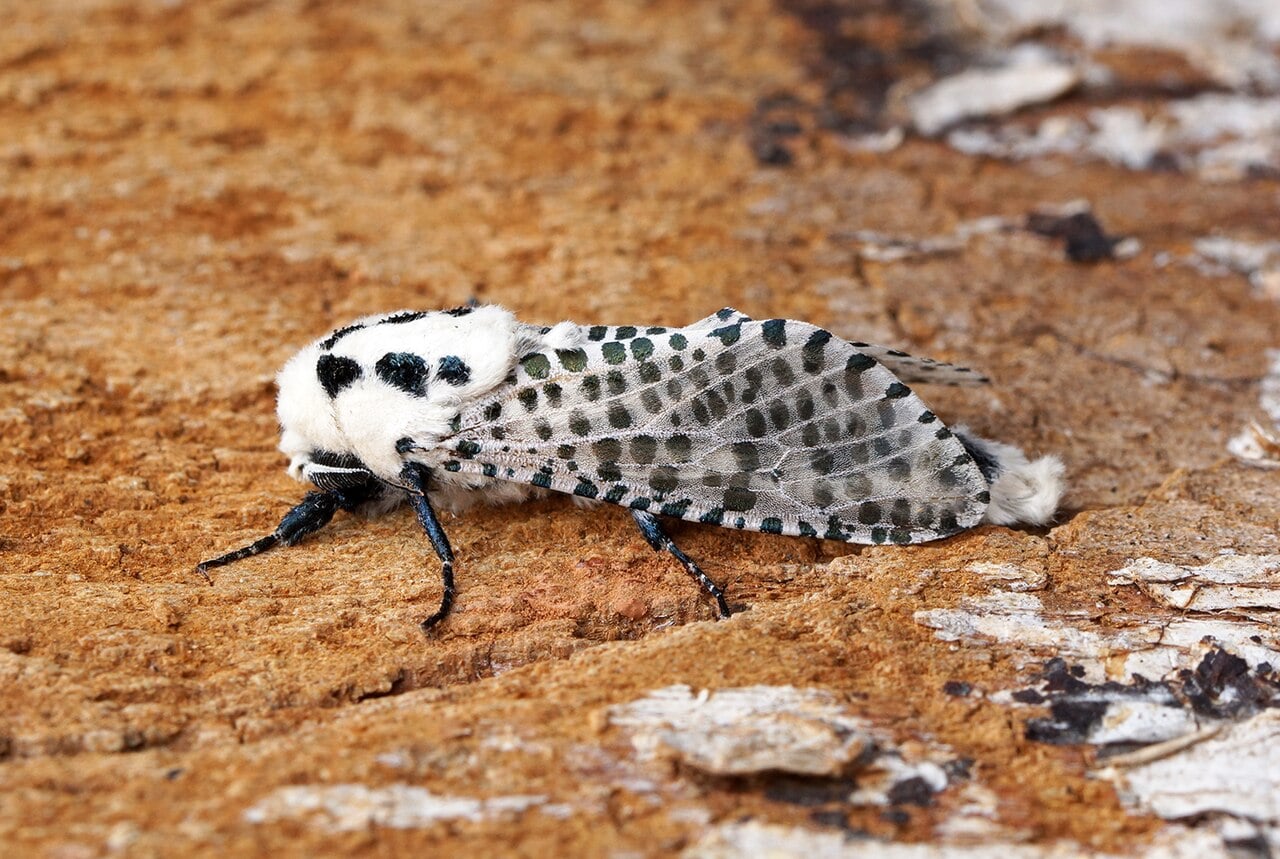
| Giant leopard moth Hypercompe scribonia | White wings; black spots and hollow rings | Woodland edges, fields and gardens | Late spring and summer | Species candidate |
Photo cards: six moths
Open a photograph for a larger view. Read the photo label before comparing the markings.
Species candidate
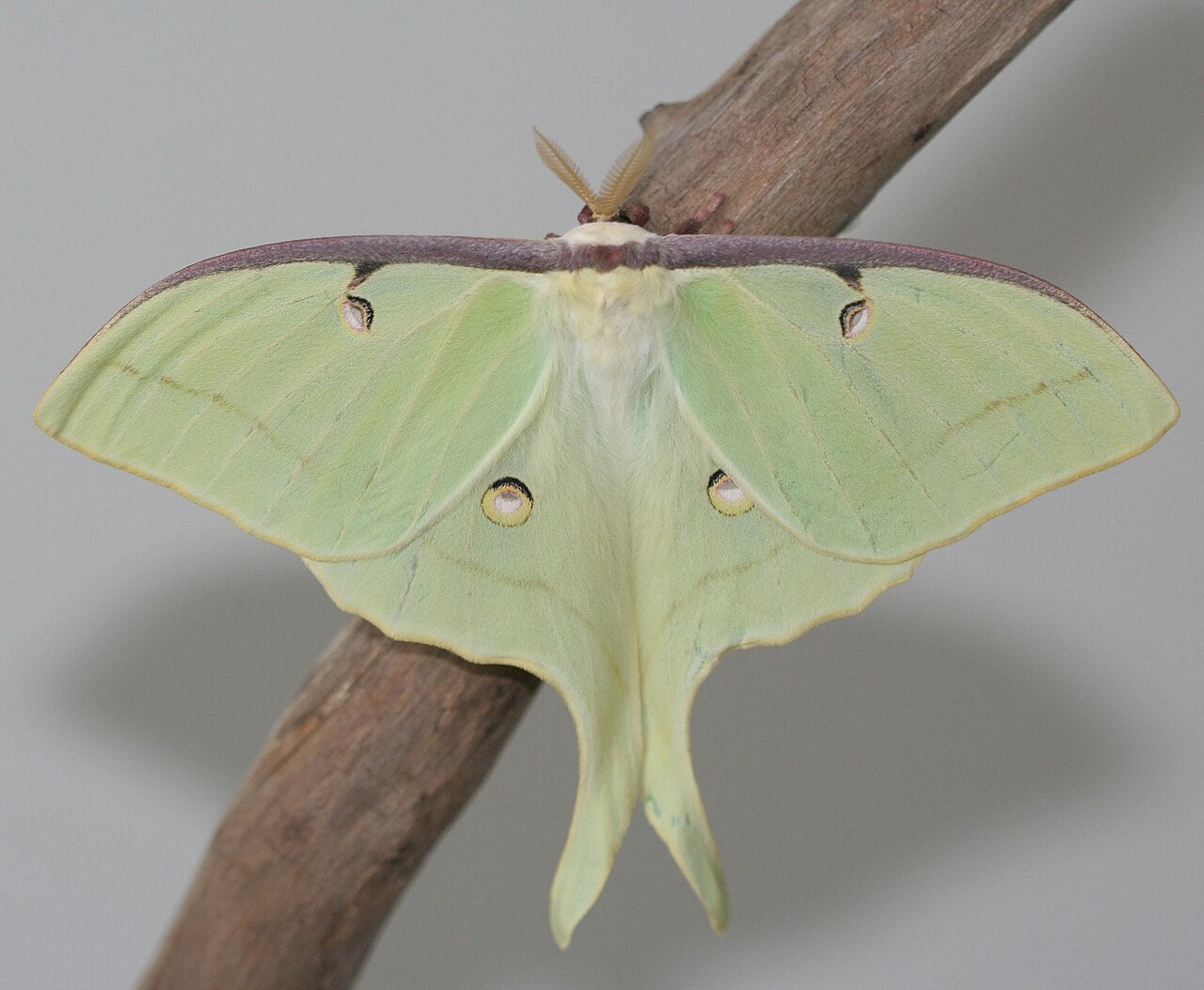
1. Luna moth
Actias luna
- Pale green wings with a small eyespot on each
- Long, tapering hindwing tails
A luna moth combines pale green wings with long tails on the hindwings. Each wing has an eyespot, although a resting pose may cover some of them. The dark leading edge of the forewing is another useful detail. Male antennae are especially feathery. Torn tails do not exclude a luna moth, so check the rest of the wing outline and pattern.
Lookalikes: Other pale moths lack this full combination. In this regional chart, tails plus green wings are a much better clue than green color alone.
Where to look: Woodlands; several hardwood hosts. Adult activity: Spring and summer.
Male Luna Moth, Megan McCarty141.jpg by Megan McCarty. CC BY 3.0.
Species candidate
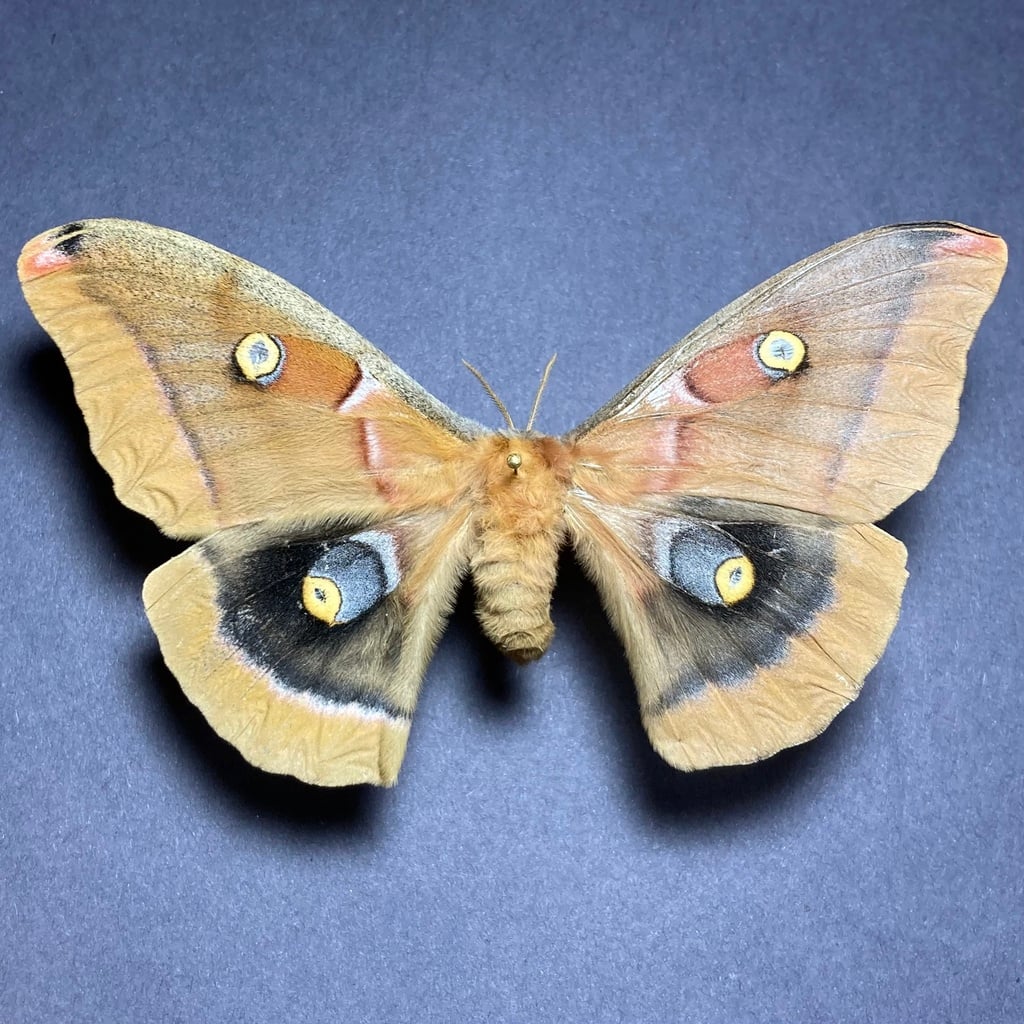
2. Polyphemus moth
Antheraea polyphemus
- Large dark eyespot on each hindwing
- Small forewing eyespots; brown or tan background
The large hindwing eyespots are the first feature to find. A polyphemus moth can look like an ordinary brown moth with its hindwings covered, then reveal a much stronger pattern when it spreads them. Ground color ranges from tan to reddish brown. The forewing eyespots are much smaller than the hindwing ones, and the wings have no luna-style tails.
Lookalikes: Other silk moths have eyespots. Compare their size and position, the surrounding bands and the absence of long tails.
Where to look: Woodlands and edges; several tree hosts. Adult activity: Spring and summer.
Antheraea polyphemus – iNaturalist photo 328610492 by Jack Gelinas.
Species candidate
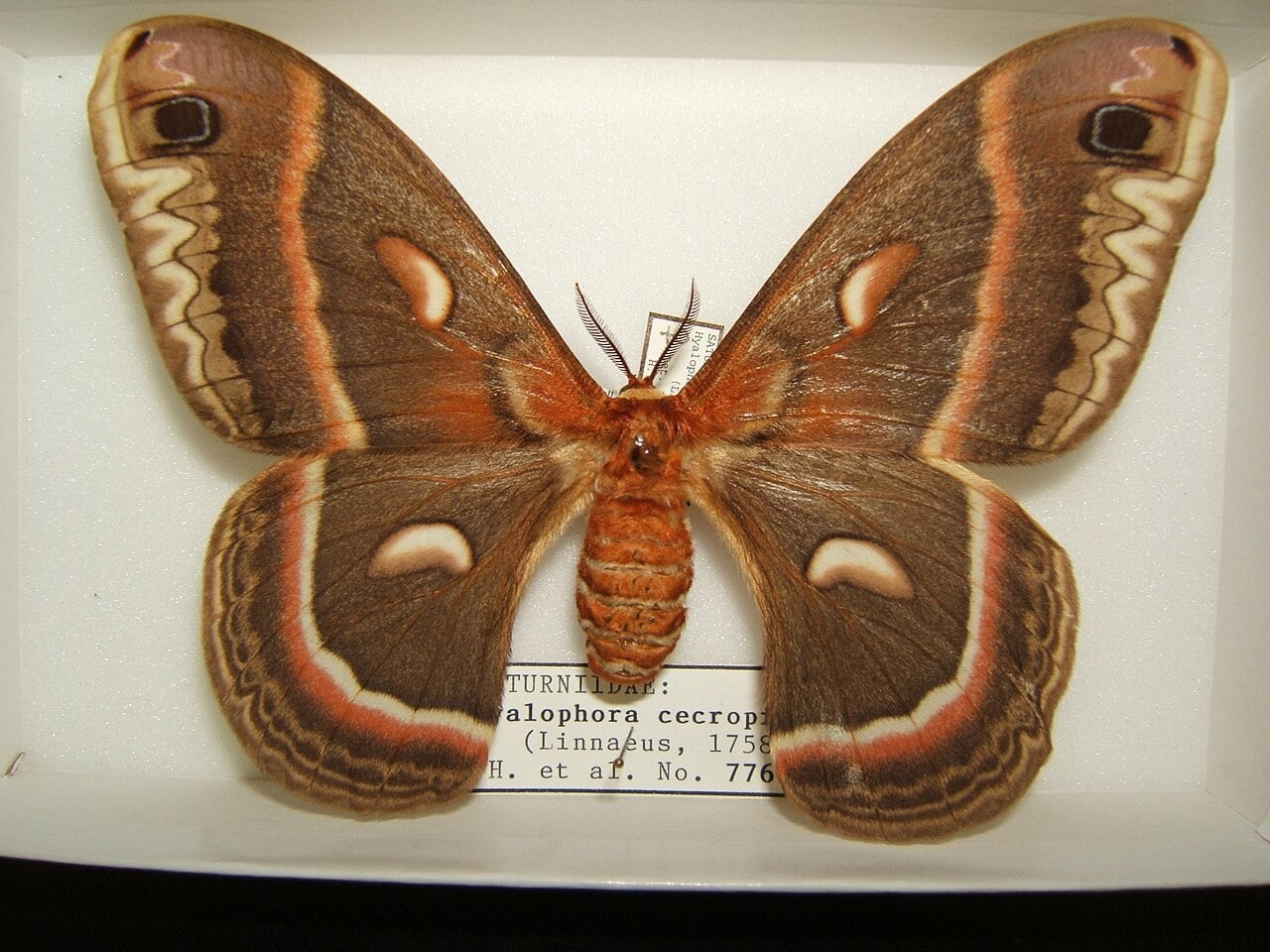
3. Cecropia moth
Hyalophora cecropia
- Pale crescent near the middle of each wing
- Red and white bands; red body with white markings
Cecropia moths have dark gray-brown wings with pale crescent-shaped marks. Red and white bands run across the outer part of the wings, and the stout body has red and white markings. Use the crescents and band arrangement together: the overall impression of a large brown moth is too vague. The pictured female shows the upper-wing pattern.
Lookalikes: Promethea and other silk moths can share dark colors or pale wing marks. Check the complete band pattern rather than using wingspan alone.
Where to look: Woodlands and wooded gardens; several tree hosts. Adult activity: Late spring and early summer.
Hyalophora cecropia adult female sjh.JPG by Kugamazog~commonswiki. CC BY-SA 2.5.
Species candidate
4. Imperial moth
Eacles imperialis
- Yellow background with purple-brown blotches
- Small dark marks within the mottled pattern
The imperial moth has yellow wings scattered with purple-brown or rusty patches and speckles. The amount of dark color varies, so two individuals may look quite different. Follow the distribution of markings across both forewings and hindwings. This is a large, broad-winged moth; a tiny pink-and-yellow moth should be compared with the rosy maple entry instead.
Lookalikes: Color alone can suggest a rosy maple moth. Imperial moths have a mottled pattern rather than the usual rosy maple pattern of clearer pink and yellow areas.
Where to look: Woodlands; several tree hosts. Adult activity: Mainly summer.
Eacles imperialis – iNaturalist photo 218186762 by Ben Sims.
Species candidate
5. Rosy maple moth
Dryocampa rubicunda
- Typical form has pink and yellow wing areas
- Furry yellow body; color can be much paler
A typical rosy maple moth has pink and yellow wings and a fluffy yellow body. It is smaller than the large silk moths elsewhere in this chart. Some individuals are pale or have reduced pink markings, so the brightest color form is not a rule for every moth. Maples are the main caterpillar hosts, and adults are often noticed resting near wooded homes.
Lookalikes: Pink prominent moths can share the same colors. Compare wing shape and patch placement; a pale example may need a regional moth guide.
Where to look: Deciduous woodland; maple hosts. Adult activity: Late spring and summer.
– 7715 – Dryocampa rubicunda – Rosy Maple Moth (20497044485).jpg by Andy Reago & Chrissy McClarren. CC BY 2.0.
Species candidate
6. Giant leopard moth
Hypercompe scribonia
- White forewings marked with black spots
- Many spots have white centers, making rings
The white forewings carry numerous black marks, many shaped like rings with pale centers. Some markings can reflect blue in the light. The moth usually rests with its wings folded over the abdomen, hiding the colorful body beneath. Compare the size and shape of the black marks across both wings; worn outer wings may become partly translucent.
Lookalikes: Other white tiger moths can have black dots. Ring-shaped marks support a giant leopard moth candidate, but a blurred dotted moth should stay at a broader level.
Where to look: Woodland edges, fields and gardens. Adult activity: Late spring and summer.
Leopard Moth (48251549462).jpg by Ben Sale from Stevenage, UK. CC BY 2.0.
What is the green moth with long tails?
In the eastern United States, pale green wings and long hindwing tails strongly suggest a luna moth. Check for an eyespot on each wing and the darker leading edge of the forewing. A damaged tail can be short or missing.
Why are the eyespots missing in my photograph?
A moth can cover its hindwings with its forewings while resting. This hides the largest eyespots of a polyphemus moth. Wait for a natural change of pose; do not pull the wings apart. A side view and a photograph from above may show different parts of the pattern.
How to record a moth sighting
Photograph the moth where it rests, including the wing edges, body and antennae. Write down the date, location and nearby vegetation. A moth on a wall may have arrived from surrounding woodland, so the wall itself tells you little about its caterpillar host.
Does this chart identify moth caterpillars?
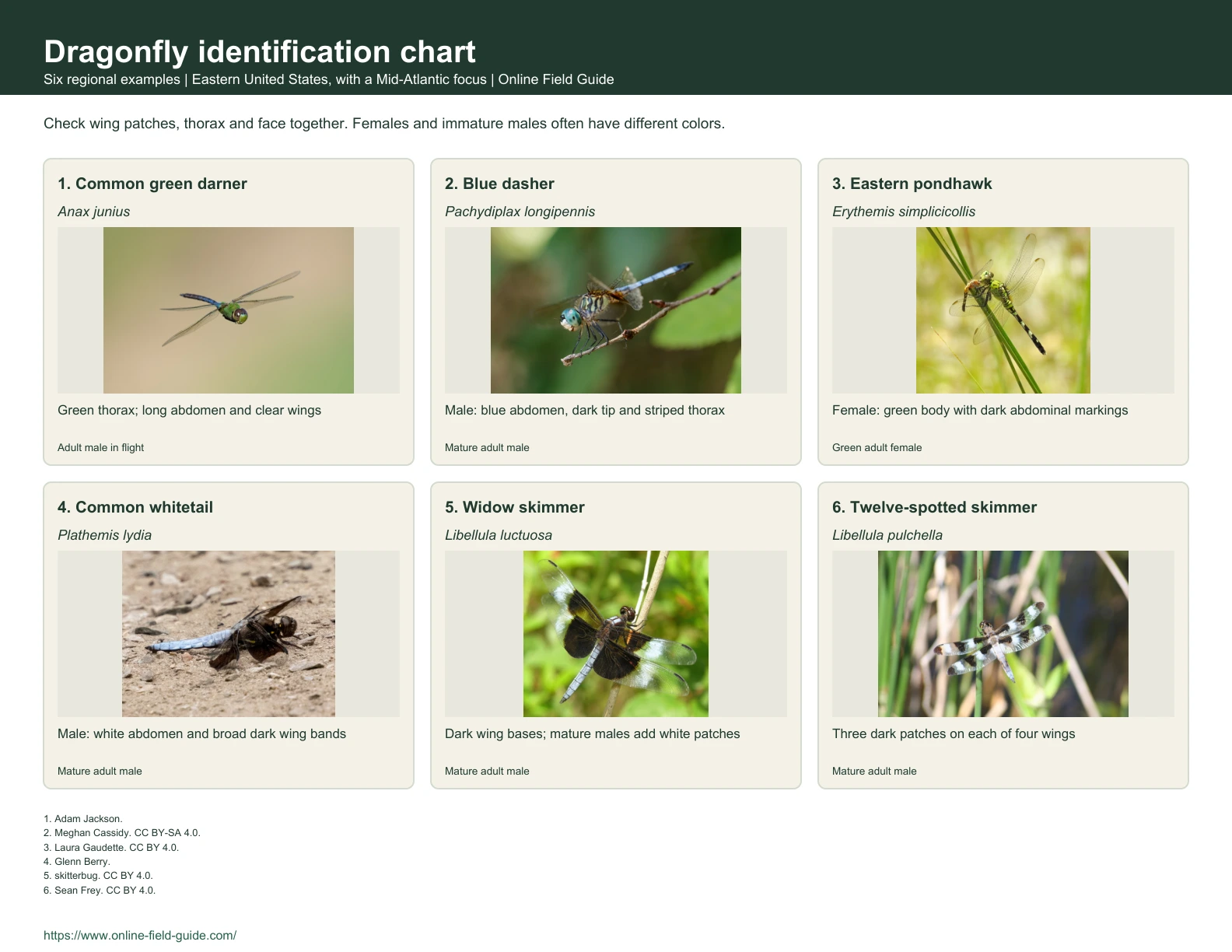
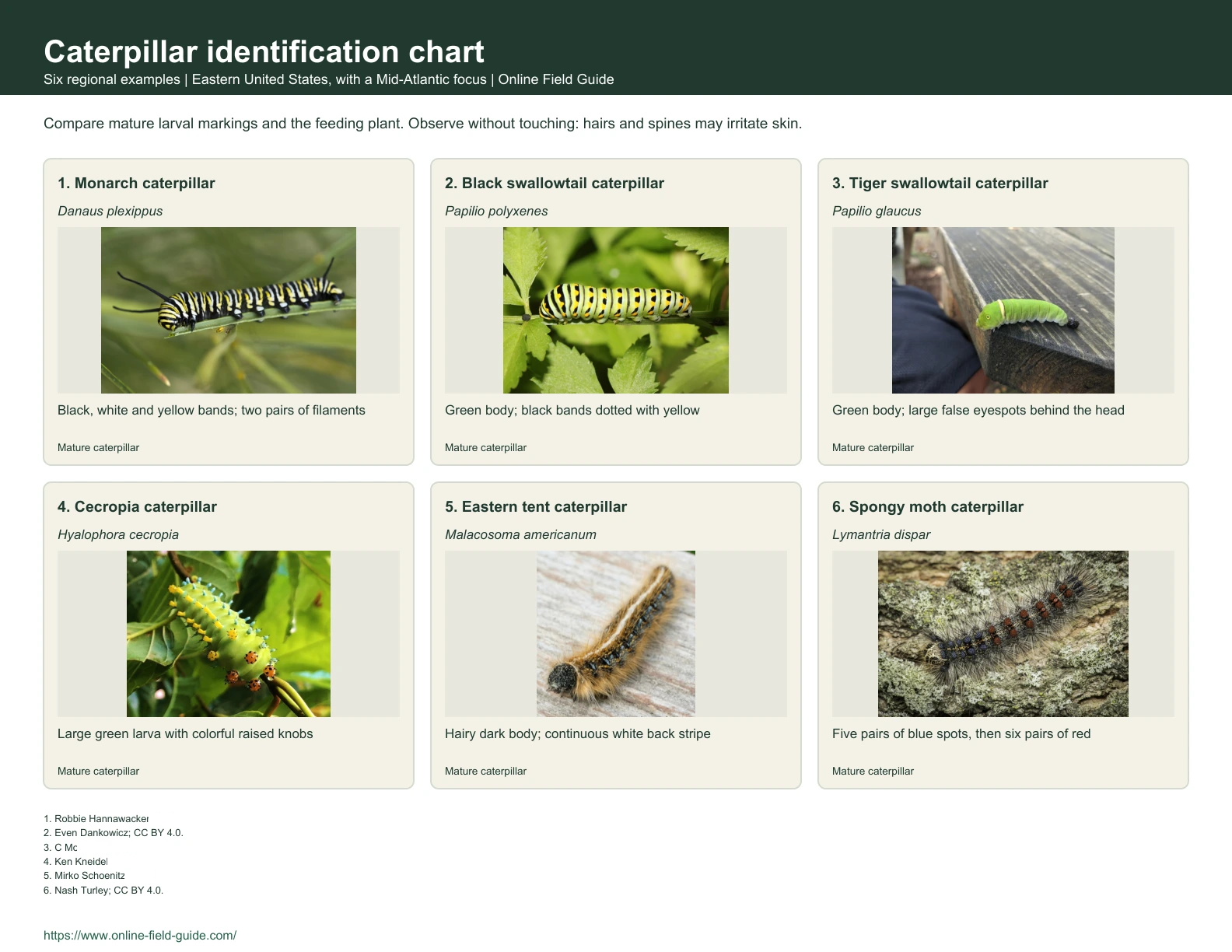
No. Caterpillars often look nothing like the adults, and their appearance can change between growth stages. Use a caterpillar guide and record the plant being eaten. Do not assign an adult name merely because a caterpillar is beside a plant listed in the table.
For more regional detail, see the Maryland DNR advice on gardens that support moths.


.jpg)
.jpg)