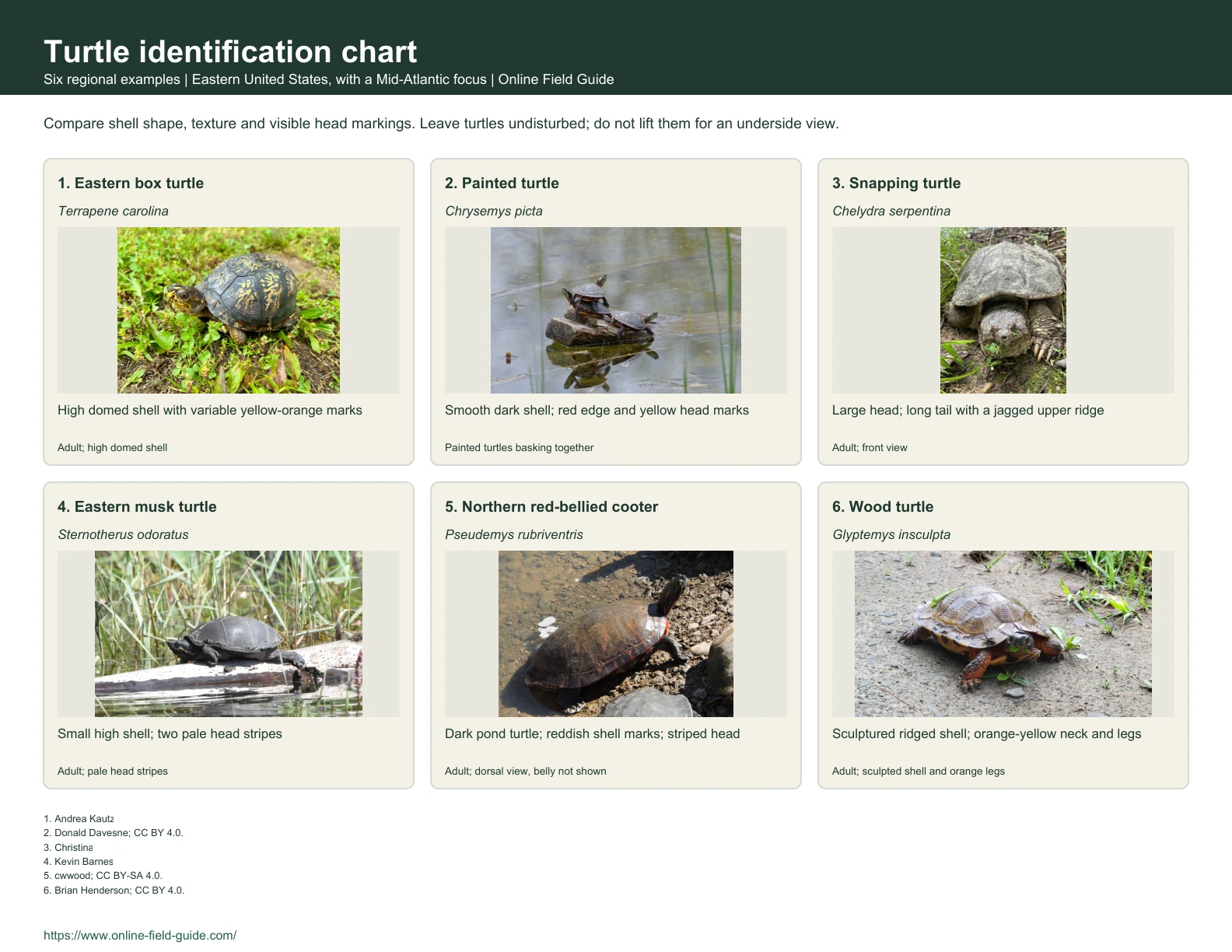
Identify an eastern-US butterfly by comparing its wing pattern, outline and markings on both sides. Orange wings with black veins suggest a monarch or viceroy; yellow wings with dark stripes suggest a tiger swallowtail. A second view often separates lookalikes.
This chart compares six butterflies seen in gardens, fields and woodland edges in the eastern United States, with a Mid-Atlantic focus. It covers adults, not caterpillars. Maryland, Pennsylvania, Virginia, Delaware and New Jersey have many more species than the six shown here.
Select the chart to open a larger view. Original photo sources, creators and licenses appear in the cards below and in the printable PDF.
Butterfly identification at a glance
Activity periods are broad regional clues. The caterpillar host plant can help explain a sighting, but an adult may visit a flower far from its host plant. On a small screen, scroll the table sideways.
Eastern-US butterfly comparison: appearance, habitat and season
Dark wings; orange-red bands and white forewing spots
Woodland edges and gardens; nettle-family hosts
Spring through fall
Species candidate
Photo cards: six butterflies
Open a photograph for a larger view. Read the photo label before comparing the markings.
Adult; sex not assigned
Species candidate
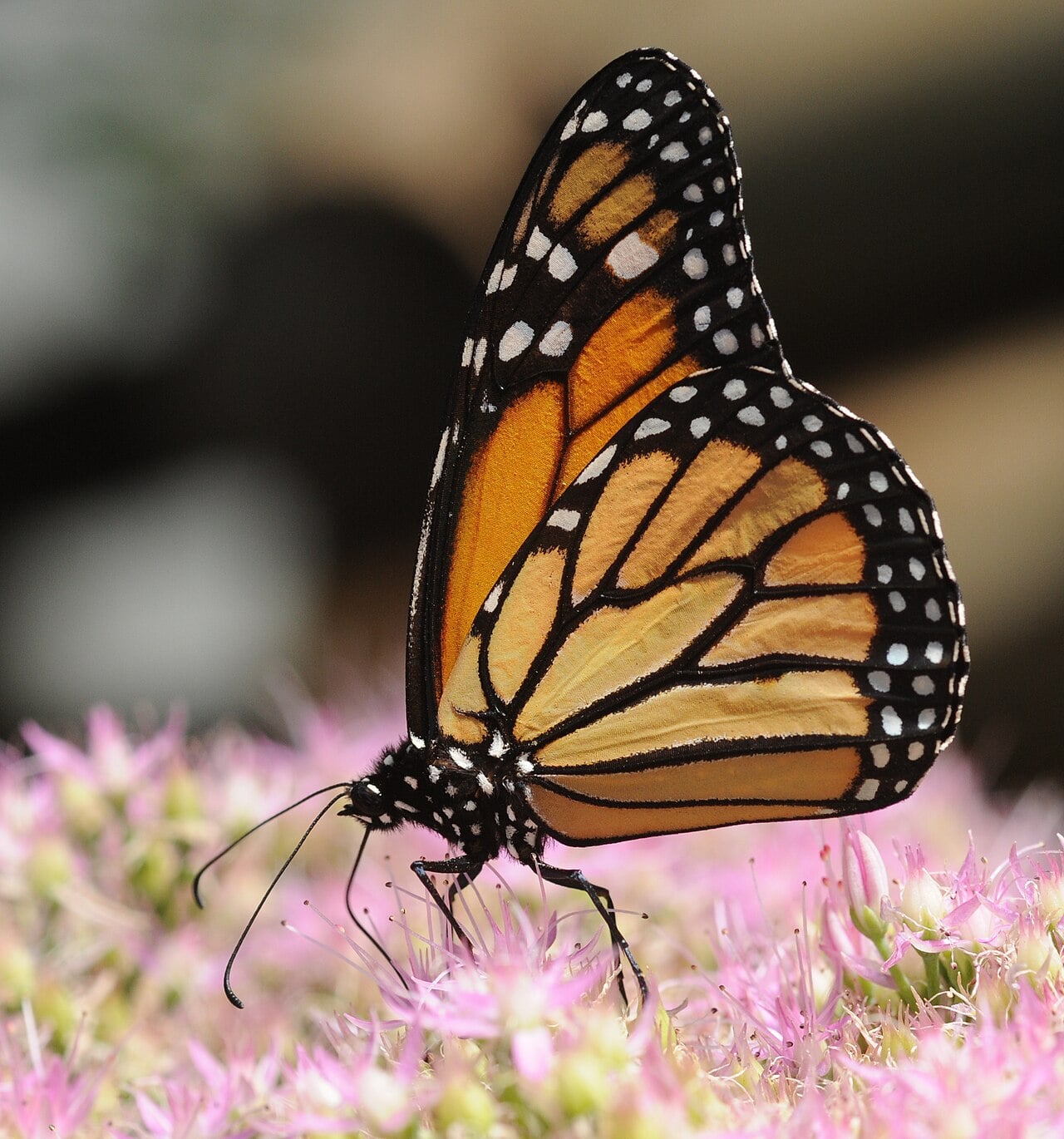
1. Monarch
Danaus plexippus
Orange upper wings crossed by black veins
Black wing margins with small white spots
Look at the veins running through the orange wings, then the white dots around the black edges. A monarch has no viceroy-style black line crossing the middle of each hindwing. A closed-wing photograph still shows much of the vein pattern, although the underside is paler. Caterpillars feed on milkweeds; adult monarchs visit many kinds of flowers.
Lookalikes: Viceroys have an extra black cross-line on each hindwing. Check that line rather than relying on the apparent size of a distant butterfly.
Where to look: Open areas and gardens; milkweed hosts. Adult activity: Warm months; fall migration.
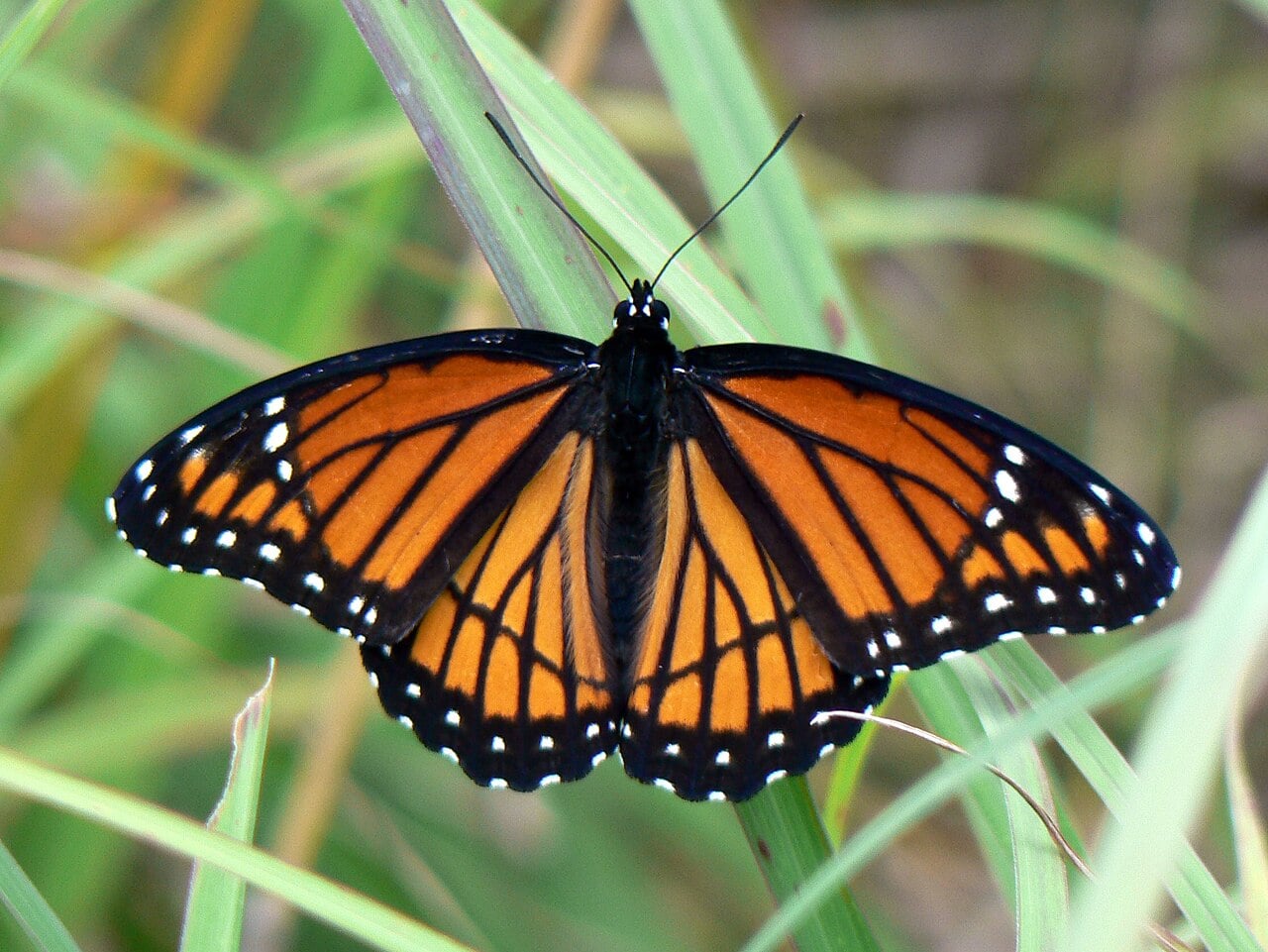
A viceroy can look almost identical to a monarch until the hindwing is visible. Find the thin black line that cuts across the other veins, roughly following the outer edge of the wing. This is the most useful first comparison in the chart. Viceroys often occur around wet ground and willows, but habitat alone cannot settle the identification.
Lookalikes: Monarchs lack that hindwing cross-line. A photograph that hides the lower wings may leave the identification unresolved.
Where to look: Wetland edges; willow and poplar hosts. Adult activity: Late spring through fall.
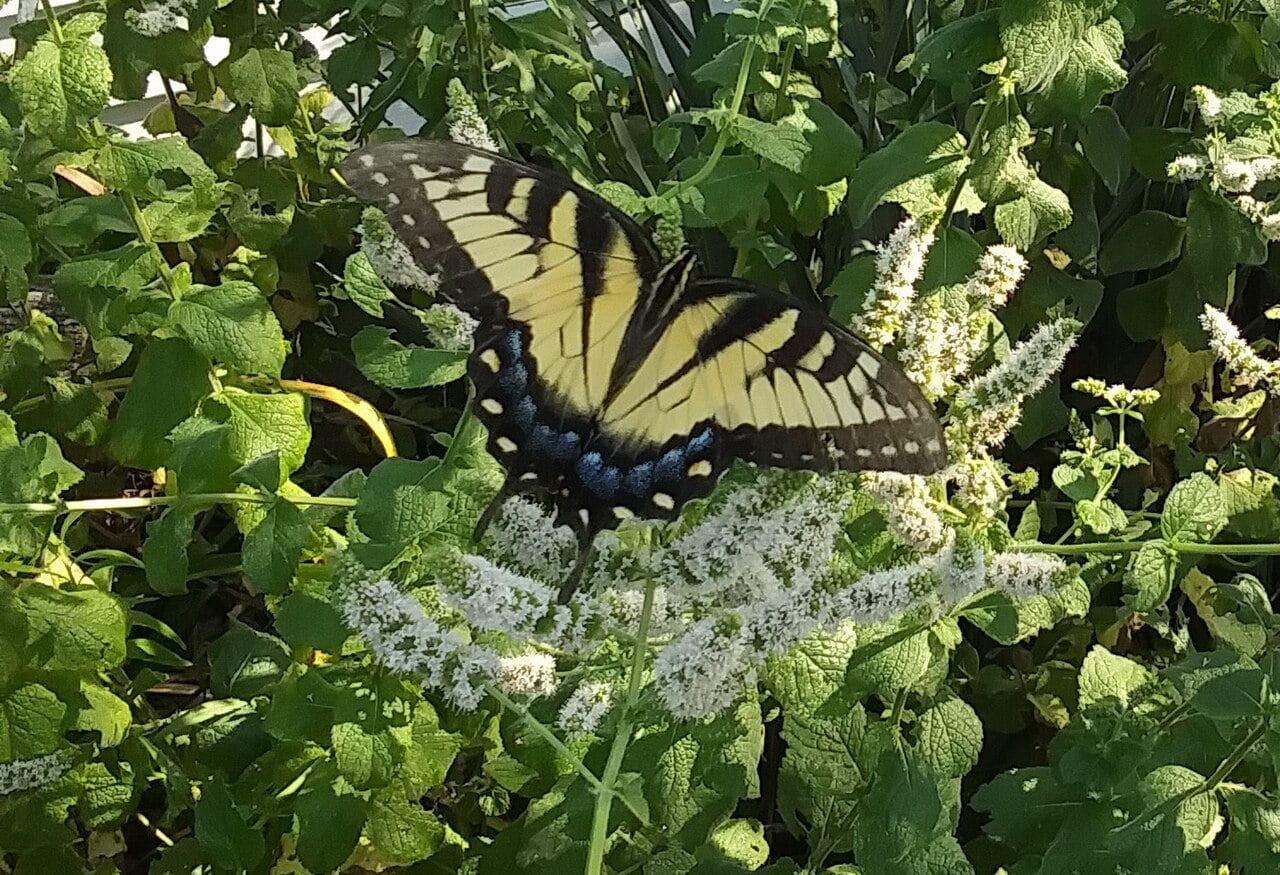
The yellow form has black stripes across its forewings and a tail on each hindwing. Some females are dark instead, so a black butterfly can still be a tiger swallowtail. Females usually show more blue on the upper hindwings. The familiar yellow pattern is a good starting point in the Mid-Atlantic, but tiger-swallowtail relatives need comparison farther north.
Lookalikes: Dark females resemble other black swallowtails. Canadian and Appalachian tiger swallowtails require closer attention to location and fine markings.
Where to look: Woodland edges and gardens; several tree hosts. Adult activity: Spring through early fall.
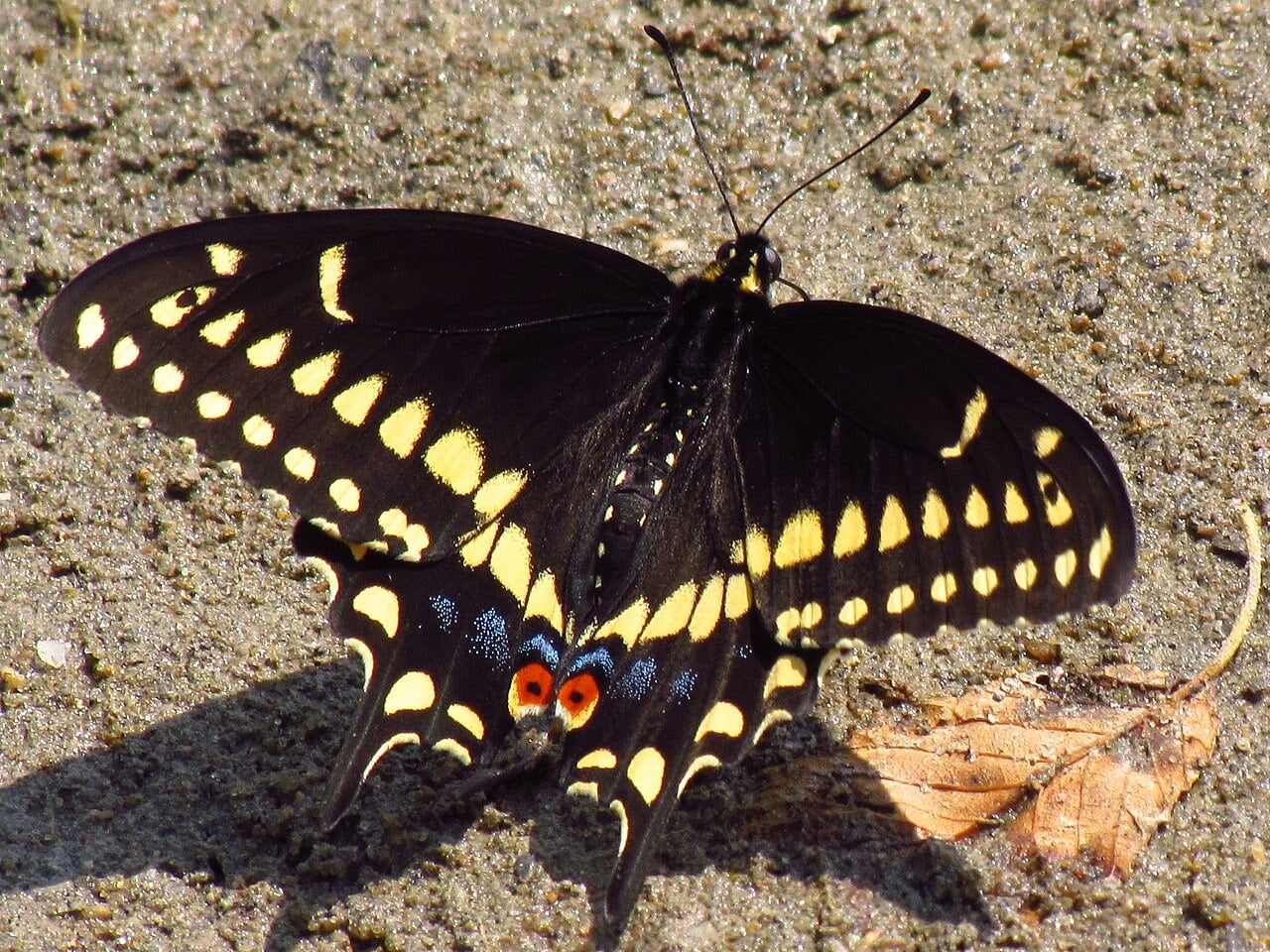
Start with the rows of pale yellow spots on the black wings. The yellow bands are generally stronger in males, while females show more blue on the hindwings. Below, the orange hindwing spots help distinguish black swallowtails from other dark swallowtails. Dill, parsley and fennel are familiar caterpillar hosts, but a butterfly feeding at another flower can be the same species.
Lookalikes: Pipevine, spicebush and dark female tiger swallowtails can look similar. Get the underside pattern as well as the upper wings before assigning a name.
Where to look: Open fields and gardens; carrot-family hosts. Adult activity: Spring through early fall.
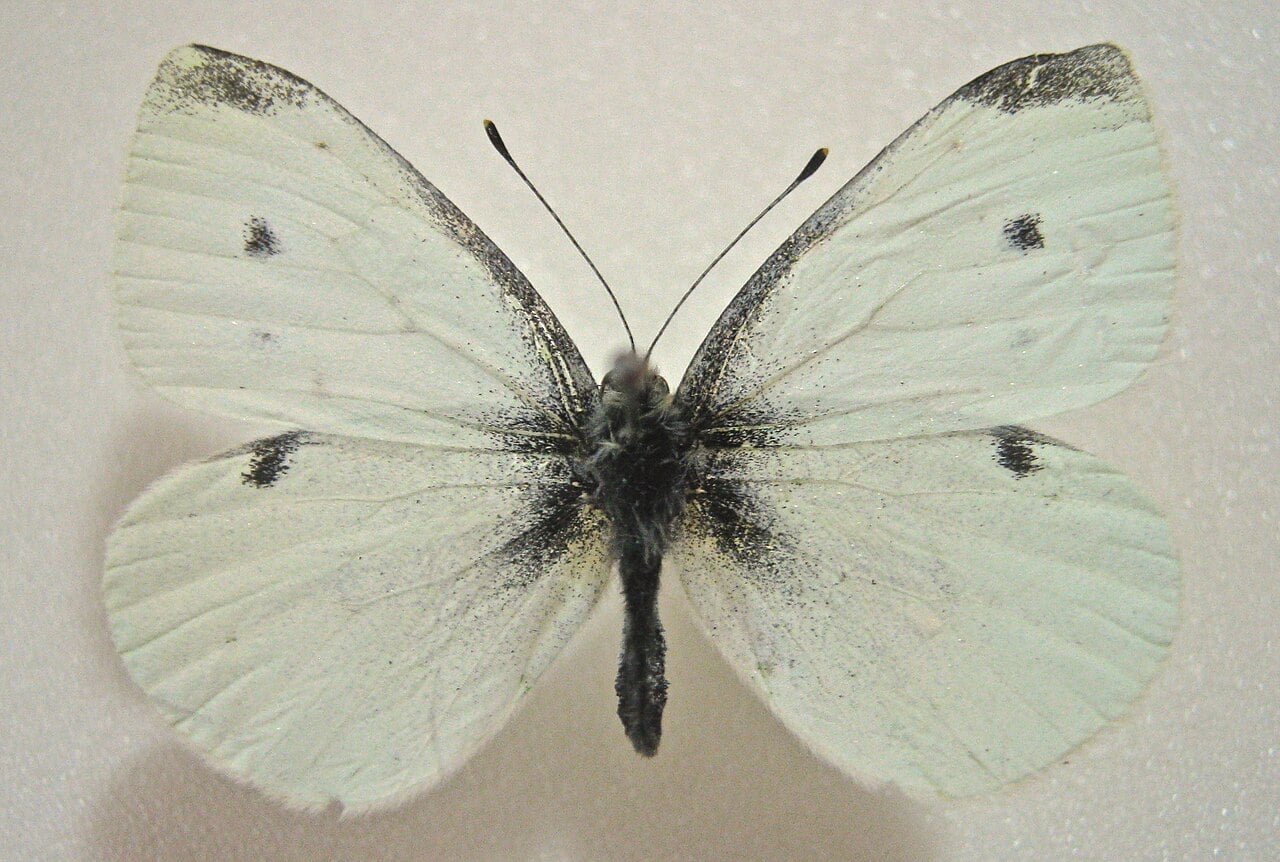
This small white butterfly often flies low through vegetable gardens and other open places. Check the dark tip of the forewing and the black spots on its upper surface. The underside is a softer yellowish white, and spring markings can be faint. The adults drink nectar; the green caterpillars feed on mustard-family plants, including cabbage and broccoli.
Lookalikes: Other whites can resemble it, especially from below. A faintly marked spring butterfly needs more than a quick impression of white wings.
Where to look: Gardens and open ground; mustard-family hosts. Adult activity: Spring through fall.
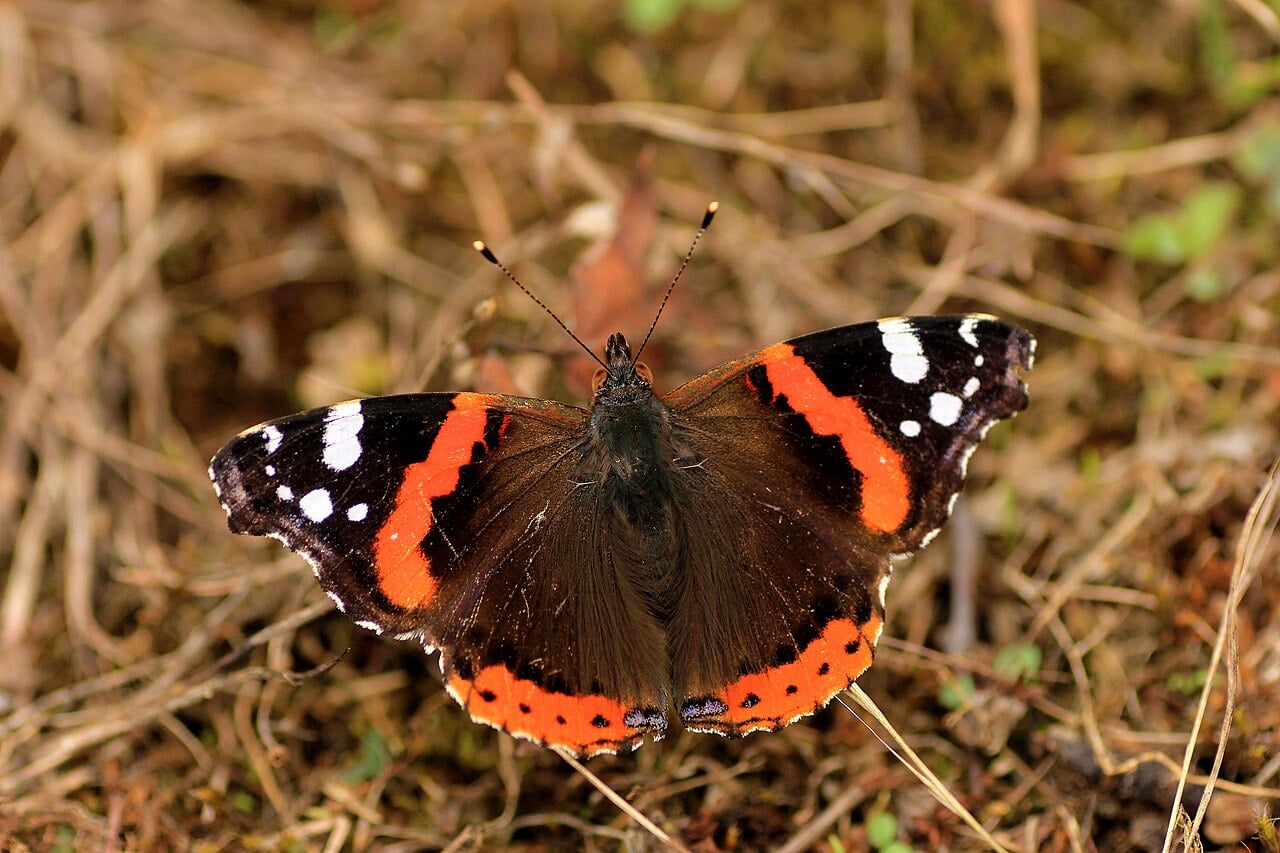
White spots near forewing tips; orange hindwing edge
With its wings open, a red admiral has a dark background crossed by bright orange-red forewing bands. White spots cluster near the forewing tips, and an orange band follows the hindwing edge. The underside of the hindwing is mottled brown, so a resting, closed-wing individual looks much less conspicuous. Compare both views if the butterfly opens its wings naturally.
Lookalikes: Painted ladies have more extensive orange areas and a different spot pattern. A dark underside alone can hide the red admiral's clearest markings.
Where to look: Woodland edges and gardens; nettle-family hosts. Adult activity: Spring through fall.
Look for the black line crossing each hindwing. A viceroy has it; a monarch does not. Wing damage or a leaf in front of the butterfly can hide the line, so keep a doubtful photograph labelled monarch/viceroy until you have a clearer view.
How to photograph a butterfly for identification
Take one photograph with the wings open if possible, then a side view with the wings closed. Include the whole wing outline and antennae. Record the county or nearest town, date and habitat. Use zoom and wait for the butterfly to settle rather than catching it or moving its wings.
Does a damaged tail rule out a swallowtail?
No. Hindwing tails can break off. Check the remaining outline, spot rows and underside markings. A missing tail is different from a species that naturally has none.
Can the same butterfly species have different colors?
Yes. Eastern tiger swallowtail females can be yellow or dark. Male and female black swallowtails differ in the strength of their yellow spots and blue scaling. Color differences should lead to a closer comparison of the pattern, rather than an automatic new species name.

_(3).jpg)

.jpg)