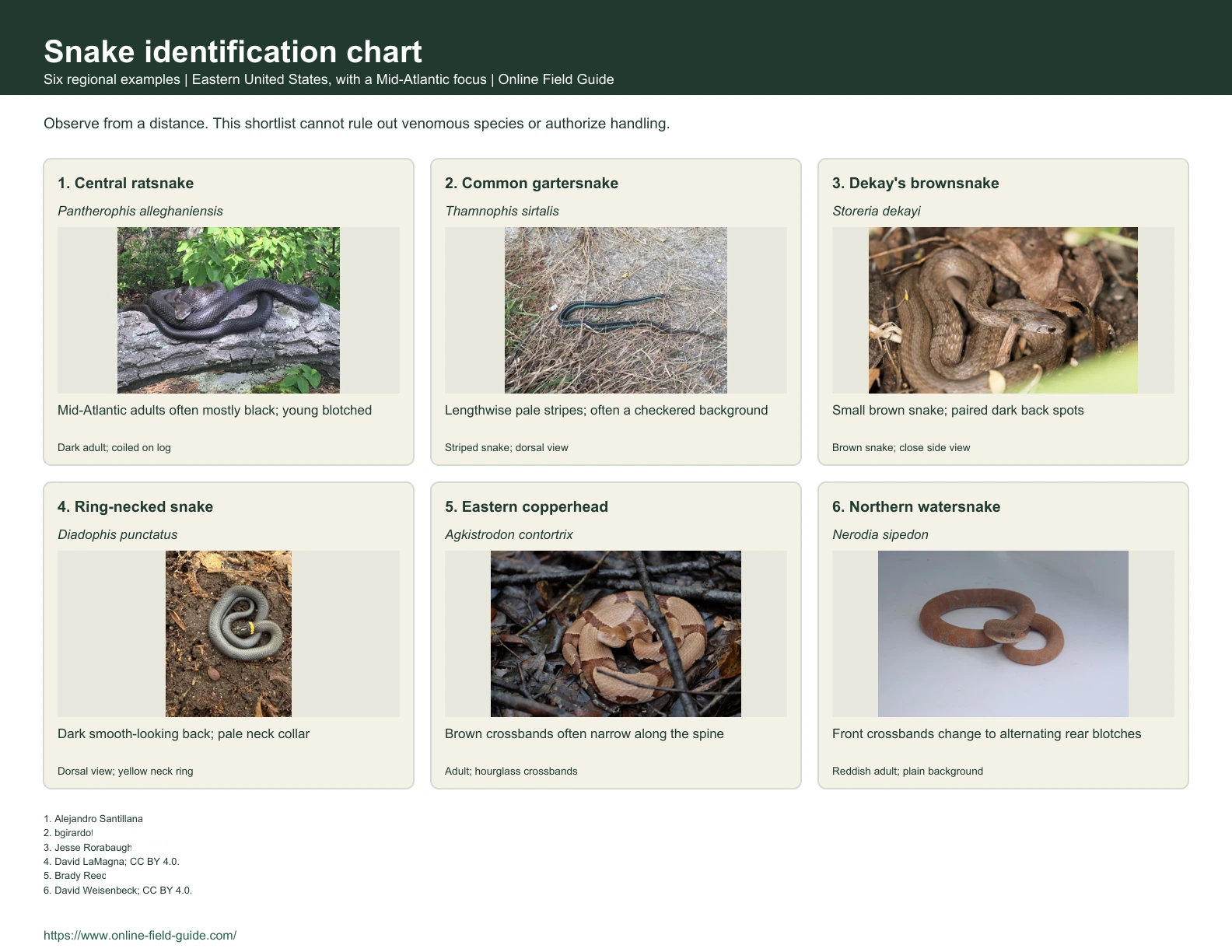
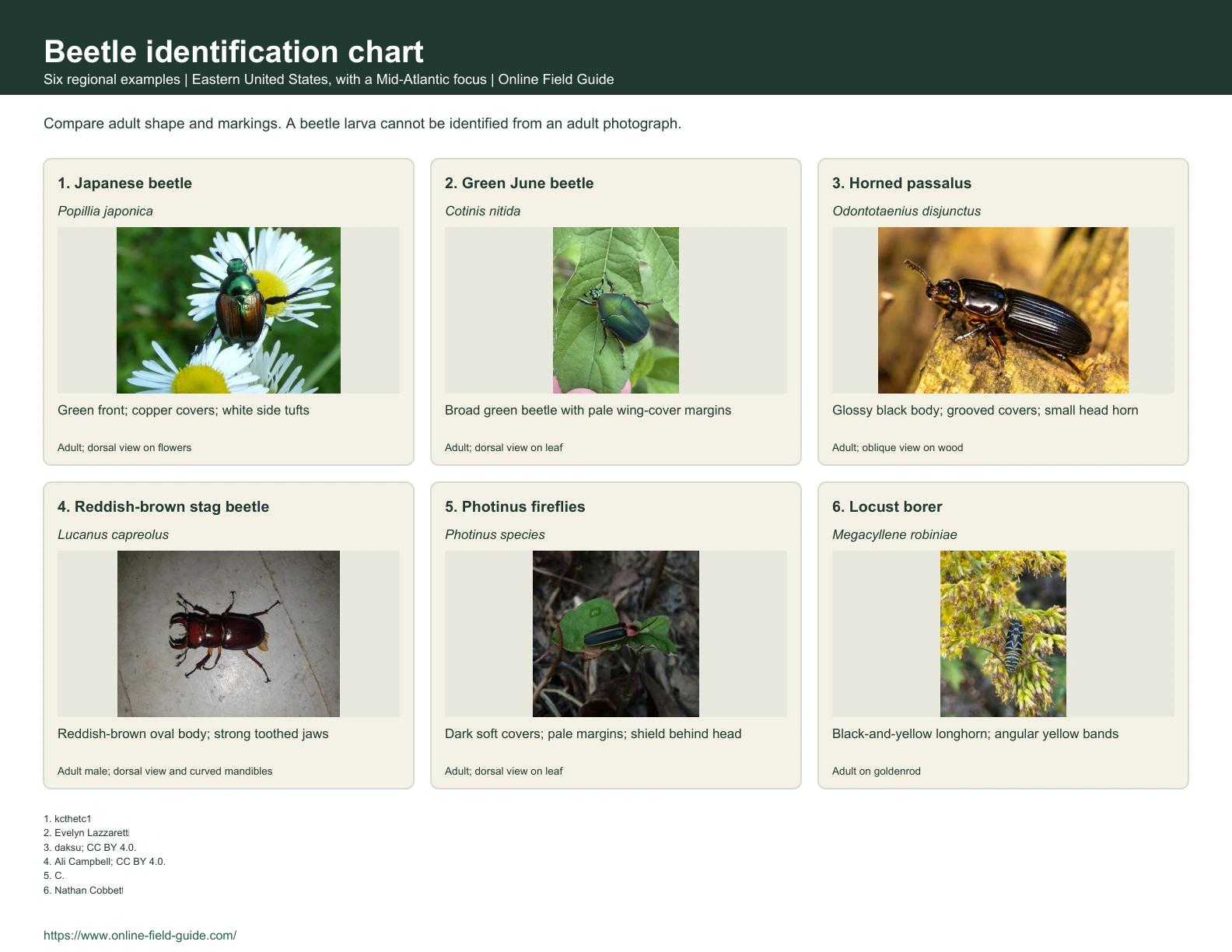
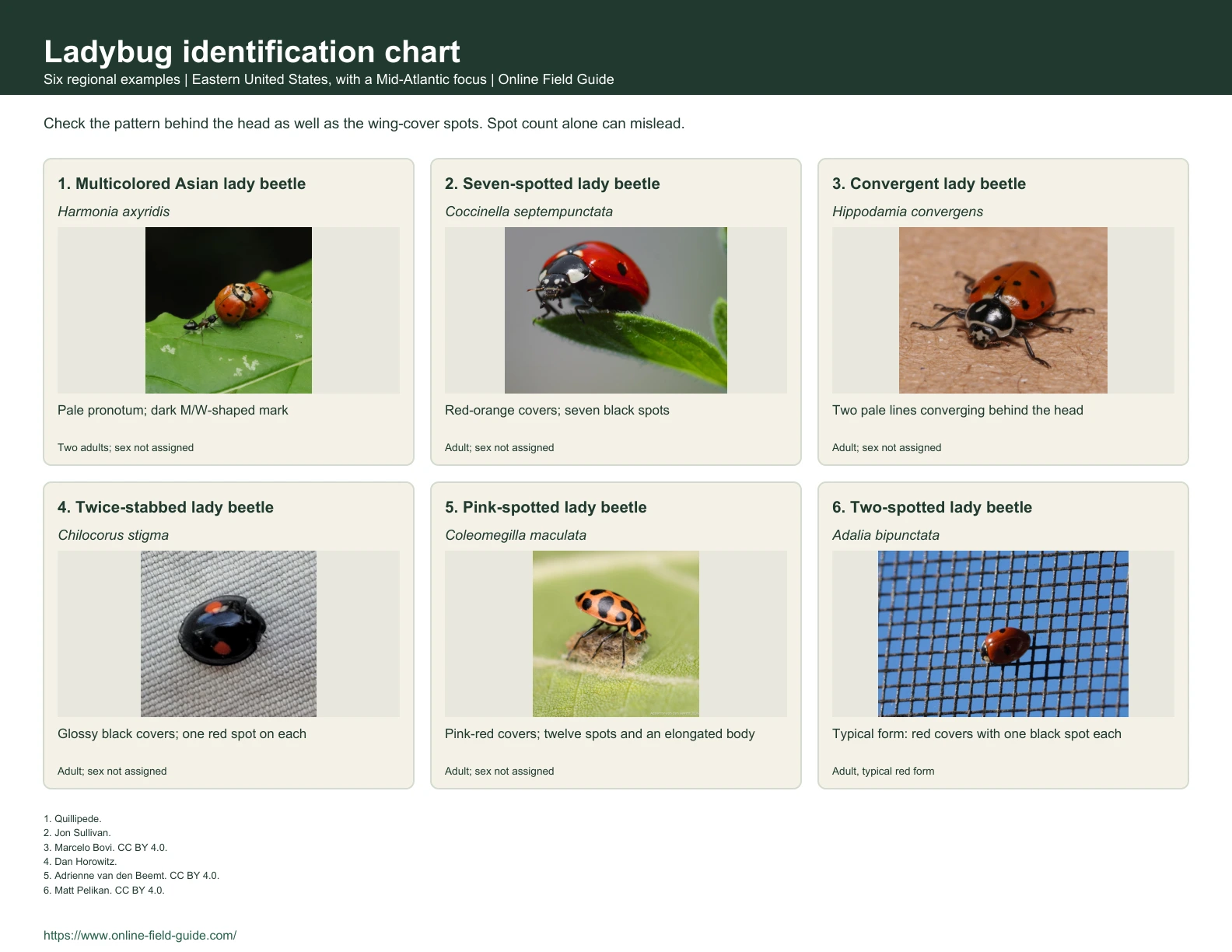
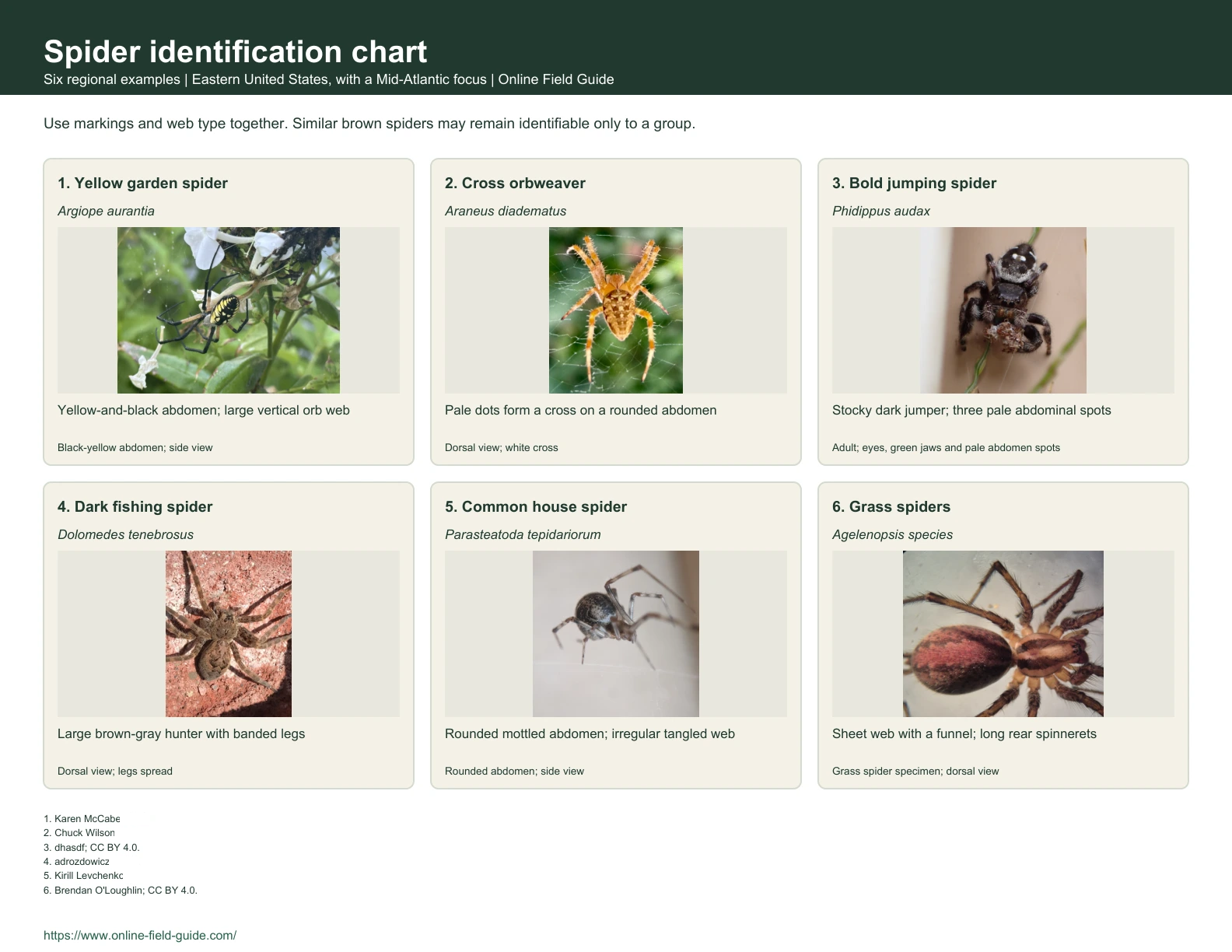
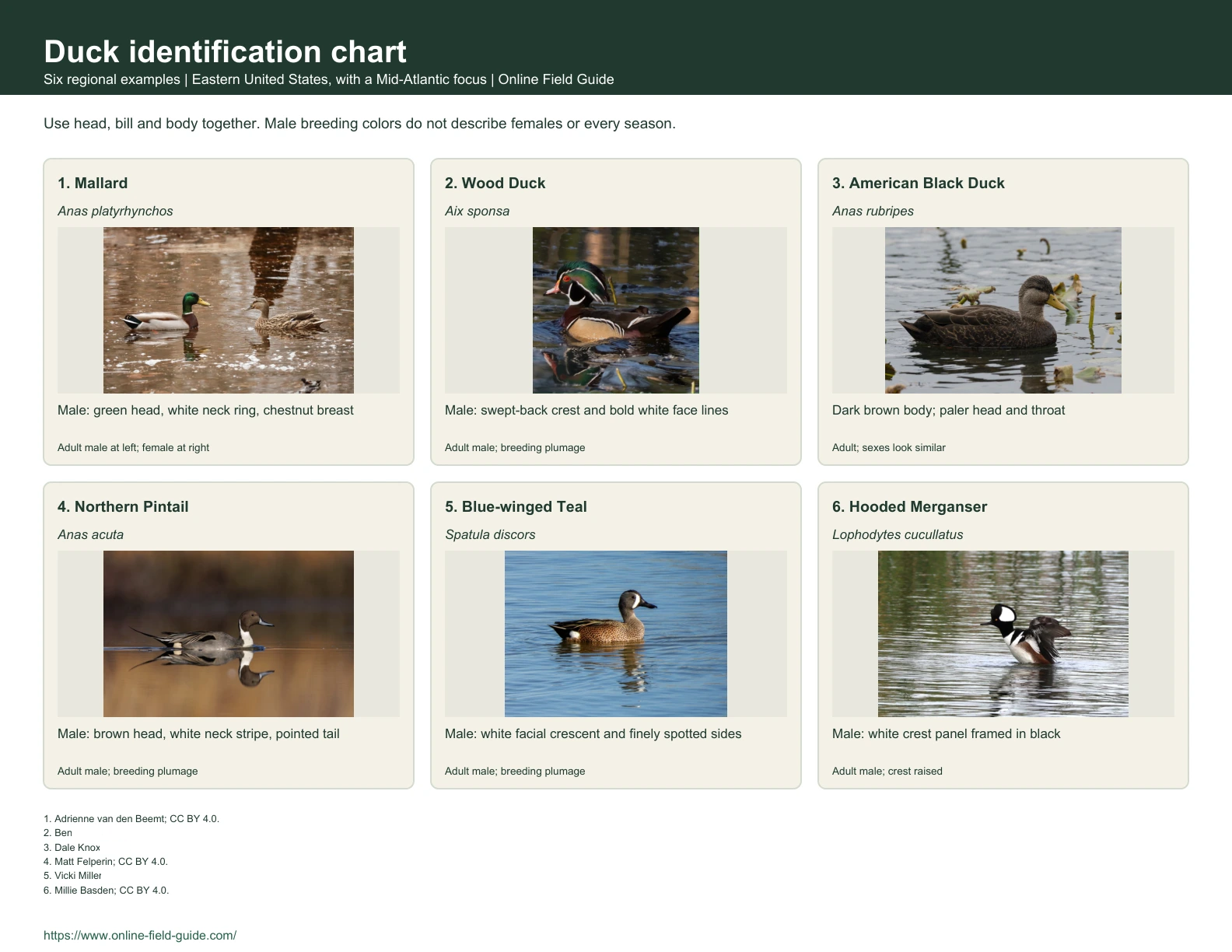
Compare a snake's full body pattern, location and age from a distance. Lengthwise stripes suggest a gartersnake; a dark snake near water may be a watersnake or another species. Copperhead crossbands often narrow across the back and widen down the sides. No single marking establishes that an unfamiliar snake is safe to approach.
This regional chart covers six snakes found in the eastern United States, with a Mid-Atlantic focus. It includes the venomous eastern copperhead, but it is not a complete venomous-snake guide. Timber rattlesnakes, cottonmouths in parts of the wider region, and many other snakes are omitted. Keep your distance from every unfamiliar snake.
Select the chart to open a larger view. Original photo sources, creators and licenses appear in the cards below and in the printable PDF.
Snake identification at a glance
Age, shedding, lighting and geographic variation change snake appearance. Seasonal ranges are broad. The identification level reflects what a photograph may support; it is not a statement that handling is safe. On a small screen, scroll the table sideways.
Eastern United States, with a Mid-Atlantic focus snake comparison: appearance, habitat and season
Front crossbands change to alternating rear blotches
Ponds, streams, marshes and adjacent land
Spring through fall
Watersnake candidate
Photo cards: six snakes
Open a photograph for a larger view. Read the photo label before comparing the markings.
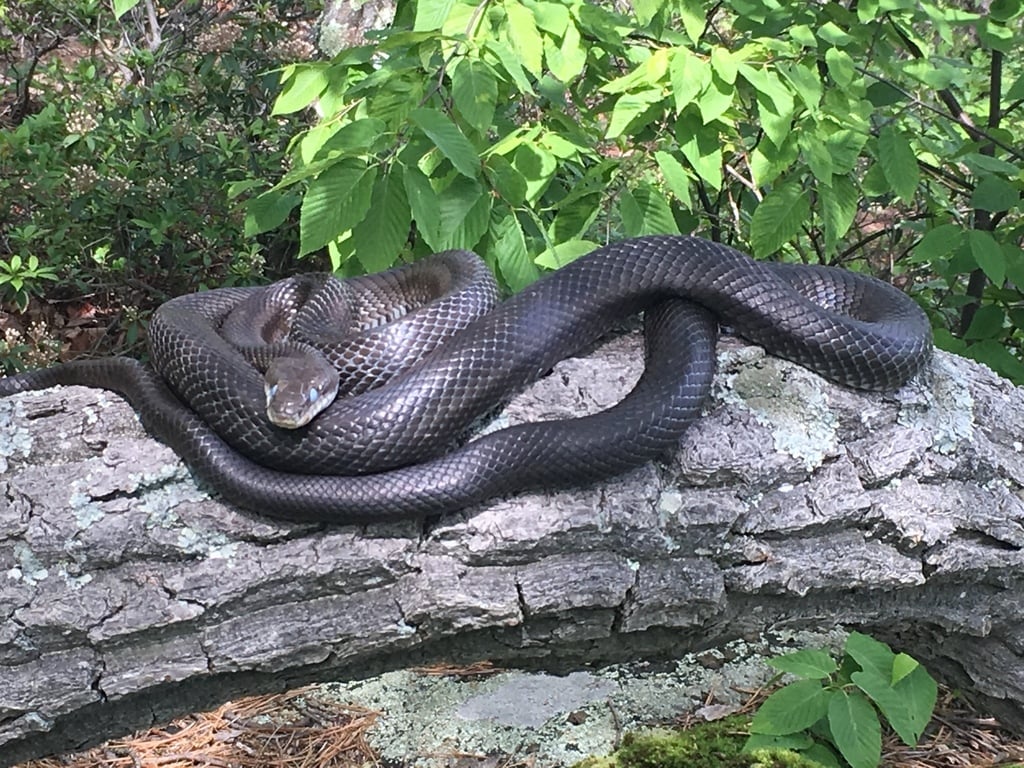
Dark adult; coiled on log
Regional ratsnake candidate
1. Central ratsnake
Pantherophis alleghaniensis
Adult pattern can be dark and fairly uniform
Juveniles have conspicuous dark dorsal blotches
Many Mid-Atlantic adults have a mostly black back, while juveniles are pale with dark blotches. Ratsnakes can climb and may be found above ground, but climbing is not a species test. Central ratsnake is the name used by the current Maryland guide; older references may call it eastern ratsnake or black rat snake. Appearance alone cannot resolve every ratsnake across its wider range.
Lookalikes: Black racers and other dark snakes can resemble adults; several species resemble blotched juveniles.
Where to look: Woodlands, edges, farms and buildings. Seasonal activity: Spring through fall.
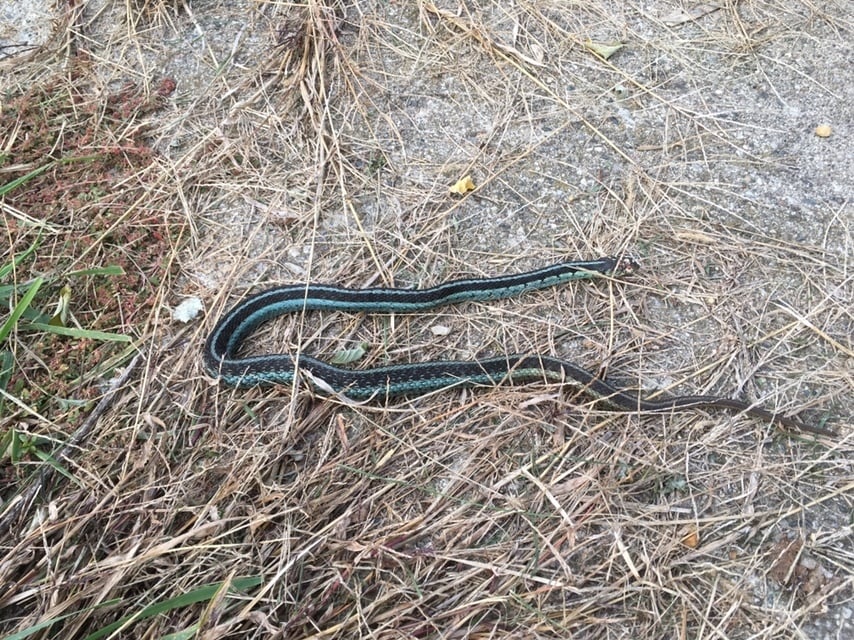
Trace the stripes lengthwise instead of relying on the overall green, brown or dark color. Common gartersnakes often show checkering between the stripes, but some are less clearly patterned. They occur in varied habitats and may be seen during the day. The stripe arrangement helps narrow the group while a regional comparison is needed for similar ribbonsnakes.
Lookalikes: Ribbonsnakes are generally more slender, with long tails and different side-stripe placement; a partial photo may not separate them.
Where to look: Gardens, meadows, wetland edges and woodland. Seasonal activity: Spring through fall.
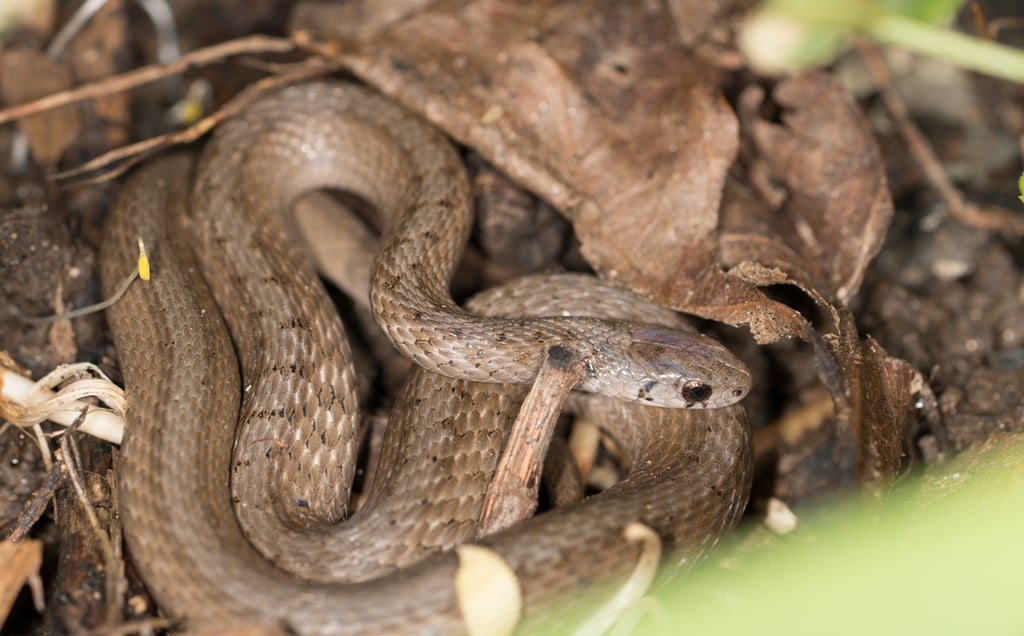
The small paired spots alongside a paler back stripe are more useful than brown color alone. Dekay's brownsnakes can occur in gardens and other settled places. The stripe and spots may be faint in a shaded photograph. A small snake should not automatically be called a baby of a larger species; several regional snakes remain small as adults.
Lookalikes: Red-bellied snakes and earthsnakes can be similarly small and brown. Do not turn a snake over to examine the belly.
Where to look: Gardens, damp leaf litter and woodland edges. Seasonal activity: Spring through fall.
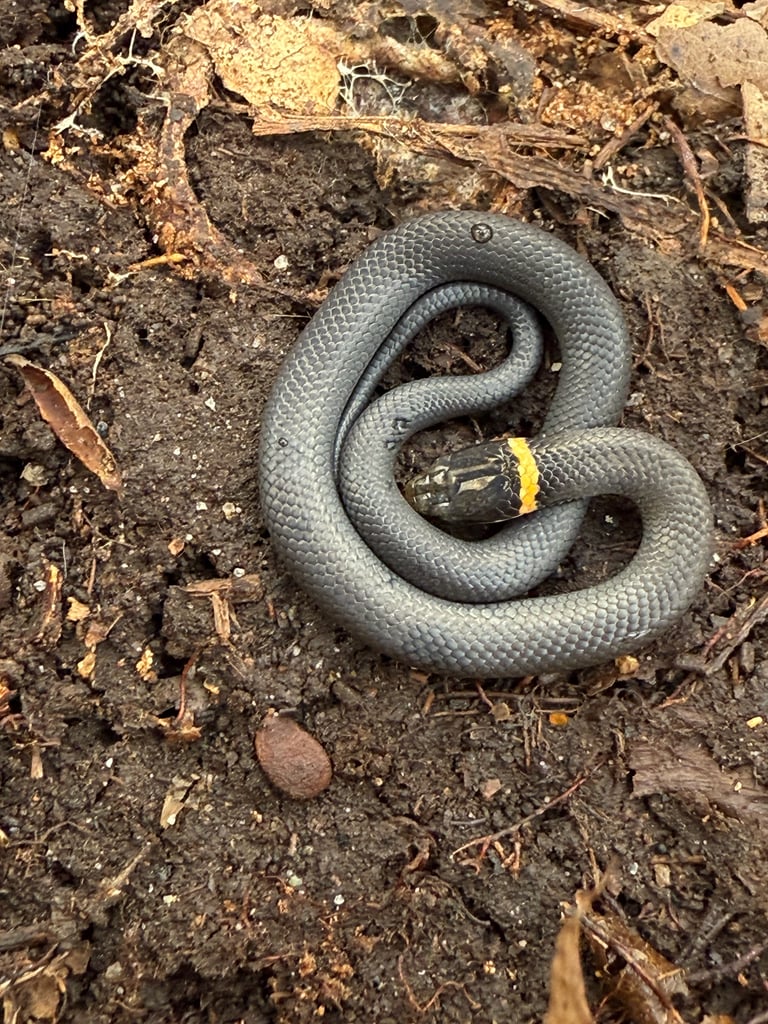
The neck ring contrasts with a largely plain dark back. It may be partly hidden when the head is beneath a leaf or against the body, so a missing ring in a partial photo is inconclusive. Regional populations and subspecies vary. An orange or yellow underside is another known feature, but there is no reason to handle the snake to expose it.
Lookalikes: Other small dark snakes can look similar when the neck is hidden. Collar width alone is not a subspecies key.
Where to look: Damp woodland, rocky cover and leaf litter. Seasonal activity: Spring through fall.
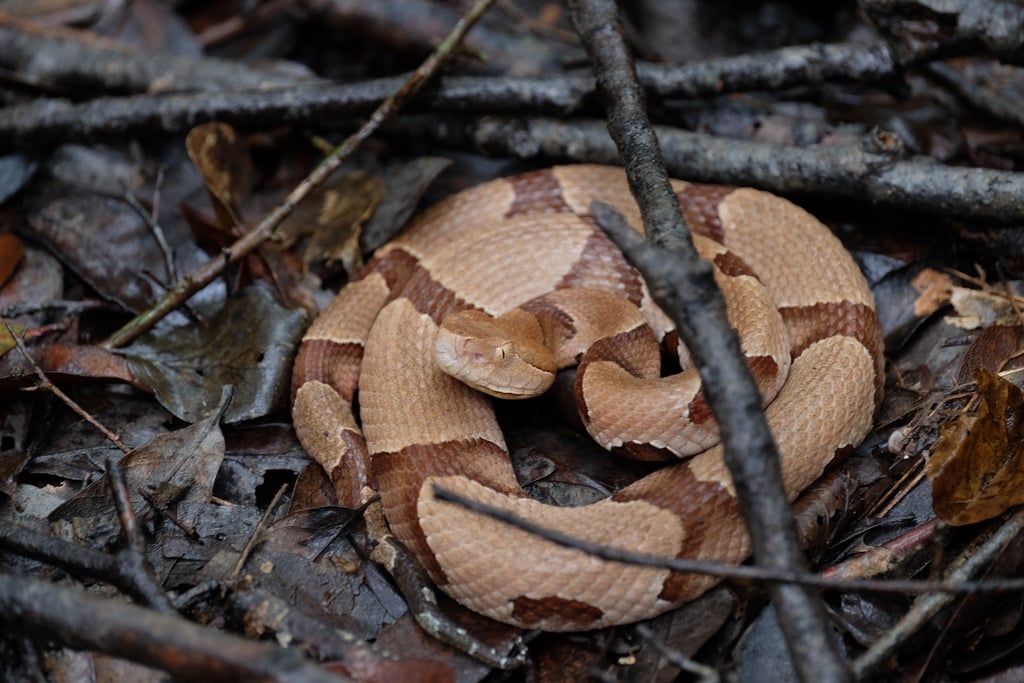
Tan background; young snakes may have yellow tail tips
Compare the complete band shape from a distance. Many copperheads show hourglass-like bands that narrow along the back and widen on the sides. Fallen leaves can conceal that pattern. A copper-colored head alone is not diagnostic, and a yellow tail tip occurs in young animals rather than all copperheads. Treat an uncertain identification as unresolved and leave the animal space.
Lookalikes: Watersnakes and several patterned juveniles cause confusion. Neither head shape nor pupil shape is a safe approach rule.
Where to look: Woodlands, rocky slopes and leaf litter. Seasonal activity: Spring through fall.
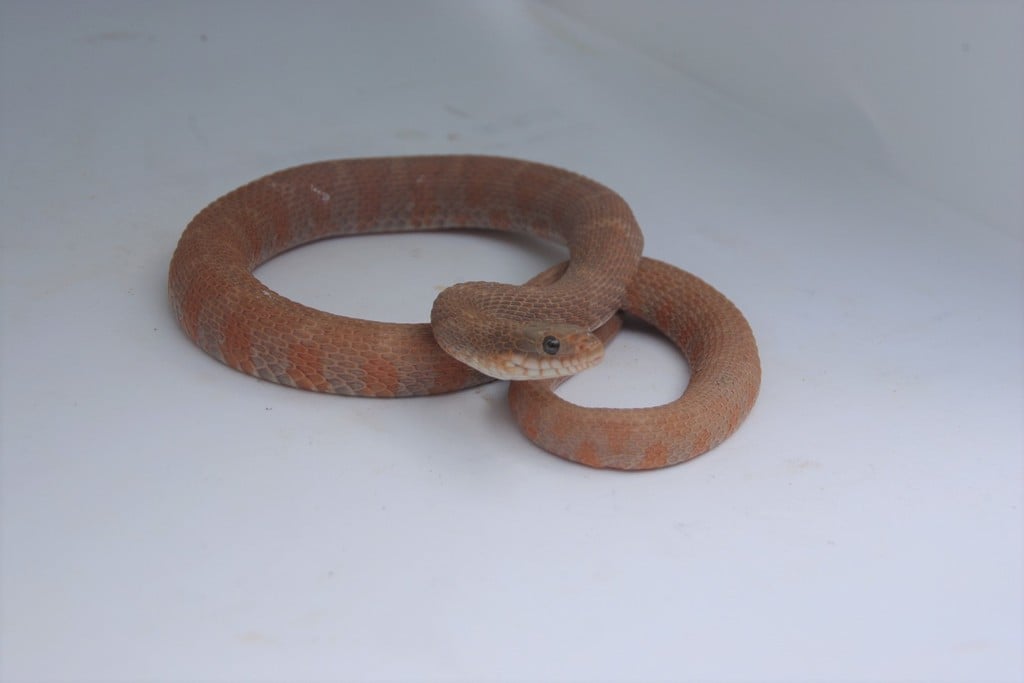
Check how the pattern changes along the whole body. Northern watersnakes commonly have crossbands near the front and alternating dark blotches farther back. In an older dark animal, these marks may be hard to see. A sighting beside a pond supports the habitat clue but does not establish a name; many other snakes enter water or move along banks.
Lookalikes: Copperheads and other watersnakes can be mistaken for this species. A swimming snake is not automatically a watersnake.
Where to look: Ponds, streams, marshes and adjacent land. Seasonal activity: Spring through fall.
How do you identify a snake without approaching it?
Use an existing clear photograph or a zoom view from a distance. Record the state or county, habitat and date, then compare the complete body pattern. Never move closer to inspect pupils, scales or the underside. If the photograph is incomplete, leave the identification unresolved.
Copperhead or northern watersnake?
Copperhead bands commonly pinch inward at the spine and broaden along the sides. Northern watersnakes usually have broad crossbands toward the front, changing to alternating blotches farther back. Patterns vary, and dark adults can hide the markings. Water nearby does not prove a snake is a watersnake, and this comparison is not a handling test.
Why does a young black ratsnake have blotches?
Central ratsnakes are often largely black as adults in the Mid-Atlantic, while young individuals show dark blotches on a pale background. Several other young snakes are patterned too. Use the full appearance and location; a blotched juvenile should not be assigned a name simply because a black adult lives nearby.
What if a snake is in a building or busy area?
Give it space and keep people and pets away. Contact local wildlife services or a qualified wildlife professional when removal is necessary. Do not pick it up, corner it or try to kill it. This chart describes visible identification clues and cannot diagnose a bite or replace urgent medical care.