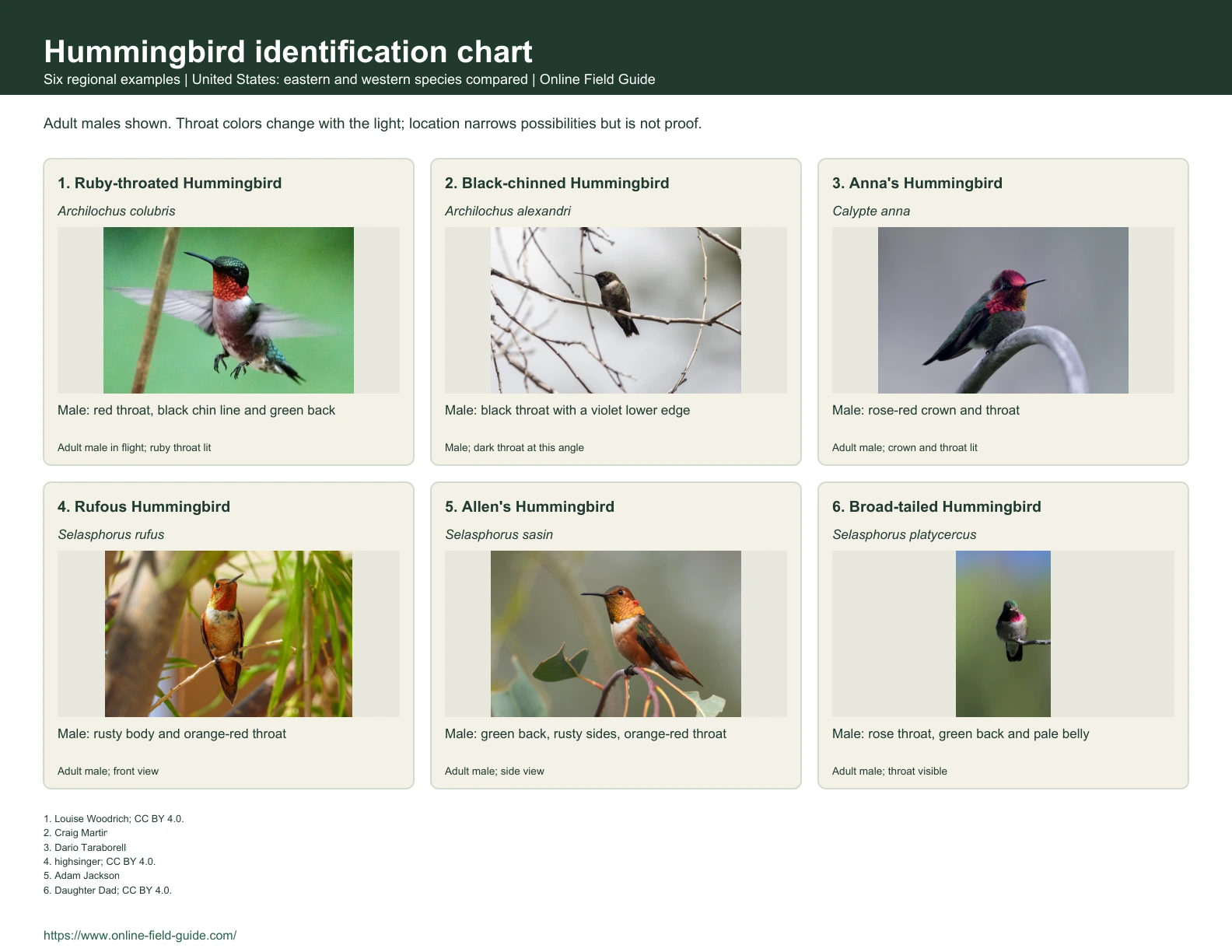
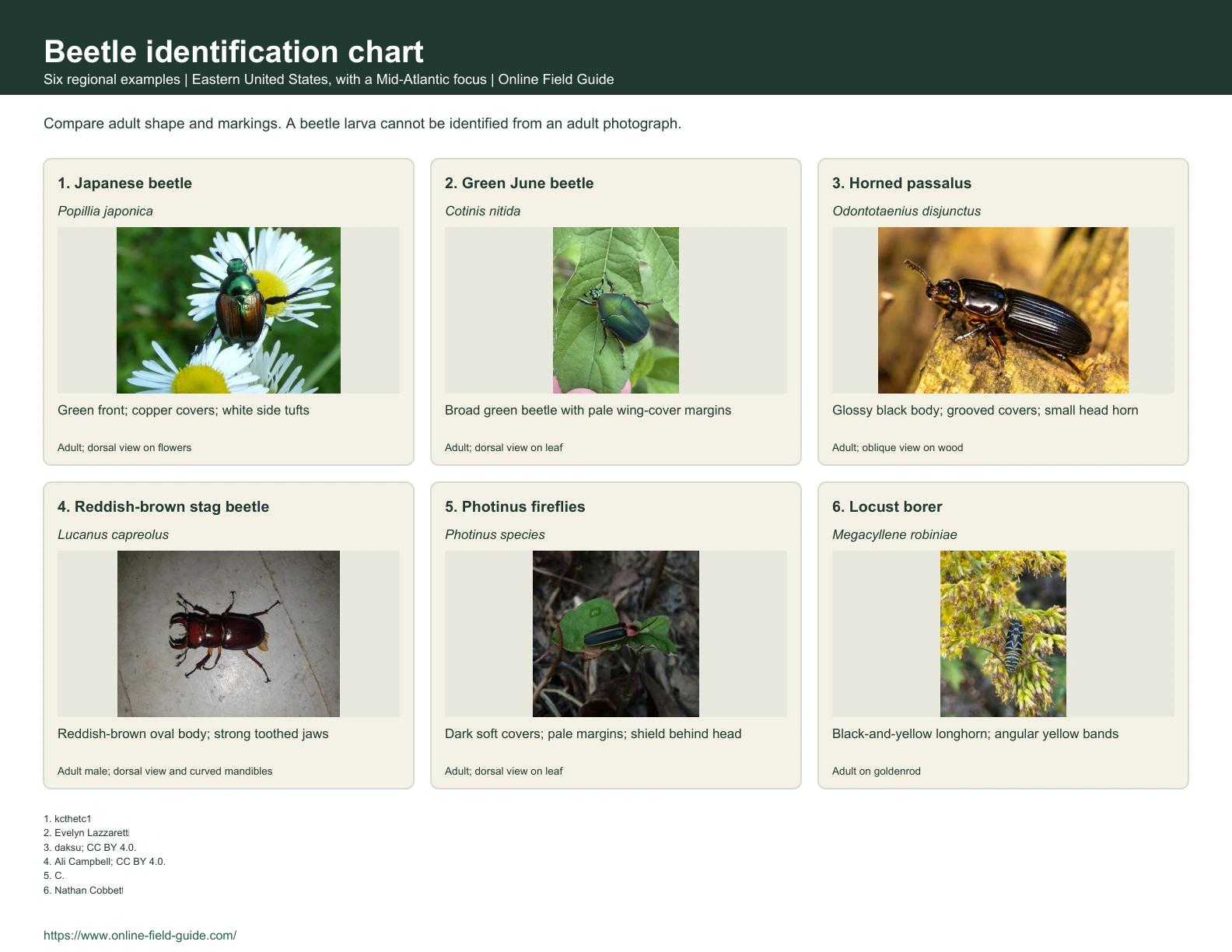
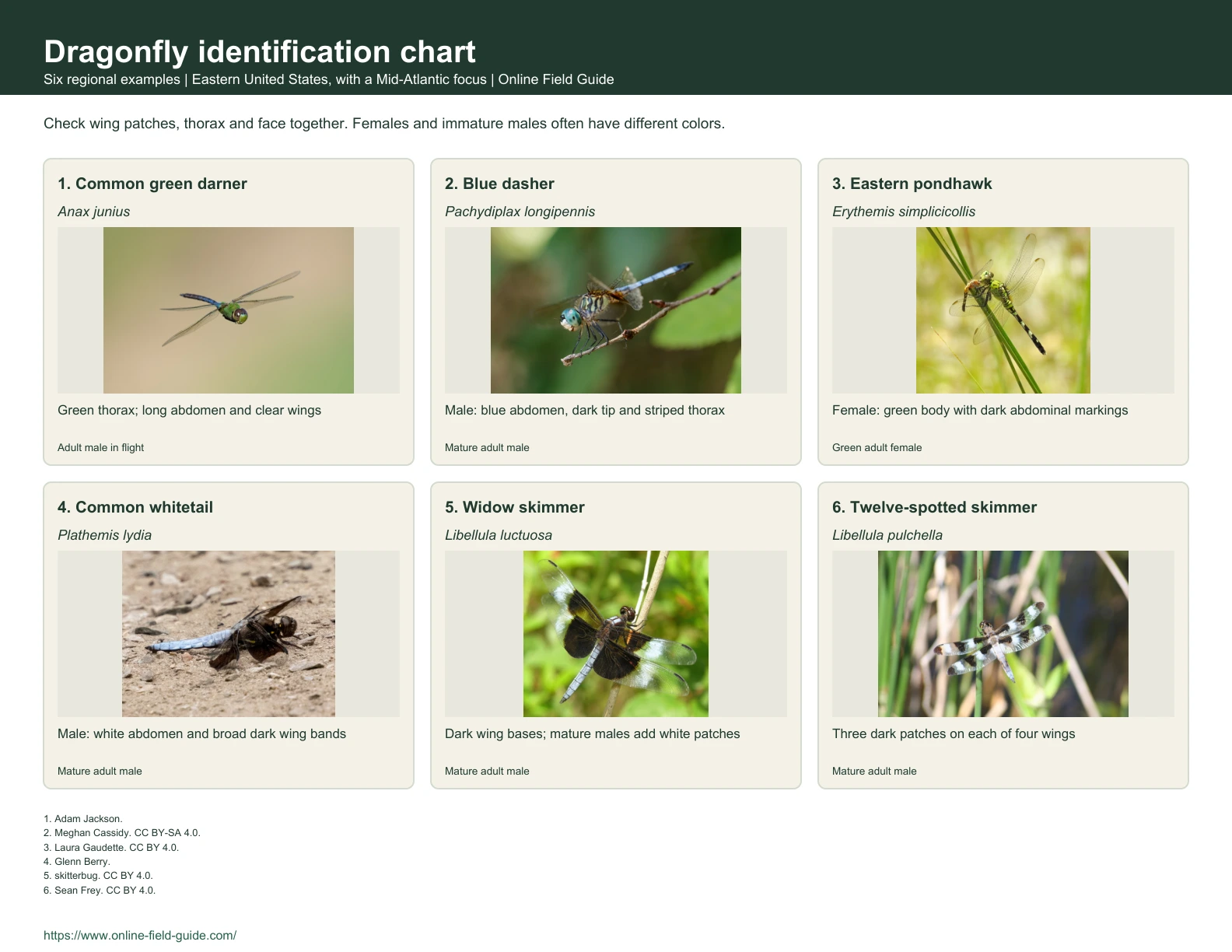
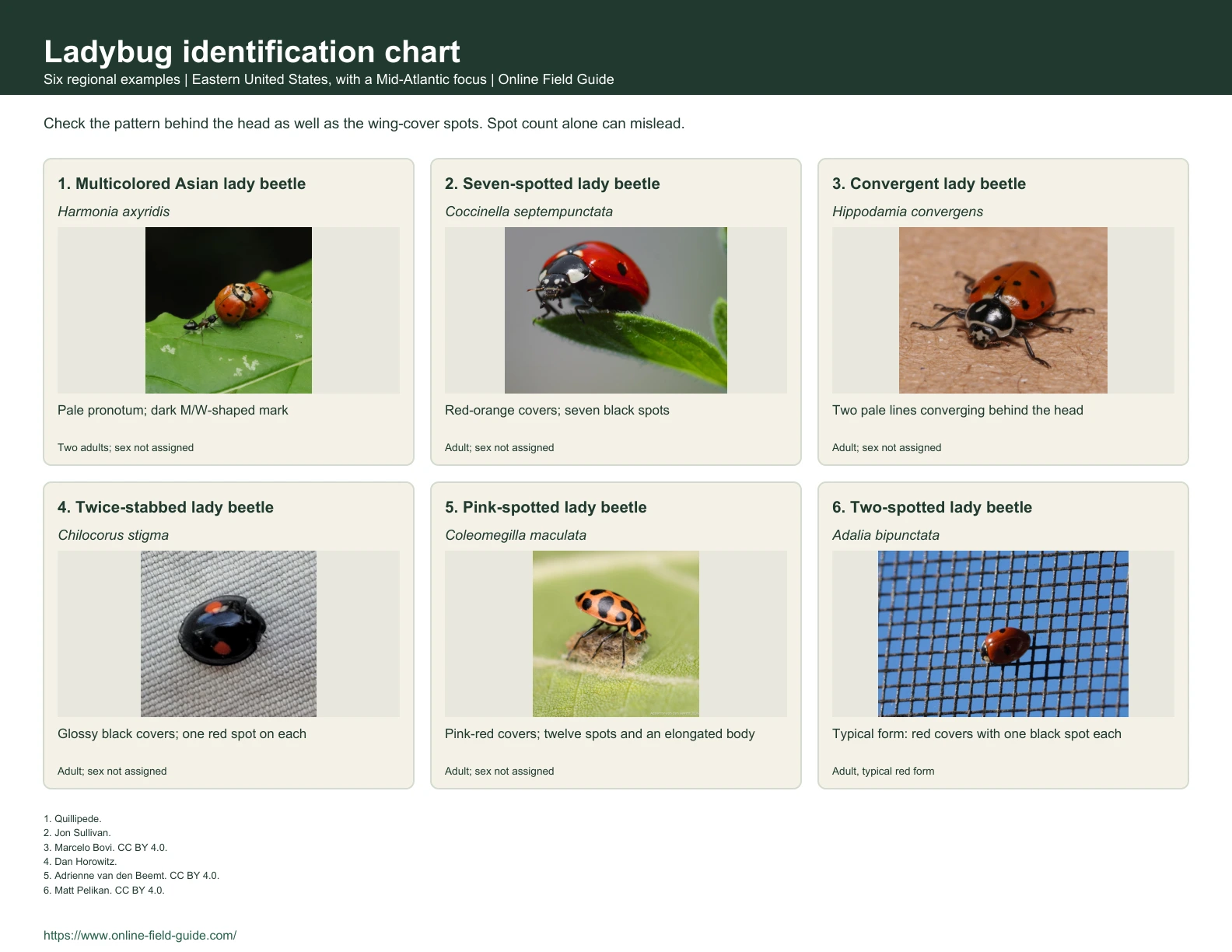
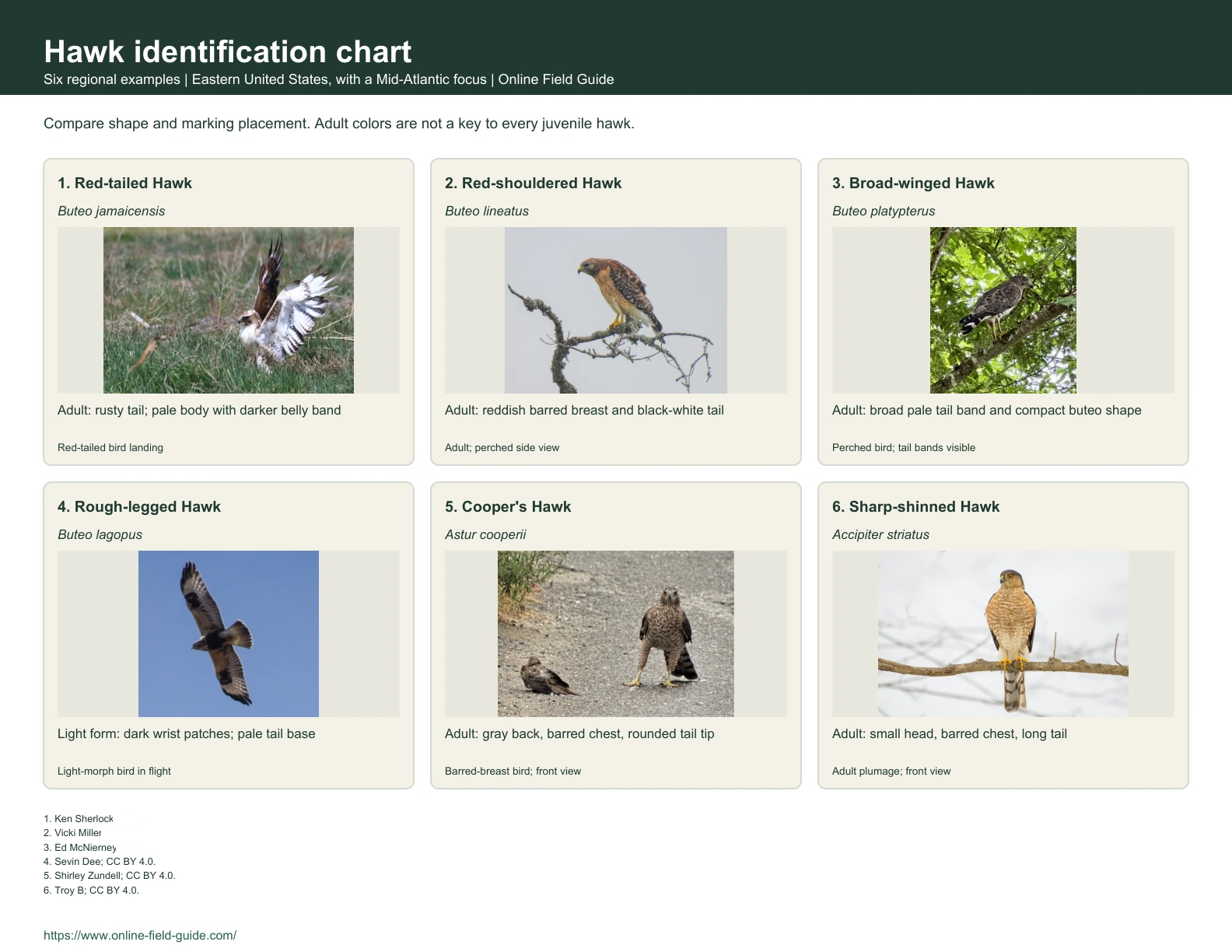
Identify a hummingbird by comparing its range, throat pattern, back color and tail. Adult males often have useful throat colors, but iridescent feathers can look black from the wrong angle. Rufous and Allen's hummingbirds can be too similar for a casual photograph to separate.
This chart covers six species that occur in the United States, spanning eastern and western regions. It is not a list of six common eastern hummingbirds: ruby-throated is the usual eastern breeder. The photographs illustrate adult males; females, juveniles and unusual visitors need further comparison.
Select the chart to open a larger view. Original photo sources, creators and licenses appear in the cards below and in the printable PDF.
Hummingbird identification at a glance
The season column describes the main US occurrence, with the region stated in habitat. Vagrants and changing local winter patterns can fall outside these broad descriptions. On a small screen, scroll the table sideways.
United States: eastern and western species compared hummingbird comparison: appearance, habitat and season
Open a photograph for a larger view. Read the photo label before comparing the markings.
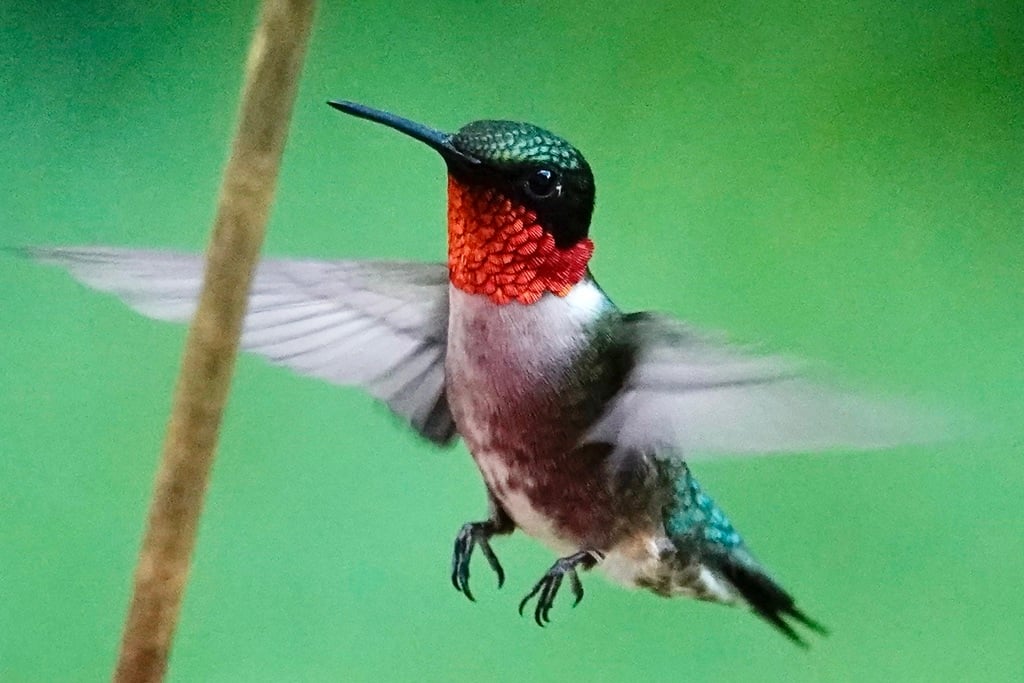
Adult male in flight; ruby throat lit
Species candidate
1. Ruby-throated Hummingbird
Archilochus colubris
Adult male has a red throat below a dark face
Green back and a pale belly
In a well-lit view, an adult male ruby-throated hummingbird shows a red throat above a pale belly and below a dark face. Its back is green. The throat can look almost black when the viewing angle changes. Females lack the red throat. Across much of the eastern United States, this is the expected breeding hummingbird, but location is a starting clue rather than a final identification.
Lookalikes: Black-chinned males have a violet band beneath a black throat. Females of these two species can be difficult in a single photograph.
Where to look: Eastern woods, gardens and edges. Seasonal occurrence: Eastern breeder, spring through fall.
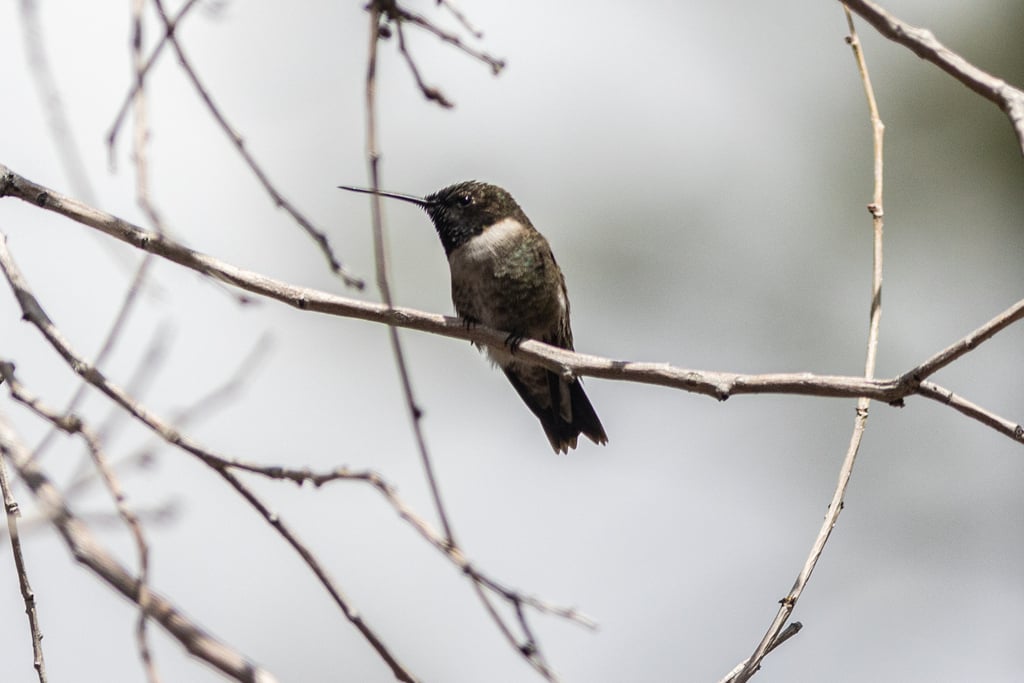
Adult male throat is mostly black with violet below
Green upperparts and a pale underside
The adult male throat is black, with a violet band along its lower edge. That band can disappear into shadow, so several angles help. A pale collar below the throat separates it from the belly. Black-chinned hummingbirds occur widely in the western United States in the breeding season. Females are much less strongly marked than the male shown.
Lookalikes: Ruby-throated males have red rather than violet throat iridescence. Female and immature Archilochus birds may require specialist photographs.
Where to look: Western river corridors, gardens and woodland. Seasonal occurrence: Western breeder, spring through fall.
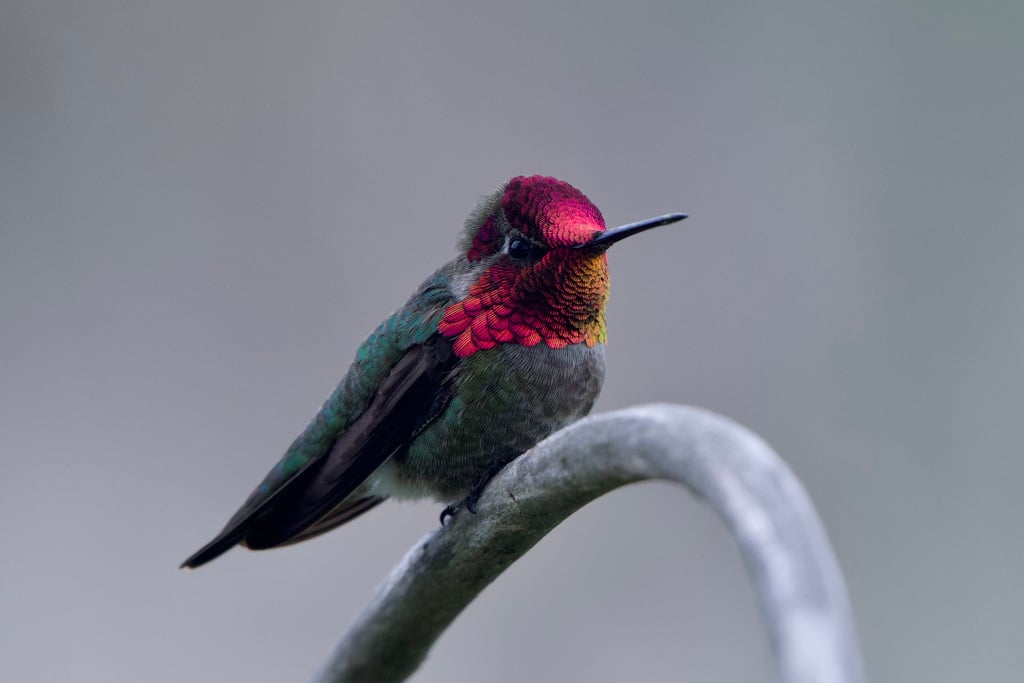
Adult male has iridescence on the crown as well as throat
Green back; grayish underside
An adult male Anna's hummingbird can show rose-red iridescence across both the crown and throat. The head may look dark when the light is wrong. Its underside is grayish rather than extensively rufous. Anna's is a year-round resident in much of its Pacific range, so a winter garden sighting there differs from a routine eastern summer hummingbird.
Lookalikes: Costa's hummingbirds have different purple head ornaments. A dark head photograph can conceal the distinction; check more than one lighting angle.
Where to look: Pacific gardens, scrub and open woodland. Seasonal occurrence: Year-round in much of Pacific range.
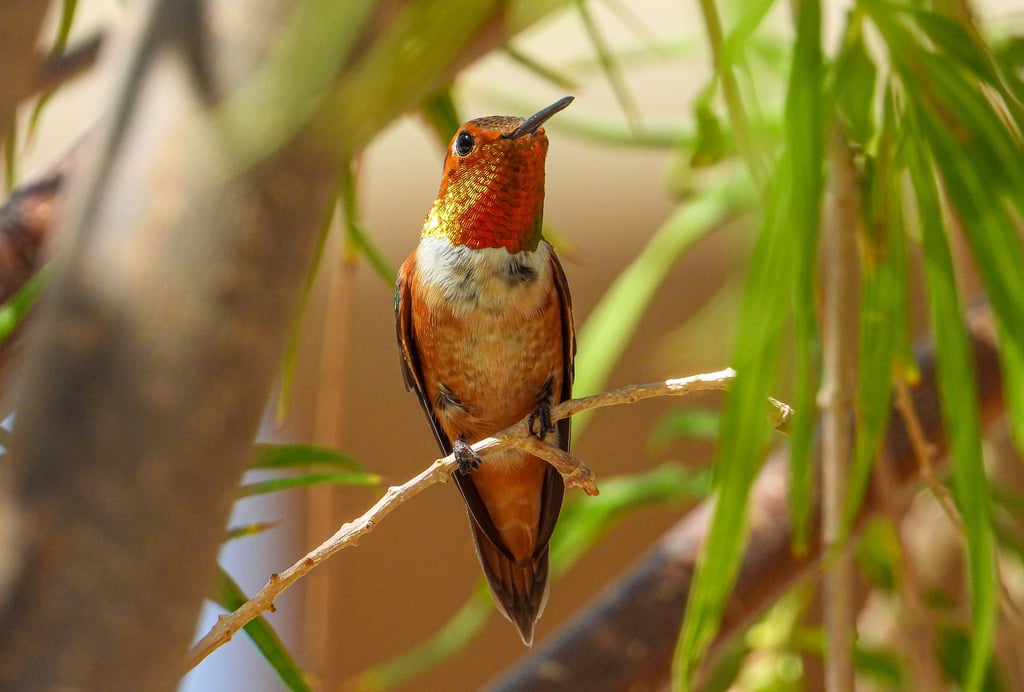
Many adult males have extensive rufous on back and sides
Adult male throat shines orange-red in good light
An adult male rufous hummingbird often has a rusty back and sides with a bright orange-red throat. Some males have green on the back, and females show much less rufous overall. These variations matter when comparing Allen's hummingbirds. A strongly rufous adult male is a useful starting point, but an ordinary side photograph may leave close lookalikes unresolved.
Lookalikes: Allen's can be extremely similar, especially green-backed males, females and juveniles. Diagnostic tail details may require an expert view.
Where to look: Western forests, gardens and migration flowers. Seasonal occurrence: Western spring/fall migrant and summer breeder.
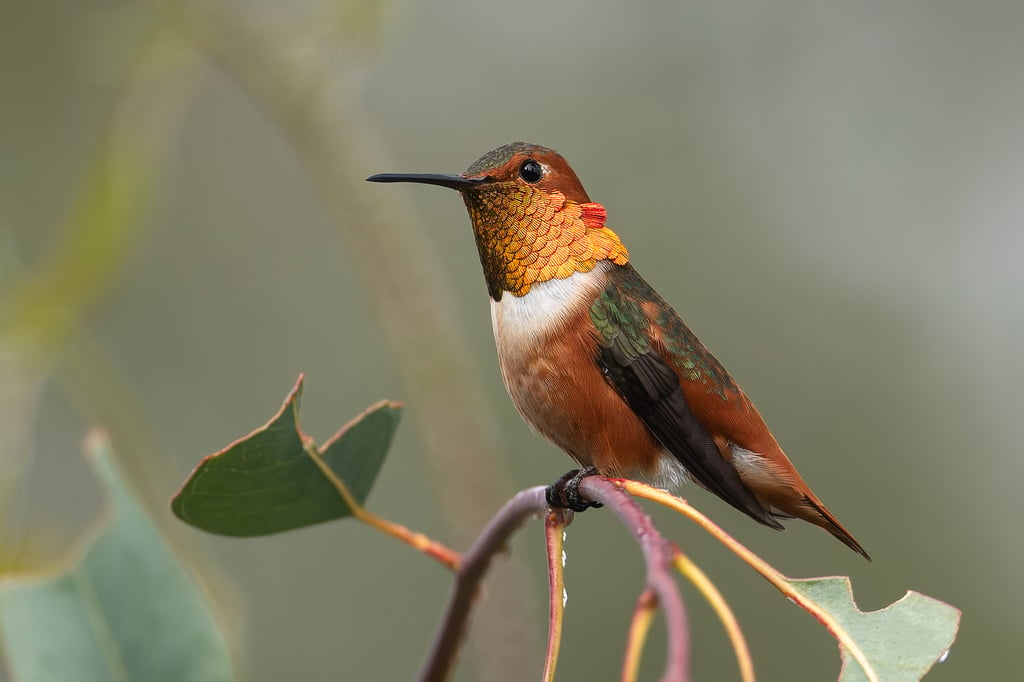
A typical adult male Allen's hummingbird has a green back above rusty sides and an orange-red throat. Its main breeding range is much more coastal than the broad western movements of rufous hummingbirds. That geographic difference can help, but it cannot replace the feather details. Where both species occur, many photographs should remain labelled Rufous/Allen's.
Lookalikes: Green-backed rufous males can match the broad color pattern. Tail-feather shape and distribution are stronger evidence than green on the back alone.
Where to look: Coastal California/Oregon; southern California gardens. Seasonal occurrence: Coastal breeder; some southern residents year-round.
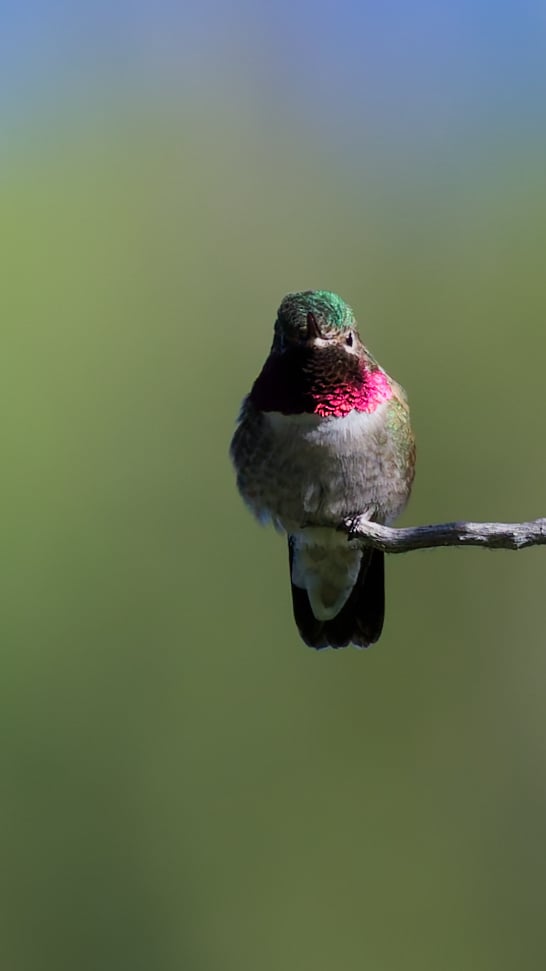
Adult male has a rose-red throat and green upperparts
Broad tail; pale breast contrasts with throat
The adult male broad-tailed hummingbird has a rose-colored throat, green upperparts and a pale belly. In its western mountain breeding habitat, the metallic trill produced by a flying male's wings is another useful clue. Females lack the bright male throat. A still photograph cannot capture the wing sound, so note observations separately from the visible plumage.
Lookalikes: Ruby-throated males can look similar in a small photograph. Range, tail details and an observed wing trill help, but a sound not actually heard is not evidence.
Where to look: Western mountain meadows and open woods. Seasonal occurrence: Mainly spring through summer in mountain West.
Can throat color identify a hummingbird by itself?
No. Iridescent feathers change appearance with angle and light. A red or violet throat may look black in shade. Compare the crown, back, sides and tail as well as the bird's location and date.
Rufous or Allen's hummingbird: can a green back settle it?
No. Some rufous males have green backs, while typical Allen's males are green-backed. Females and young birds are especially difficult. If the necessary tail details are not visible, use Rufous/Allen's rather than forcing a species name.
Which hummingbird is common in the eastern United States?
Ruby-throated hummingbird is the usual eastern breeding species. The other birds in this chart mainly represent western ranges, although unusual visitors occur. This national comparison should not be treated as a list of regular birds at an eastern feeder.
How should you photograph a hummingbird?
Photograph from a distance as the bird perches naturally. A side view and a front view in good light can reveal different throat colors. Note the county, date and habitat. Do not catch a bird or spread its tail to obtain identification details.