Identify a hawk by combining wing shape, tail shape and the arrangement of dark and pale markings. Broad-winged soaring hawks differ from long-tailed woodland hawks. An adult red tail is helpful, but young red-tailed hawks have brown, banded tails.
This chart compares six hawks seen in the eastern United States, with a Mid-Atlantic focus. Photographs illustrate adult or explicitly labelled plumages. Young birds can look quite different, and a distant silhouette often supports only a hawk group rather than a species name.
Select the chart to open a larger view. Original photo sources, creators and licenses appear in the cards below and in the printable PDF.
Hawk identification at a glance
Regional occurrence includes migrants and winter visitors. A hawk outside its usual season still needs a full identification; the calendar alone does not settle it. On a small screen, scroll the table sideways.
Eastern United States, with a Mid-Atlantic focus hawk comparison: appearance, habitat and season
Mainly migration and winter in much of Mid-Atlantic
Species candidate
Photo cards: six hawks
Open a photograph for a larger view. Read the photo label before comparing the markings.
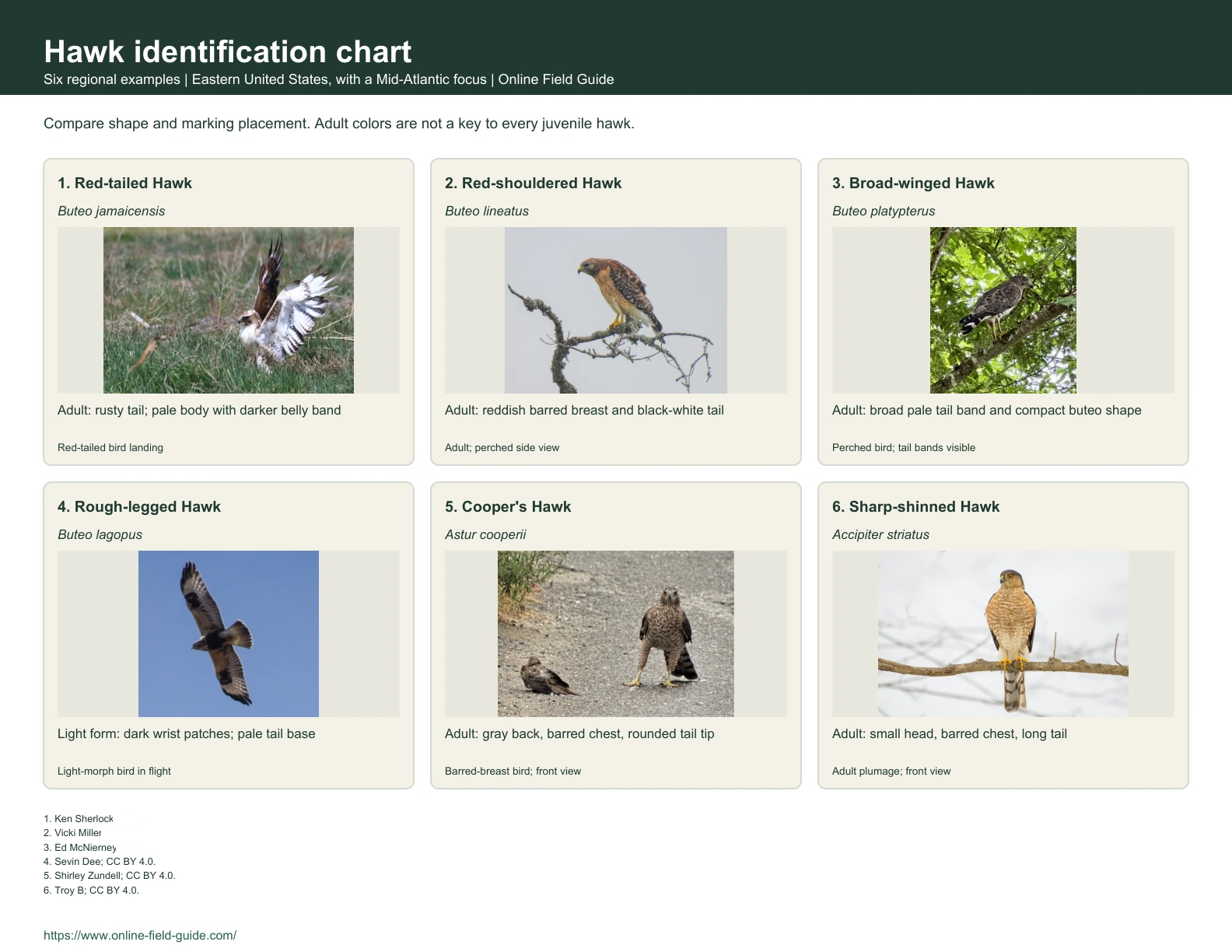
Red-tailed bird landing
Species candidate
1. Red-tailed Hawk
Buteo jamaicensis
Broad wings and a relatively short, wide tail
Many eastern adults show a dark band across the belly
Check the broad-winged shape and the tail from above if possible. Typical eastern adults have a rusty upper tail and a pale chest above a darker belly band. Young birds have a brown, finely banded tail. Red-tailed hawks also vary in body color, so a missing belly band or a poor view of the tail should prompt more comparison, not a quick exclusion.
Lookalikes: Red-shouldered hawks have a more strongly banded tail and different wing pattern. A red tail hidden by a perch cannot be assessed.
Where to look: Open fields, roadsides and woodland edges. Seasonal occurrence: Year-round.
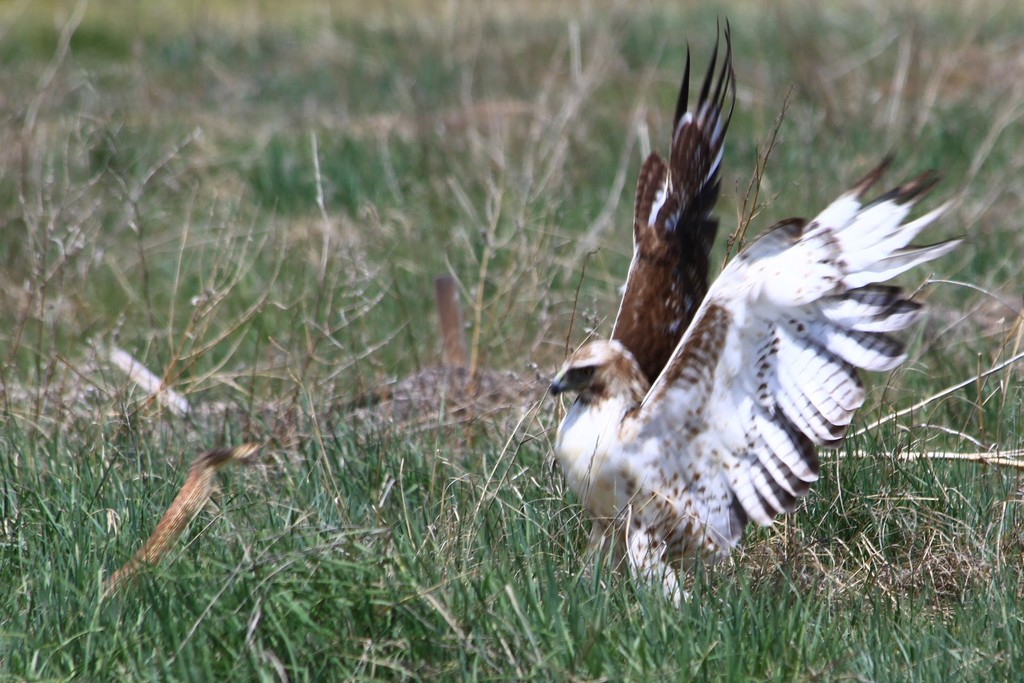
An adult red-shouldered hawk has reddish barring across the chest and belly. Its tail carries alternating dark and pale bands, and the upper wings have a checkered pattern. In flight, pale crescents near the outer wings can help. Juveniles are brown and streaked below, so the adult's rusty chest is not a requirement for every age.
Lookalikes: Juvenile broad-winged hawks can look similar. Use tail pattern, wing shape and several views rather than the color of one breast photograph.
Where to look: Mature woods, often near streams or wetlands. Seasonal occurrence: Year-round.
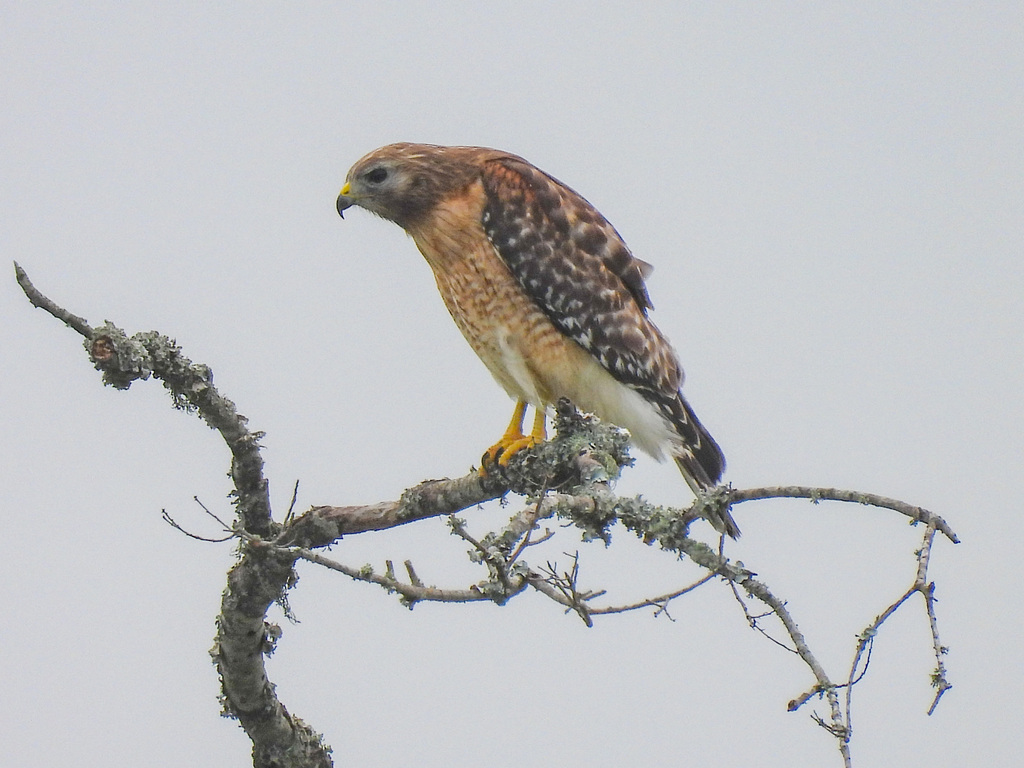
Adult tail has a broad pale band between dark areas
A broad-winged hawk is compact, with broad wings and a short tail. Typical light adults have brown upperparts and barred underparts; the conspicuous pale band across the tail is often the best flight clue. During fall migration, many birds can gather in soaring groups. Young birds have different tail markings and need a juvenile comparison.
Lookalikes: Red-shouldered hawks tend to show more narrow tail bands. A folded or obscured tail can remove the clearest distinction.
Where to look: Deciduous woods and wooded landscapes. Seasonal occurrence: Spring through fall; migrates south.
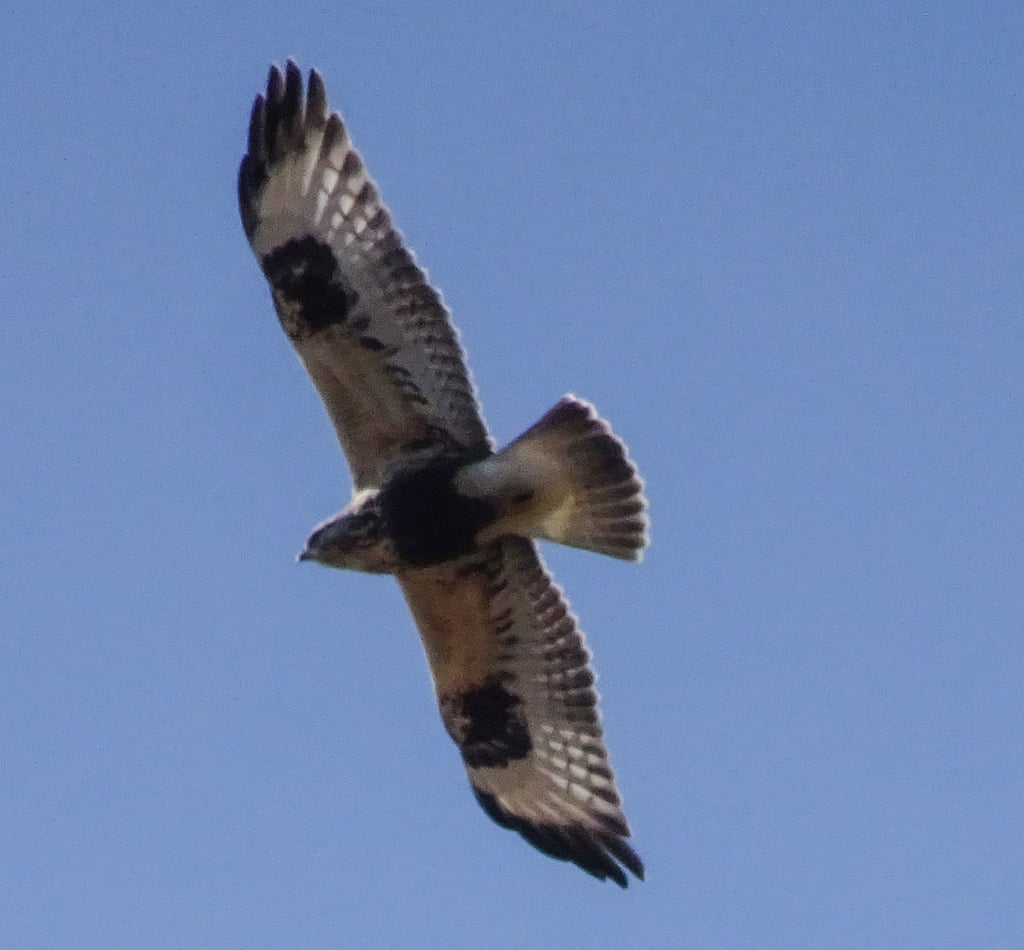
Light birds show a dark patch at each underwing wrist
Pale tail base contrasts with a dark end band
Rough-legged hawks visit from northern breeding grounds. Light birds often show dark patches at the bends of the wings and a pale tail base with a dark tip. Some have a large dark belly patch, while others are more mottled. Dark forms also occur. Feathering reaches down the legs, but this may be impossible to see on a distant flying bird.
Lookalikes: Northern harriers can hunt the same fields. Compare wing shape, flight pattern and tail markings; hovering alone does not identify a rough-legged hawk.
Where to look: Open winter fields, grassland and marsh edges. Seasonal occurrence: Late fall through winter; irregular locally.
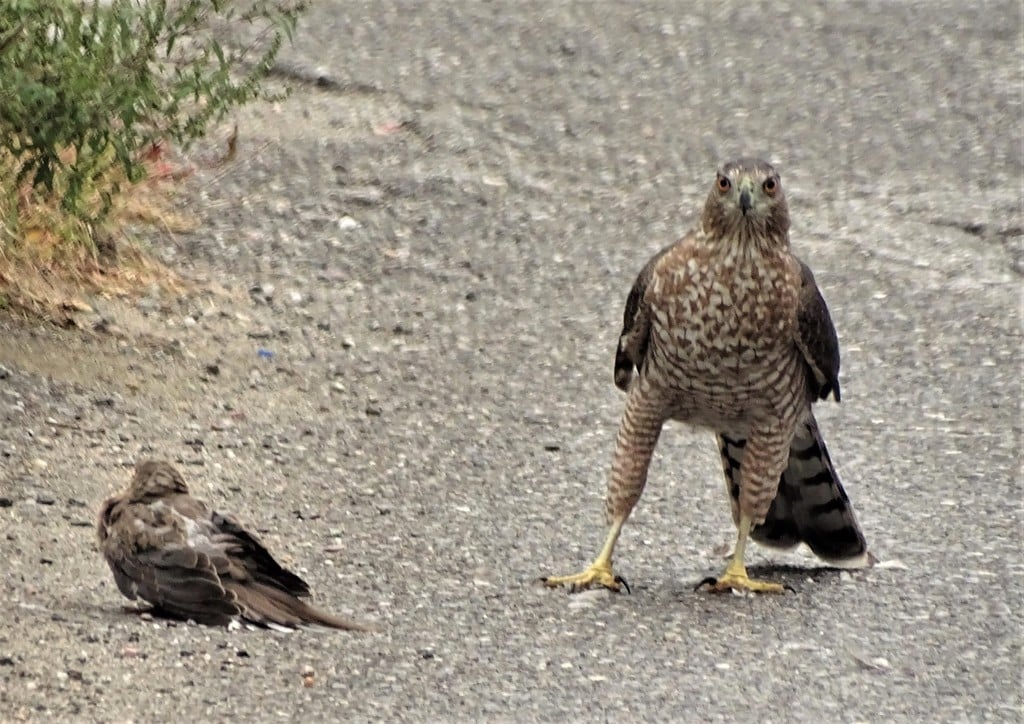
A Cooper's hawk has short, rounded wings and a long tail suited to maneuvering around trees. Adults are gray above with rusty barring below. A dark cap can contrast with a paler nape, especially in a good side view. The tail often looks rounded when spread or seen clearly. Immatures are brown above and streaked below. Older guides may list it as Accipiter cooperii.
Lookalikes: Sharp-shinned hawks overlap in size and plumage. Tail shape and head proportions are useful together, but posture can change both; leave poor photographs as Cooper's/sharp-shinned.
Where to look: Woodlands, wooded suburbs and parks. Seasonal occurrence: Year-round.
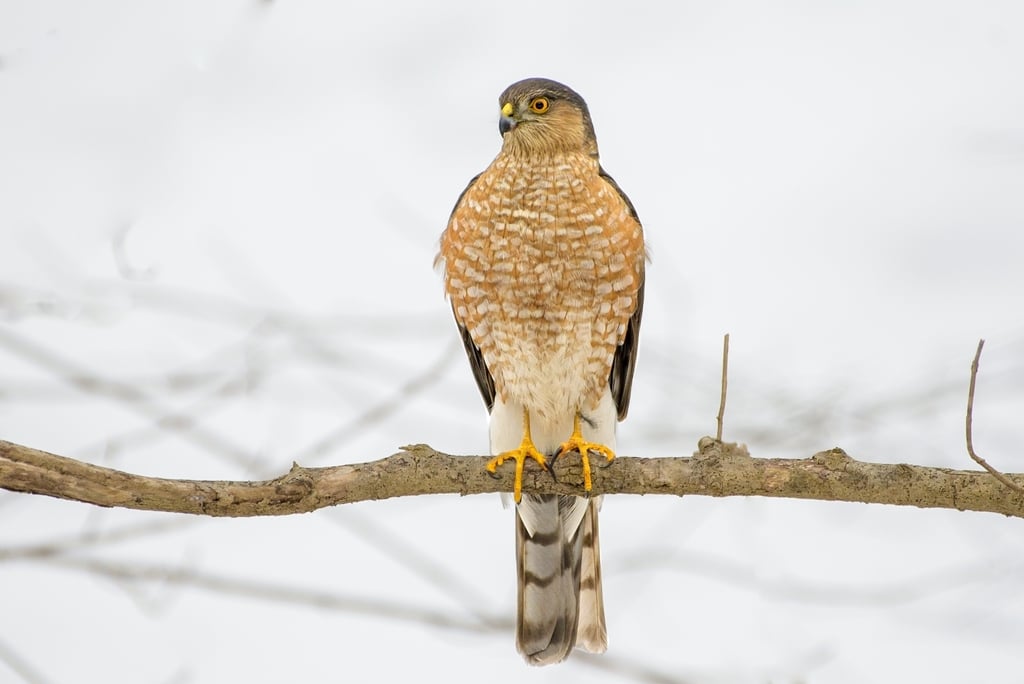
Long tail often has a straighter end than Cooper's
The small head and relatively slight build help with a sharp-shinned hawk. Adults have blue-gray upperparts and rusty barring beneath, while juveniles are brown with streaked underparts. The tail often looks square-ended, but angle and feather position can change that impression. A distant bird crossing a yard may not show enough for a confident species identification.
Lookalikes: A small male Cooper's hawk and a large female sharp-shinned can overlap. Do not use apparent size without a nearby reference.
Where to look: Wooded areas and migration corridors. Seasonal occurrence: Mainly migration and winter in much of Mid-Atlantic.
Compare the head, shoulders and tail in several frames. Cooper's usually looks larger-headed and often has a rounded tail tip; sharp-shinned looks smaller-headed and often more square-tailed. Size overlaps between sexes. A single blurred or tightly cropped image may not distinguish them.
Does a brown tail rule out a red-tailed hawk?
No. Juvenile red-tailed hawks have banded brown tails. Look at the broad wings, body proportions and underwing markings. The red tail is an adult clue, not a feature shared by all ages.
Why does the same hawk look different from below?
The pale underside of a tail or wing can look very different from its upper surface. Backlighting can hide barring and turn a patterned bird into a dark silhouette. Note which surface you can actually see before comparing colors.
How can you record a distant hawk?
Photograph the whole bird in flight and, if it lands naturally, from the side. Record the date, place, wing posture and whether it was soaring, gliding or flapping. Keep an uncertain hawk at group level rather than forcing a species name.