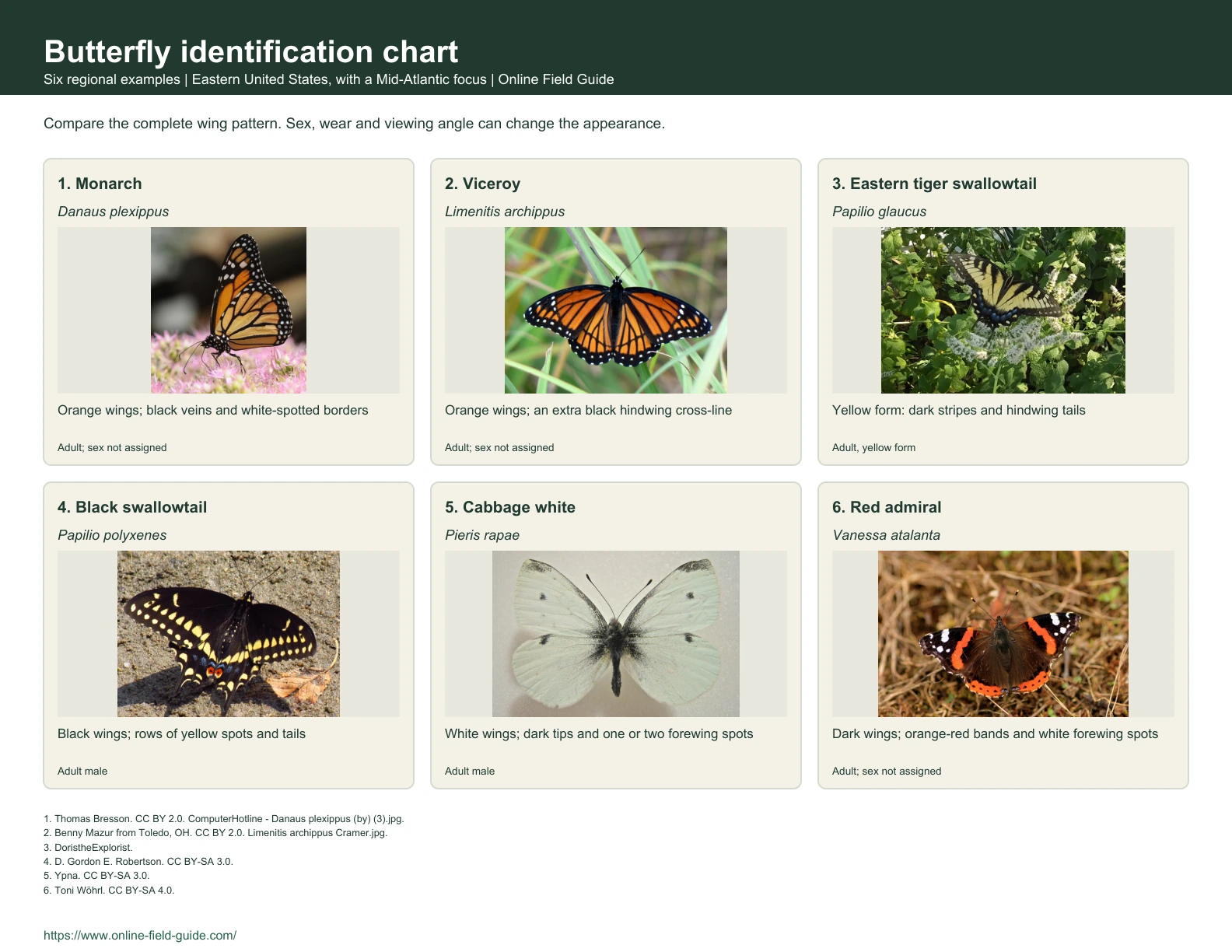
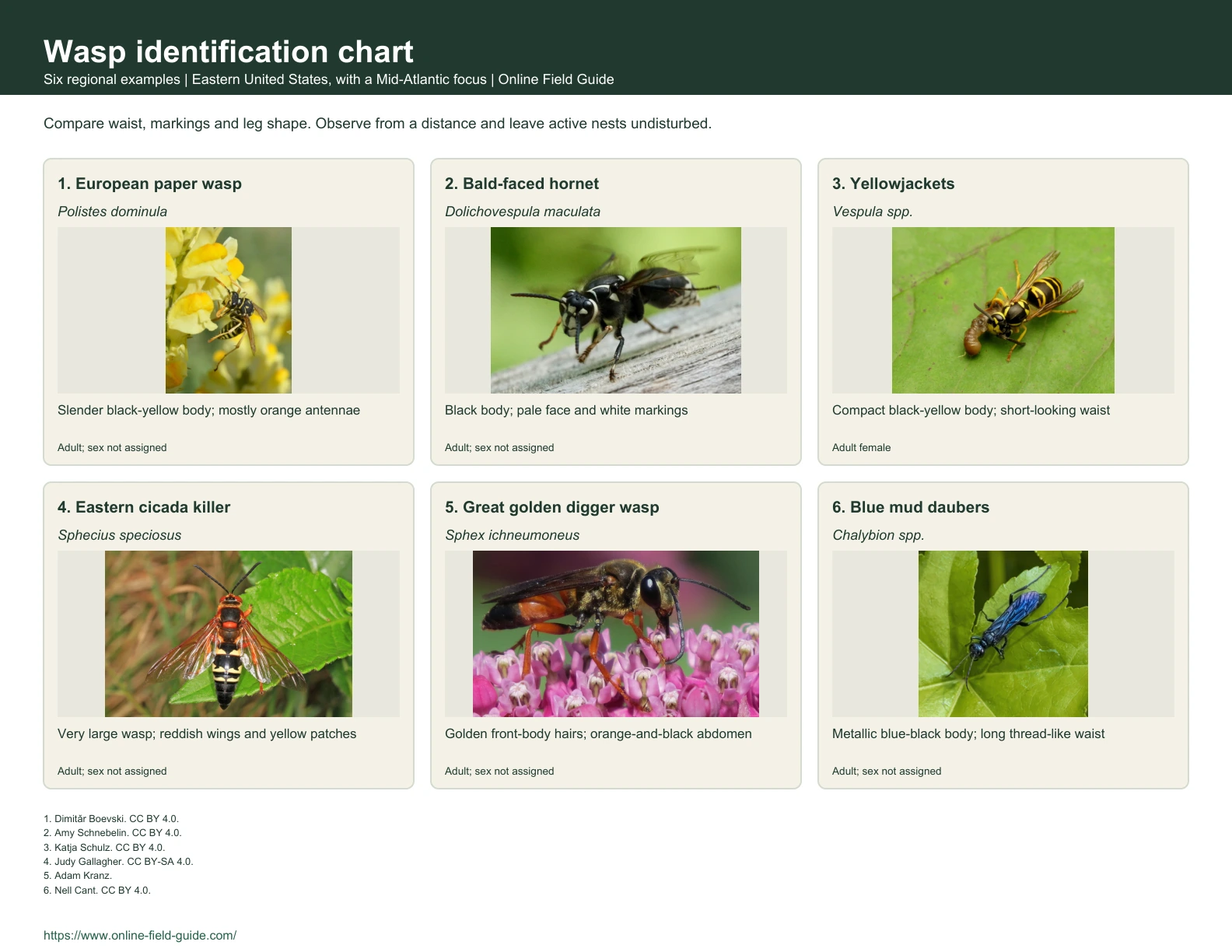
Identify a duck by comparing its head pattern, bill, body shape and wing markings. A green-headed male with a white neck ring suggests a mallard; a long neck and pointed tail suggest a northern pintail. Brown females and males in summer plumage need a closer comparison.
These six wild ducks occur in the eastern United States, including the Mid-Atlantic. Five photographs show adult males in recognizable plumage; the American black duck represents a species whose sexes look similar. This is an introductory comparison, not a complete guide to female ducks, hybrids or domestic breeds.
Duck photo identification chart
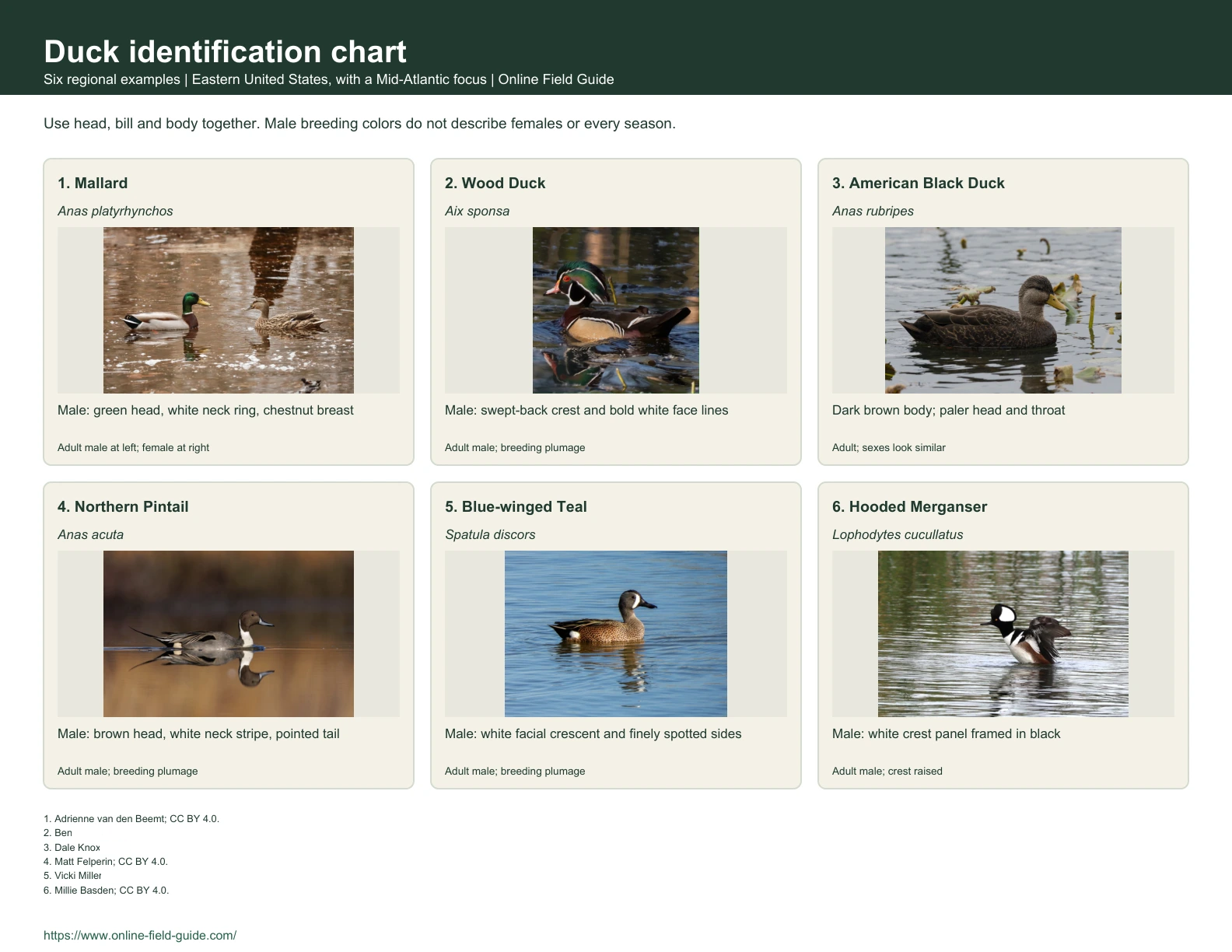
Duck identification at a glance
Seasonal occurrence is a broad Mid-Atlantic guide. Migration dates and winter numbers vary with weather, latitude and the amount of open water. On a small screen, scroll the table sideways.
| Duck or group | First visual clue | Habitat clue | Seasonal occurrence | Identification level |
|---|---|---|---|---|
| Mallard Anas platyrhynchos | Male: green head, white neck ring, chestnut breast | Ponds, marshes and urban waterways | Year-round where water stays open | Species candidate |
| Wood Duck Aix sponsa | Male: swept-back crest and bold white face lines | Wooded ponds, swamps and sheltered streams | Spring through fall; some winter locally | Species candidate |
| American Black Duck Anas rubripes | Dark brown body; paler head and throat | Coastal marshes and inland wetlands | Year-round; often more noticeable in winter | Species candidate |
| Northern Pintail Anas acuta | Male: brown head, white neck stripe, pointed tail | Shallow marshes, flooded fields and estuaries | Mainly migration and winter | Species candidate |
| Blue-winged Teal Spatula discors | Male: white facial crescent and finely spotted sides | Shallow ponds, marshes and flooded fields | Especially spring and fall migration | Species candidate |
| Hooded Merganser Lophodytes cucullatus | Male: white crest panel framed in black | Wooded ponds, small lakes and sheltered creeks | Fall through spring; some breed locally | Species candidate |
Photo cards: six ducks
Open a photograph for a larger view. Read the photo label before comparing the markings.
Species candidate
1. Mallard
Anas platyrhynchos
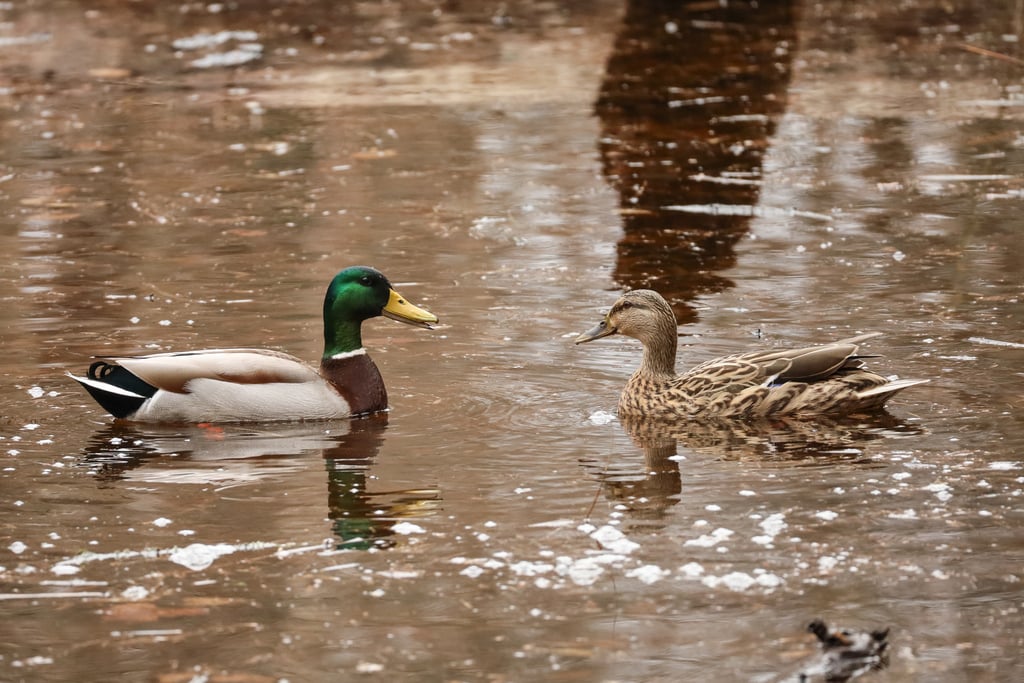
- Adult male has a green head and narrow white neck ring
- Gray sides contrast with a chestnut breast
Start with the head and neck ring, then check the chestnut breast and gray sides. The male bill is yellow. Females are mottled brown, usually with an orange-and-dark bill, and do not show this male pattern. After breeding, males can also become brown; a blue wing patch bordered in white may help when the bird moves.
Lookalikes: Domestic mallard-derived ducks and hybrids can have unusual colors. A green head alone is not enough to name every park duck.
Where to look: Ponds, marshes and urban waterways. Seasonal occurrence: Year-round where water stays open.
Species candidate
2. Wood Duck
Aix sponsa
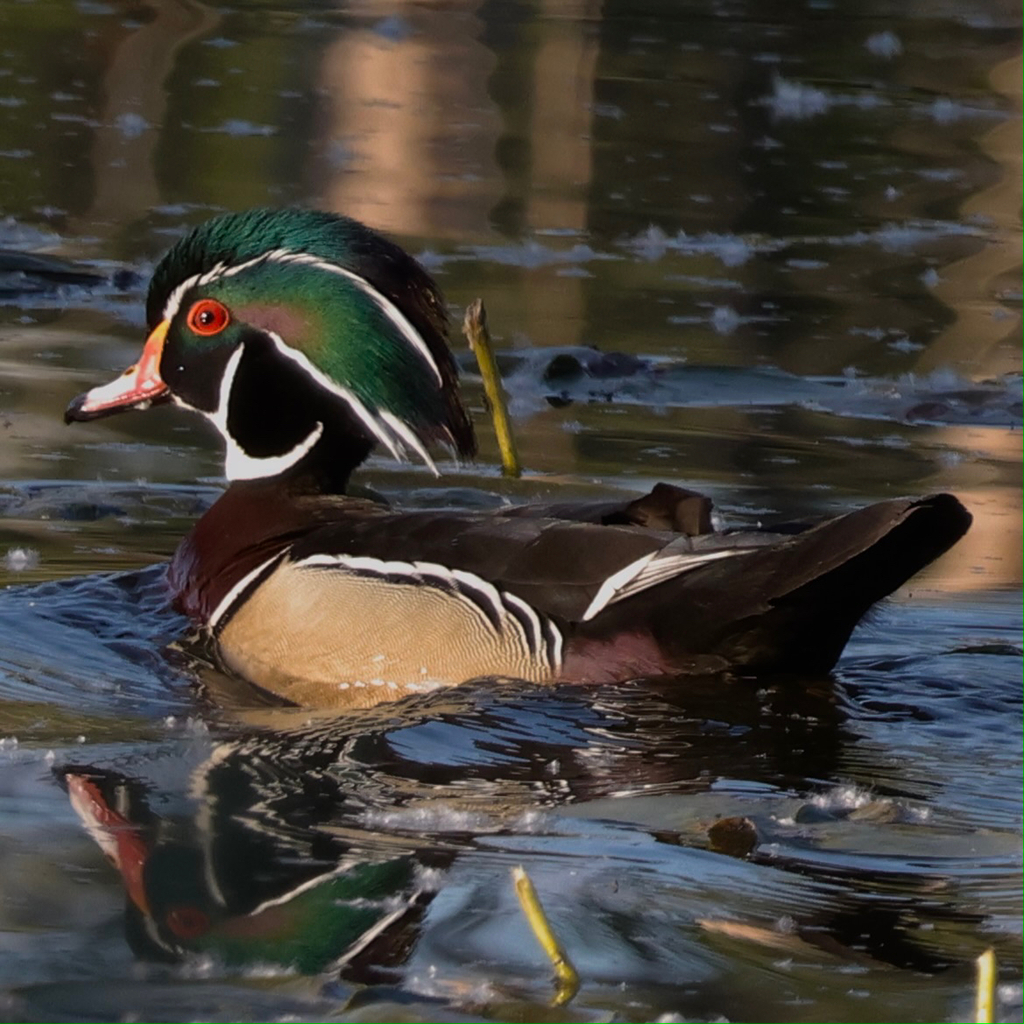
- Adult male has a long crest and fine white facial lines
- Chestnut breast and patterned sides; red eye
A breeding male wood duck has a swept-back crest and several white lines around the face and neck. The body carries chestnut, pale and dark panels rather than a mallard-like gray flank. Females are quieter brown-gray birds with a conspicuous white eye surround. Wood ducks often stay near trees and sheltered water, so look beyond exposed park ponds.
Lookalikes: Female hooded mergansers also have a crest. Compare the white eye surround and broad duck bill with a merganser's narrow bill.
Where to look: Wooded ponds, swamps and sheltered streams. Seasonal occurrence: Spring through fall; some winter locally.
Species candidate
3. American Black Duck
Anas rubripes
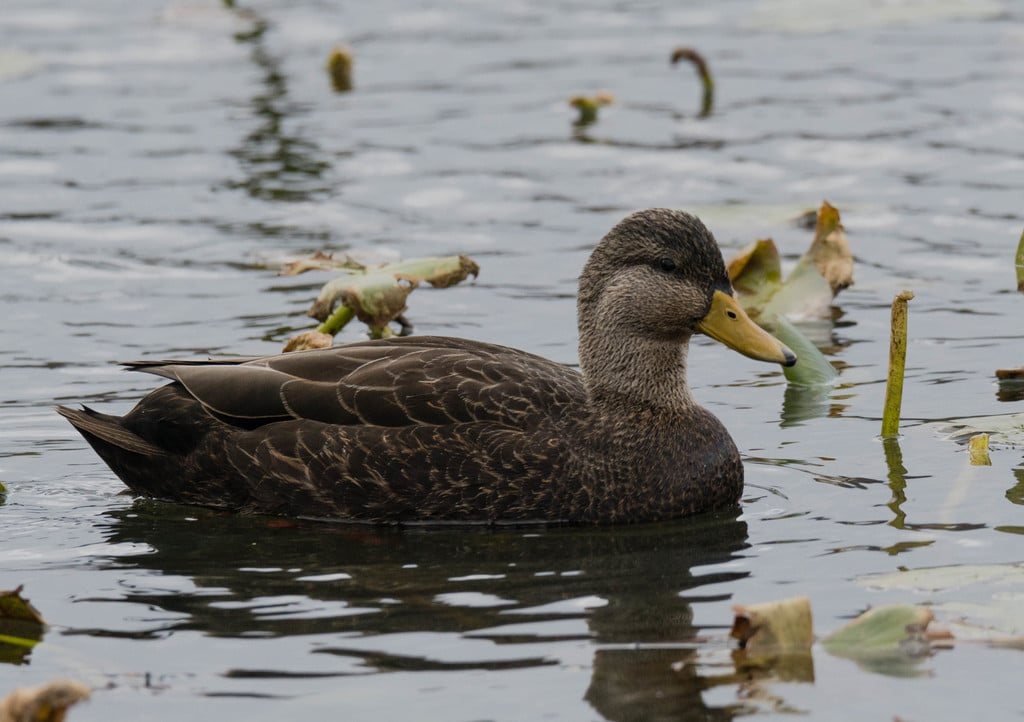
- Body is much darker than the head
- Purple-blue wing patch has little or no white border
An American black duck has a dark brown body and a lighter brown head. It can look black at a distance, but a closer view shows the brown feather pattern. The wing patch is purple-blue and usually lacks the mallard's broad white borders. Males generally have a yellowish bill; females tend toward olive. Both sexes remain broadly similar in body plumage.
Lookalikes: Female mallards and mallard hybrids can be difficult. Compare the whole body contrast, bill and a clear wing view; keep doubtful birds unresolved.
Where to look: Coastal marshes and inland wetlands. Seasonal occurrence: Year-round; often more noticeable in winter.
Species candidate
4. Northern Pintail
Anas acuta
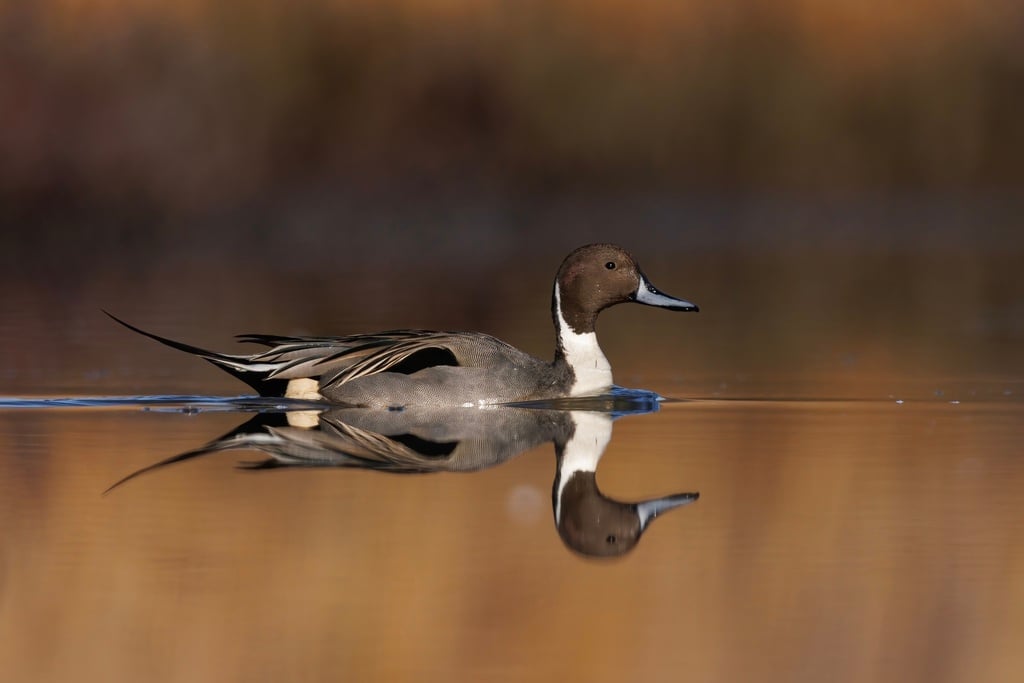
- Slender body and long neck
- Male white breast extends up the side of the neck
The long neck and slim body are useful before you can see the finer markings. A breeding male has a brown head and a white stripe rising from the breast along the side of the neck. Its central tail feathers form a long point. Females retain the elegant shape but have mottled brown plumage and a shorter pointed tail.
Lookalikes: A swimming bird can hide its tail. Use the long neck and slender outline with the plumage, rather than expecting the point in every view.
Where to look: Shallow marshes, flooded fields and estuaries. Seasonal occurrence: Mainly migration and winter.
Species candidate
5. Blue-winged Teal
Spatula discors
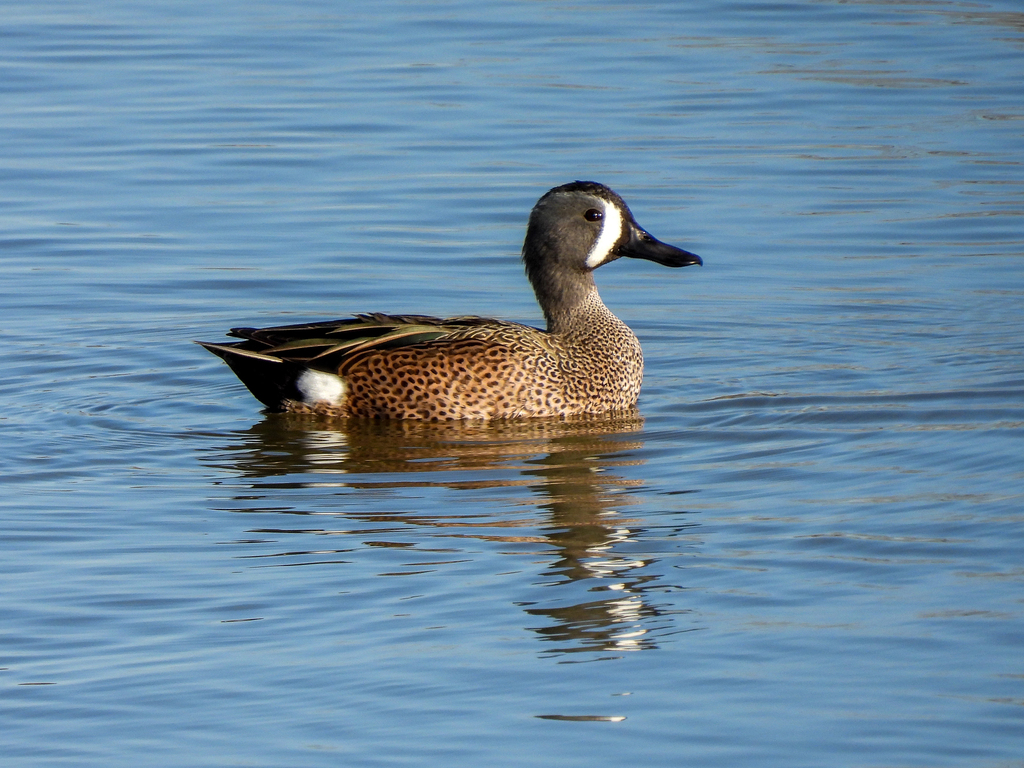
- Adult male has a white crescent in front of the eye
- Blue forewing patch is most obvious in flight
A breeding male blue-winged teal has a pale crescent between its bill and eye, set against a blue-gray head. The brown sides have small dark marks. The namesake blue forewing can be hidden when the bird is resting. Females are mottled brown and lack the bold male crescent. This is a small dabbling duck, often feeding in shallow water.
Lookalikes: Other teal and northern shovelers can show blue wing patches. Check the face and bill shape as well; the wing color is not exclusive.
Where to look: Shallow ponds, marshes and flooded fields. Seasonal occurrence: Especially spring and fall migration.
Species candidate
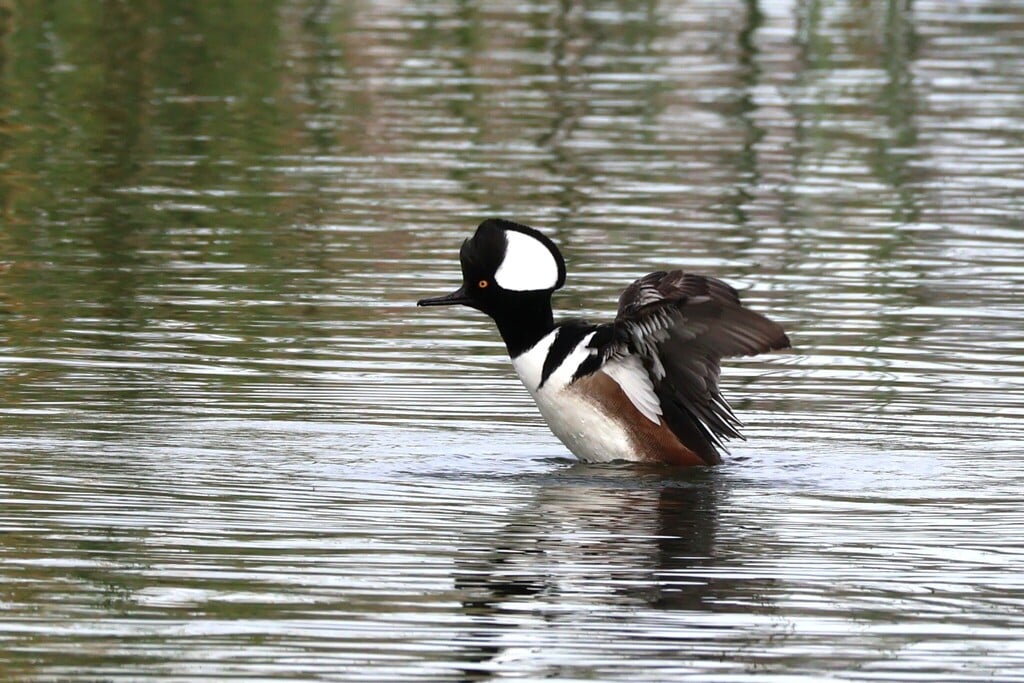
6. Hooded Merganser
Lophodytes cucullatus
- Raised crest forms a fan with a large white patch
- Narrow bill; chestnut sides and dark back
The raised crest makes a male hooded merganser especially distinctive: a large white panel is surrounded by black. When the crest lies flat, the head looks much smaller, so do not judge the species from head outline alone. The bill is slender rather than broad and flat. Females have a cinnamon-brown crest and lack the male's black-and-white head.
Lookalikes: Bufflehead males also have a white head patch, but their rounder heads, broad bills and white sides differ from a hooded merganser.
Where to look: Wooded ponds, small lakes and sheltered creeks. Seasonal occurrence: Fall through spring; some breed locally.
How do you identify a brown female duck?
Begin with bill shape and color, the head pattern and the body outline. Then look for the wing patch if the bird shows it naturally. Several females resemble one another, so use a female-specific regional guide rather than assigning the name of the brightest male in the flock.
Why has a male duck lost its bright colors?
Many male ducks molt into a duller eclipse plumage after breeding. A summer mallard may resemble a female, although its yellow bill can still help. The date and stage of molt matter; this chart does not cover every transitional appearance.
Is every unusual duck a different wild species?
No. Domestic ducks and wild-domestic hybrids occur on park ponds. Odd white patches, oversized bodies or unfamiliar color combinations can be signs to investigate domestic ancestry. Record the bird as uncertain if it does not match a normal wild plumage.
Which photographs help with duck identification?
Take a side view showing the bill, head, chest and tail, and a wing view only if the duck opens its wings naturally. Note the place, date and habitat. Watch from shore without chasing birds or approaching nests.
For more regional detail, see the Cornell Lab guidance on identifying brown ducks.
Related reading: Where ducks sleep, Can ducks fly?.