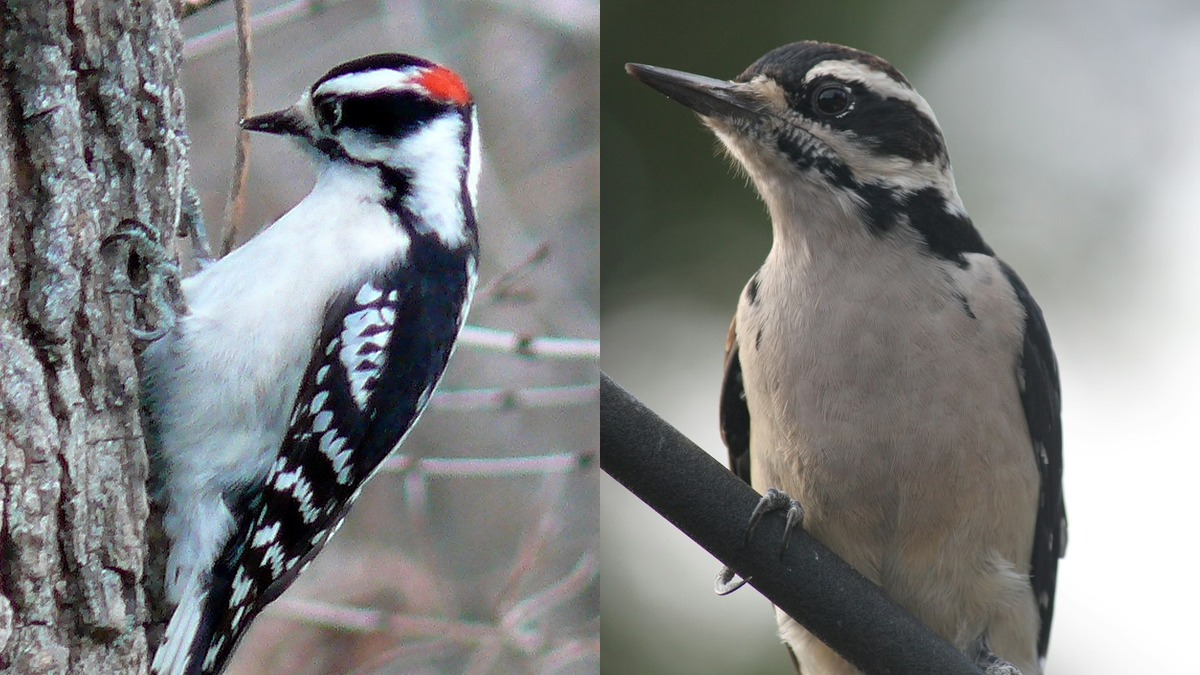
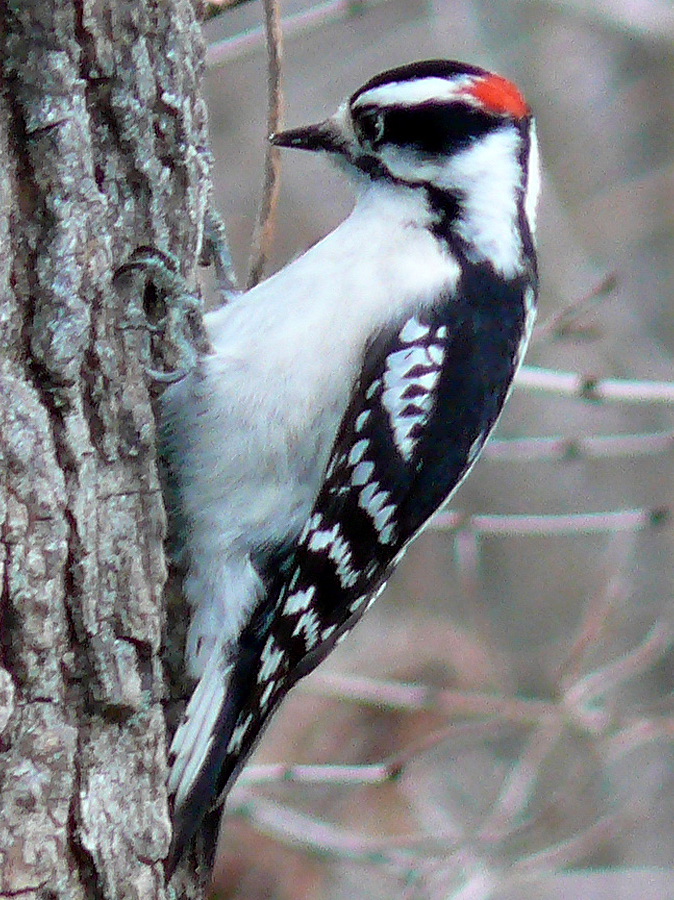
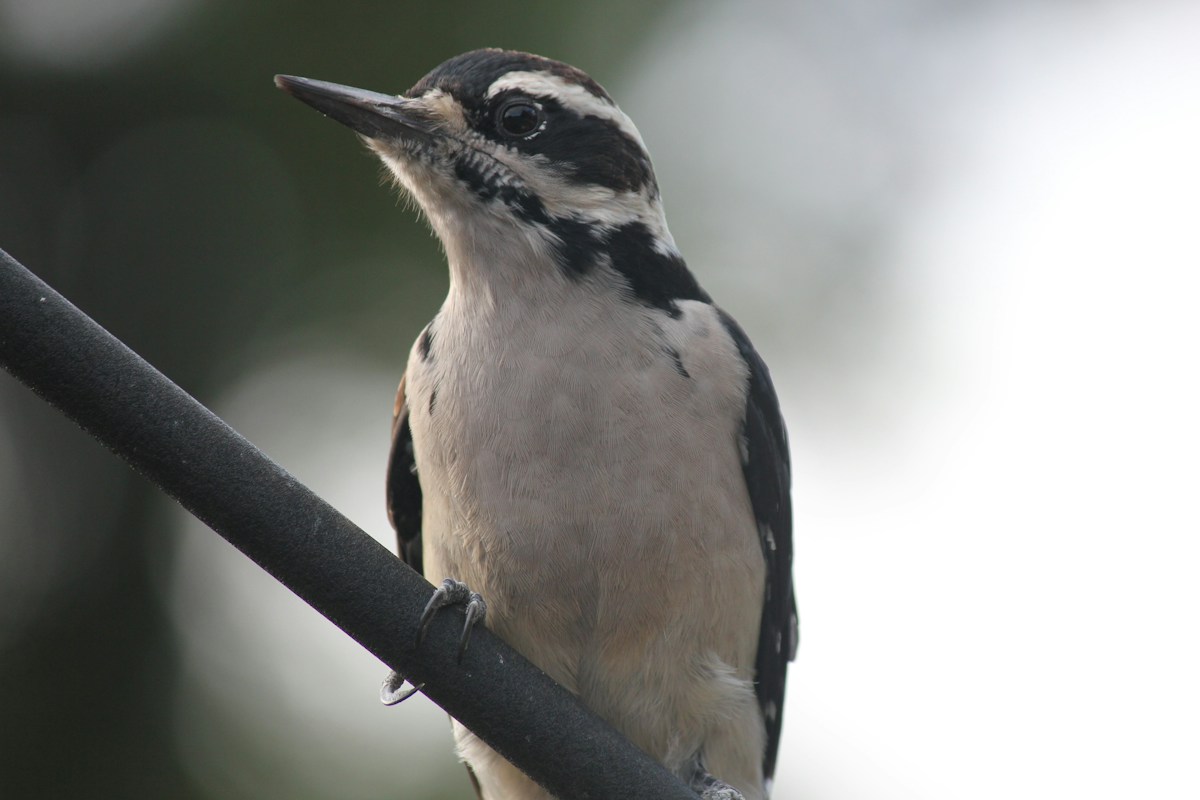
A Downy Woodpecker has a short bill that looks small against its head; a Hairy Woodpecker has a longer bill approaching head length. Start with a clear side view of the bill, then check the outer tail feathers. Overall size helps most when there is something nearby for comparison.
Downy Woodpecker. Look at the short bill in relation to the head. The red patch marks this bird as an adult male; it does not separate the two species. Ken ThomasHairy Woodpecker. Compare the long, straight bill with the length of the head. This female lacks a red nape patch. Anish Lakkapragada
Quick Identification Comparison
Feature
Downy Woodpecker
Hairy Woodpecker
Bill in profile
Shorter than the head; small-looking
Approximately head length; stronger-looking
Typical impression
Small and compact
Larger, with a more substantial bill
Outer tail feathers
Usually white with black spots
Usually white in eastern birds; regional exceptions occur
Adult male head
Small red patch at the back
Small red patch at the back
Check the Bill Before Judging Size
Watch until the bird turns sideways. Compare the bill from its base to its tip with the head behind it. A Downy’s bill looks noticeably shorter; a Hairy’s projects farther forward. A bird facing the camera can hide much of its bill, so that angle is a poor basis for identification.
A nearby feeder can provide scale, but separate photographs are deceptive. A cropped Downy can look larger than a Hairy photographed from farther away. If the bird is alone against a tree trunk, the proportions of its bill are usually more useful than your impression of its total size.
Use the Tail as a Second Check
Look for the pale feathers along the outside of the tail. Small dark spots support Downy Woodpecker. Hairy Woodpeckers in much of eastern North America generally have plain white outer tail feathers. Cornell’s woodpecker comparison notes that some Pacific and Newfoundland Hairies also have dark markings there.
A folded tail may hide the relevant feathers. Do not treat an unseen spot as proof that the tail is unspotted. Get another view and combine the tail pattern with the bill.
Why the Red Patch Does Not Settle It
Adult males of both species can have red at the back of the head, and adult females lack that patch. A red nape helps with sex, not the Downy-versus-Hairy decision. Young birds can show different head markings, so a red patch on the crown needs more care.
Their shared white back stripe and spotted black wings also explain why the pair is confusing. Those features establish the general pattern; they are not enough to choose between these two woodpeckers.
Allow for Regional Differences
Both species vary geographically. Cornell’s Hairy Woodpecker account describes western birds with less white spotting on the wings, while its Downy account shows darker Pacific birds. A clean eastern example should not become a rigid color rule for every location.
In a quick observation, note where the bird was, its bill proportions and whether the outer tail was visible. A side photograph and an underside view of the tail are more useful than several blurred pictures of the back. If neither bill nor tail is clear, leave the identification open rather than choosing from apparent size alone.