Identify a beetle by checking its wing covers, body shape and antennae before comparing the colors. A small metallic green beetle with copper wing covers and white side tufts suggests a Japanese beetle. A larger green beetle with pale margins suggests a green June beetle. Several other groups require finer detail.
These six adult beetle examples occur in the eastern United States, with a Mid-Atlantic focus. The chart includes garden visitors, wood-associated beetles and a firefly. Beetle larvae look different and are outside this comparison. Photograph the insect where it is rather than opening logs or disturbing habitat.
Select the chart to open a larger view. Original photo sources, creators and licenses appear in the cards below and in the printable PDF.
Beetle identification at a glance
Activity is a broad regional guide. An adult can fly away from its larval habitat, and lights may attract beetles from surrounding areas. Some species-level names remain candidates until details are checked. On a small screen, scroll the table sideways.
Eastern United States, with a Mid-Atlantic focus beetle comparison: appearance, habitat and season
Open a photograph for a larger view. Read the photo label before comparing the markings.
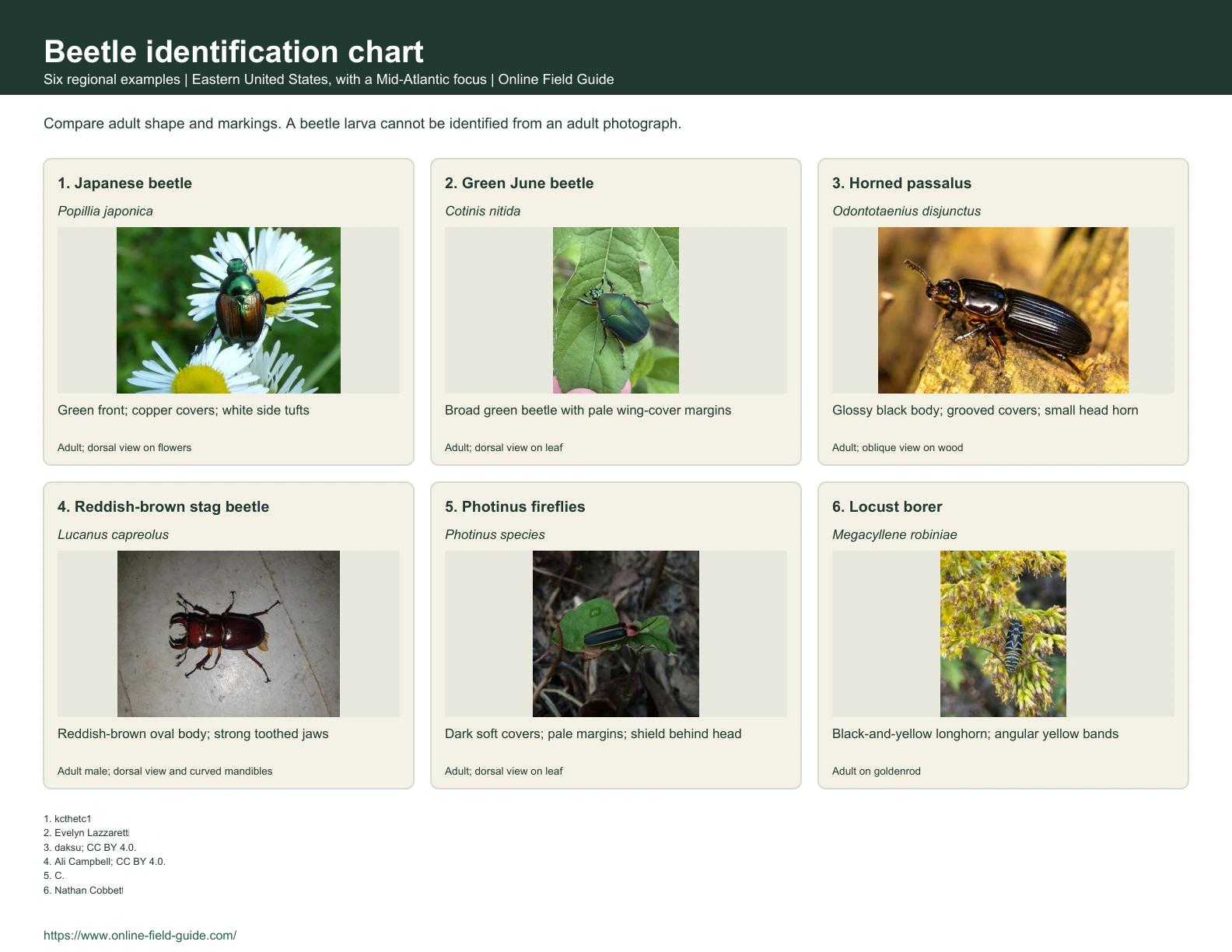
Adult; dorsal view on flowers
Species candidate
1. Japanese beetle
Popillia japonica
Metallic green head and front body
Copper wing covers with white hair tufts beside them
The copper wing covers contrast with a metallic green head and thorax. Check the small white tufts along the abdomen rather than identifying every shiny green beetle as Japanese. Adults often gather on leaves and flowers. The pale curved grubs found underground are a separate life stage and need a different identification method.
Lookalikes: Green June beetles have green covers and pale margins without the same white side-tuft pattern.
Where to look: Gardens, flowers, shrubs and vines. Adult activity: Early to late summer.
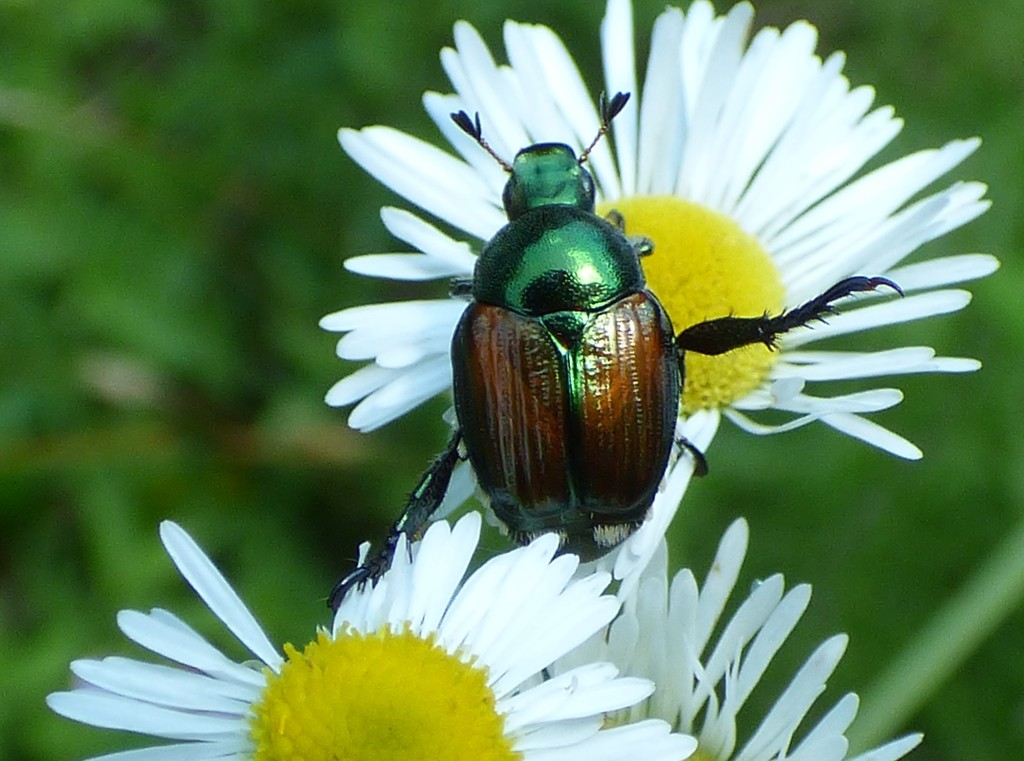
Look at the wing covers as well as the front body: they are green, often bordered with a pale tan margin. The broad outline differs from a smaller Japanese beetle. Adults can fly low over lawns or feed around fruit. A green scarab seen elsewhere in North America may belong to a related species, so keep the eastern location in the comparison.
Lookalikes: Japanese beetles have copper-brown covers and white side tufts. Western figeater beetles are a separate lookalike.
Where to look: Lawns, gardens and ripening fruit. Adult activity: Summer.
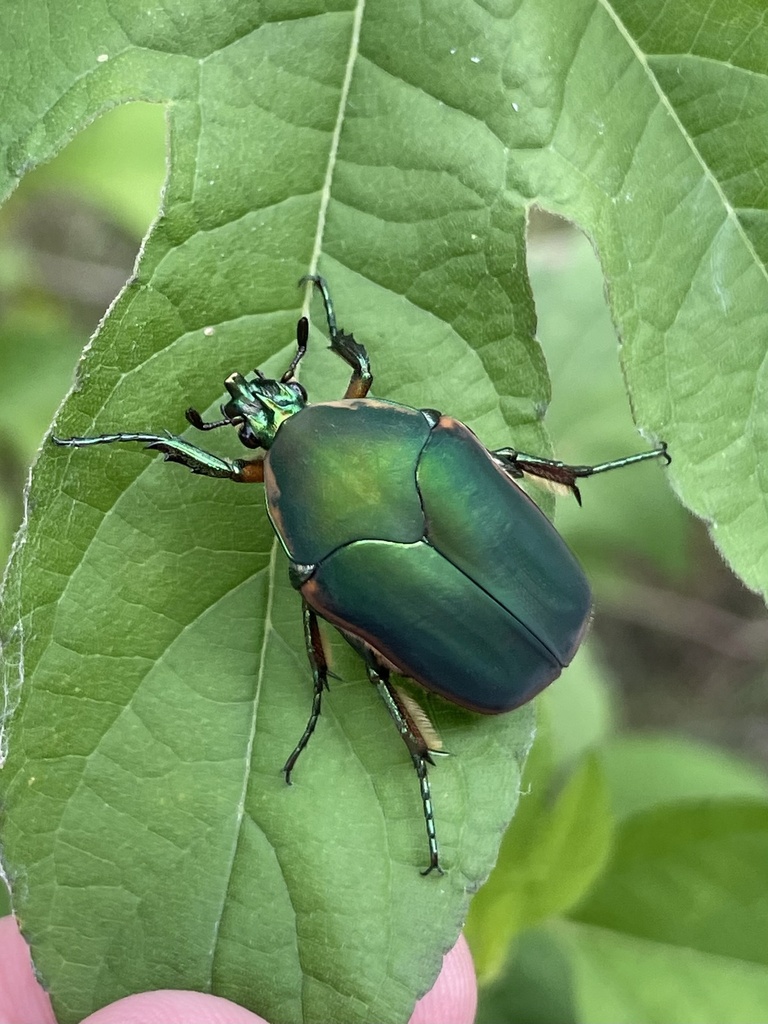
A horned passalus, also called a bess beetle, has a glossy black surface and pronounced lengthwise grooves on its covers. The small horn sits on the head and may disappear in a distant photograph. These beetles live in decaying wood with their young. Observe exposed individuals and leave the log intact; tearing it apart destroys the habitat being examined.
Lookalikes: Stag beetles may also be large and dark, but their prominent jaws differ from the passalus's small central horn.
Where to look: Decaying hardwood logs. Adult activity: Warm months; sheltered adults can overwinter.
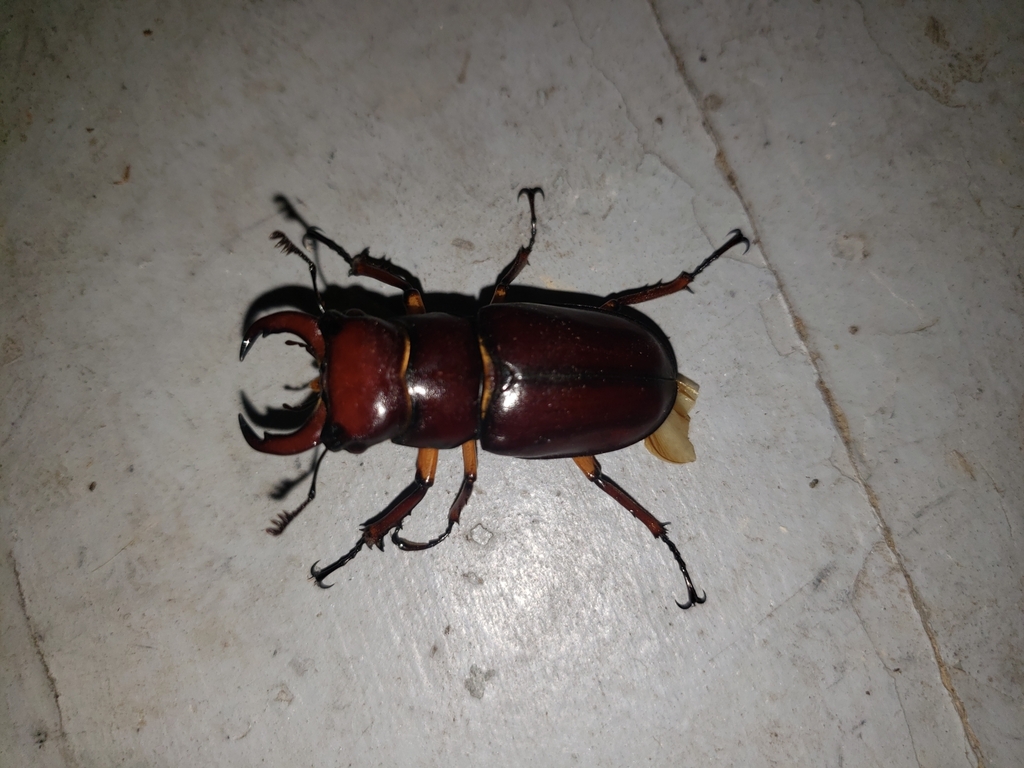
The jaws, or mandibles, draw attention to stag beetles, but females can have much smaller jaws than males. Check the reddish-brown body and compare the jaw shape in a sharp image. Adults may turn up around outdoor lights. A photograph that hides the antennae and mandibles is better recorded as a stag beetle than forced to this species.
Lookalikes: Other Lucanus and smaller stag beetles share brown bodies. Sex changes the jaws, so size of the mandibles alone is insufficient.
Where to look: Wooded areas; sometimes attracted to lights. Adult activity: Late spring and summer.
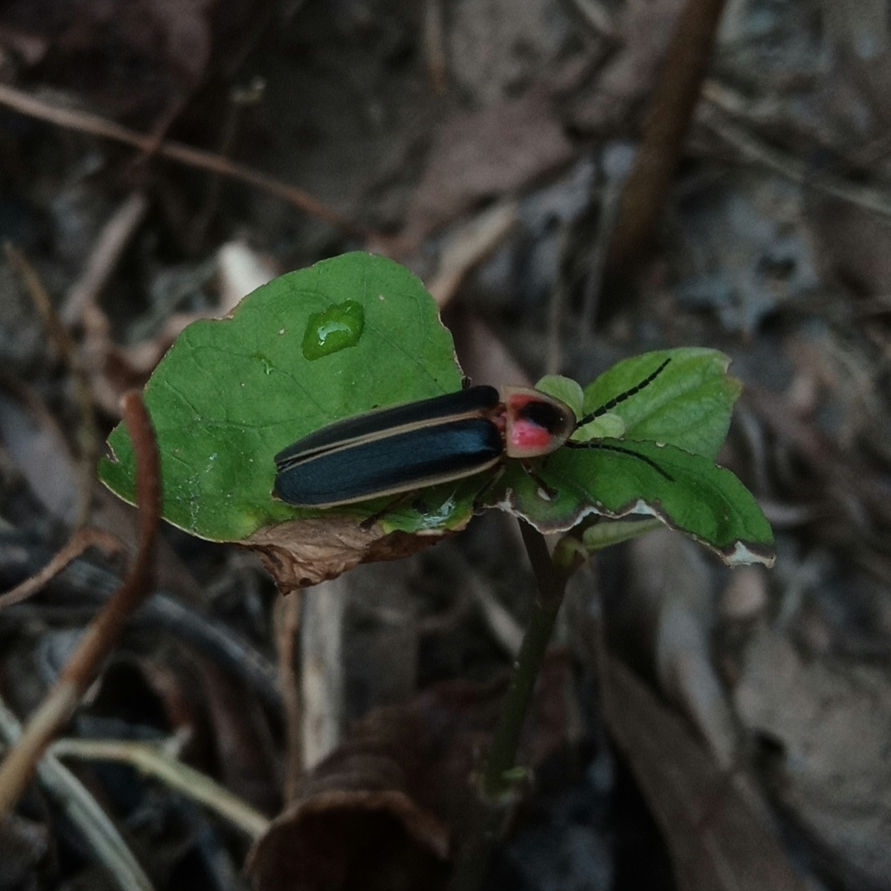
Fireflies are beetles, despite the familiar name. The pictured Photinus pyralis represents a group whose dark wing covers and pale-edged front shield can look similar in still photographs. The flash timing and flight pattern can help an experienced observer separate species. An illuminated insect or a yellow-edged cover alone does not establish the pictured species.
Lookalikes: Other firefly genera and some soldier beetles look similar. Record the flash behavior separately from the body photograph.
Where to look: Grassy areas, gardens and woodland edges. Adult activity: Late spring and summer evenings.
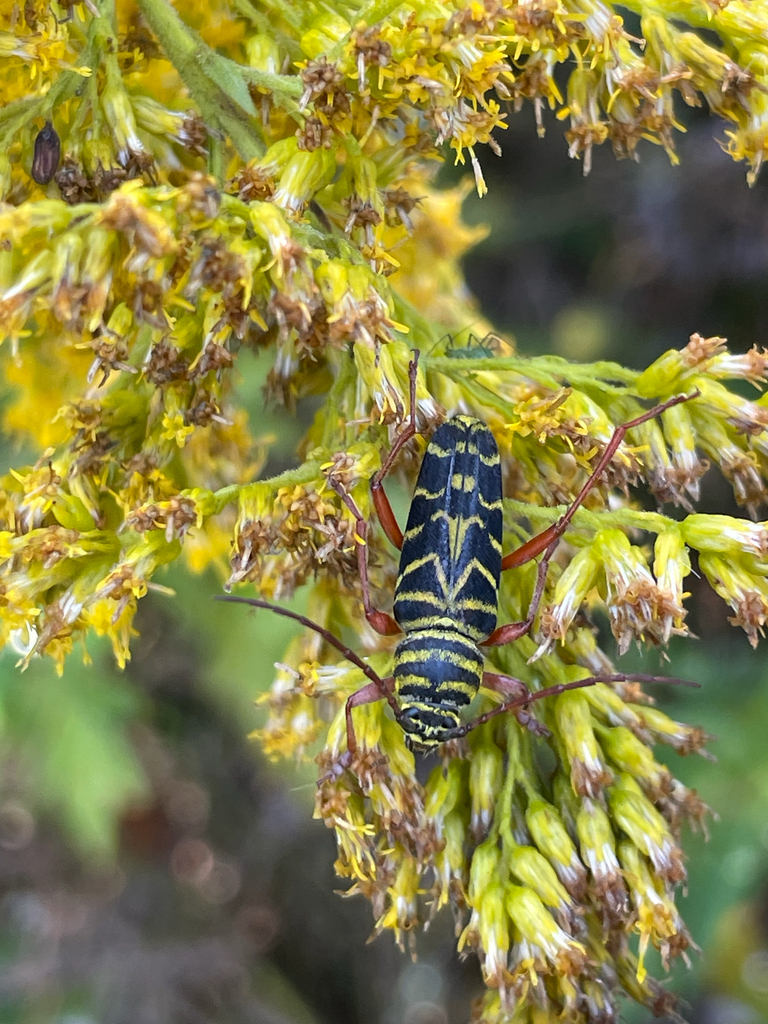
Look for the angular yellow band crossing the black wing covers and the long antennae typical of a longhorn beetle. Adults commonly visit goldenrod late in the season, while larvae develop in black locust. A beetle sitting on goldenrod could still be another species, so inspect the full pattern. The flight season helps separate a close striped lookalike.
Lookalikes: The hickory borer has a similar black-and-yellow pattern but is associated with spring activity.
Where to look: Goldenrod near black locust and open woodland. Adult activity: Late summer and fall.
Most adult beetles have hardened front wings, called elytra, meeting along a straight seam down the back. These covers protect the flight wings underneath. Fireflies have softer covers than many beetles. A top view showing that seam, the antennae and the front body is more useful than a single side silhouette.
Japanese beetle or green June beetle?
Check the copper-brown wing covers and small white hair tufts along the sides of a Japanese beetle. Green June beetles have green wing covers, often with tan or yellowish borders, and a broader body. Both can look metallic in sunlight, so green color alone does not separate them.
Can a yellow-and-black beetle look like a wasp?
Locust borers have yellow bands on a dark body and may visit goldenrod. Their hardened wing covers meet along the back and their outline differs from a wasp's narrow waist. Other longhorn beetles share a similar color pattern; compare the bands and season before choosing an exact name.
What should you record for a beetle identification?
Take a top view and, if possible, a side view without turning or handling the insect. Note whether it was feeding, walking on a trunk, attracted to a light or merely resting. A tree or flower name is useful context, but it does not prove the larval host.