
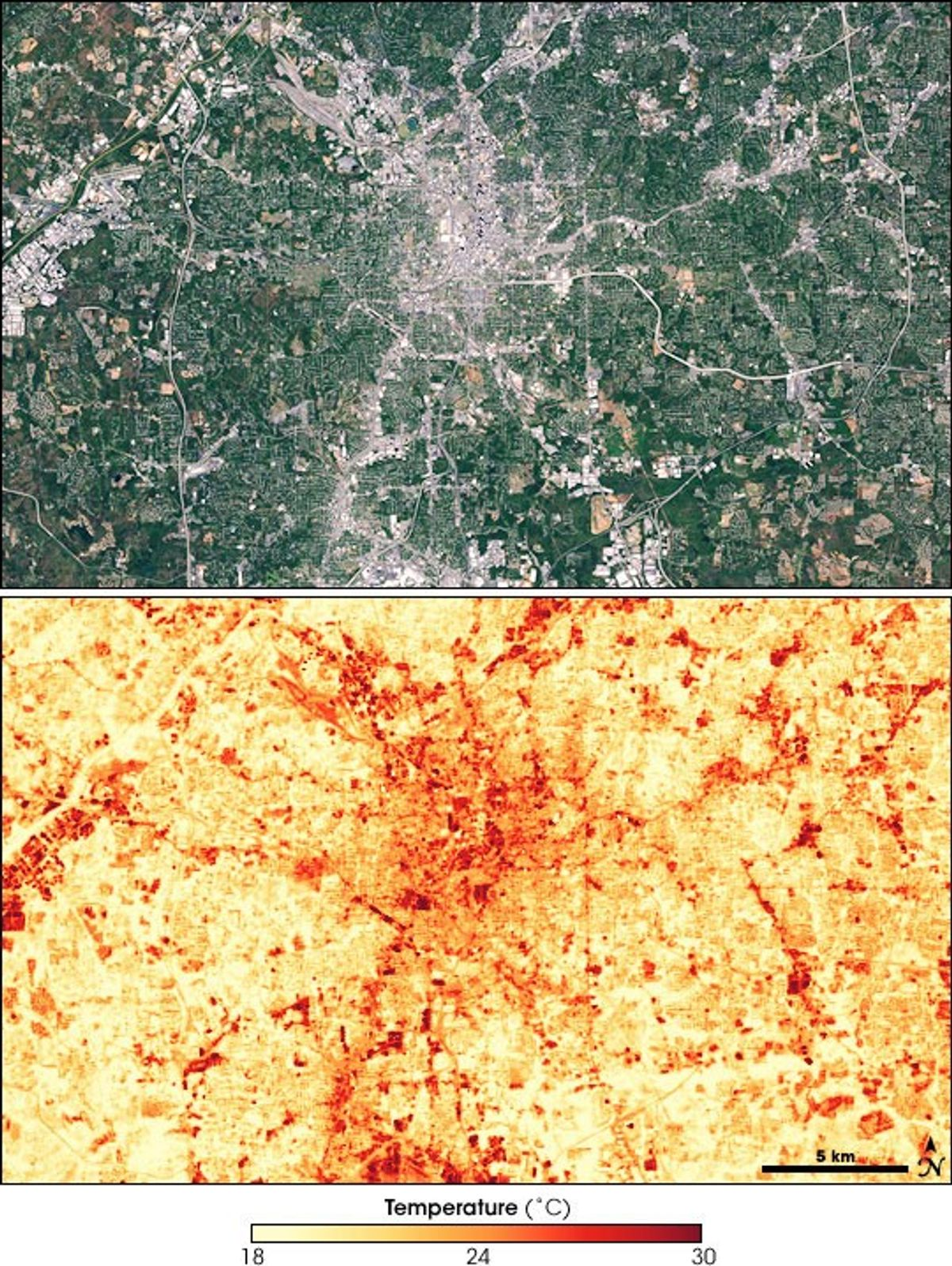
An urban heat island is a built-up area that is warmer than nearby surroundings. Pavement and buildings can absorb and hold heat. Places with fewer trees also have less shade and less cooling from water evaporating from plants and soil.
Walk from a shaded street into a large parking lot on a sunny day and you can feel the difference that shade makes. Across an entire city, the mix of paved areas, vegetation, and buildings helps explain why some neighborhoods are hotter than others.
Why Temperature Changes From Block to Block
A parking lot and a tree-lined street can feel different on the same afternoon. Shade limits direct sunlight on the ground and on people. Plants can also cool their surroundings by releasing water vapor. A sunlit paved surface has less access to that cooling and can reach a much higher surface temperature.
Building shapes, airflow and heat released by vehicles and cooling equipment can also affect local conditions. After sunset, built surfaces continue releasing stored heat. The U.S. Environmental Protection Agency's heat island guide explains why the difference changes with weather, time of day, and the surfaces you compare.
Surface Temperature and Air Temperature
A satellite can map the temperature of surfaces such as roofs and pavement. A thermometer mounted above the ground measures the air around it. The lower Atlanta panel above shows land surface temperatures, with warmer areas in red. The top panel shows the same area in natural color, so you can compare the pattern with vegetation and development. Use it to find warmer surfaces. For air temperatures on a nearby street, you would need a separate measurement.
When reading a map, find out what was measured and at what time. A midday surface image can highlight hot asphalt. To understand the heat people experience after sunset, compare nighttime air measurements or a map based on those measurements.
How a City Can Change the Pattern
Street trees can shade sidewalks, where people walk and wait. Reflective roofs can reduce the sunlight a roof absorbs. Parks can offer cooler areas when their vegetation has enough water. The right measure depends on which surface or outdoor space you are trying to cool.
Choose the scale of analysis based on the question. Comparing a city with nearby countryside shows the broad heat island. Comparing school grounds, bus stops and neighboring streets can show where shade would make the biggest difference for people outdoors.
Featured image: Marit Jentoft-Nilsen / NASA Earth Observatory