
Population density can be measured three ways. Arithmetic density divides the population by all land area. Physiological density divides the population by arable land, and agricultural density divides the number of farmers by arable land.
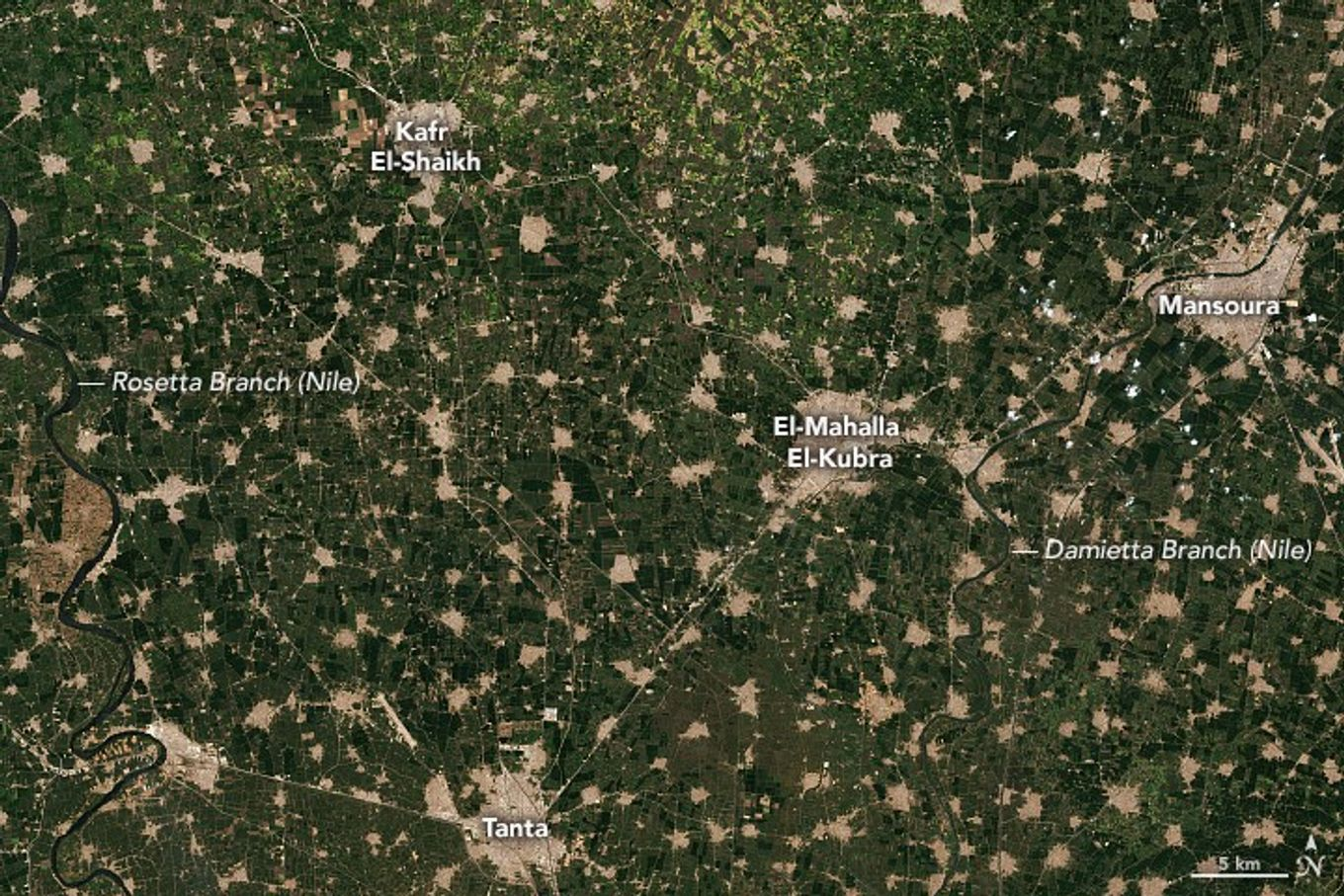
Think of a district with a fertile river valley and a wide stretch of desert. Its population can look sparse when you average it across the whole district. Divide those same people by the much smaller area where crops can grow and the result tells a different story. In the Landsat image above, you can see gray built-up areas between the dark green fields.
How to Calculate the Three Types of Population Density
Imagine a district with 60,000 residents, including 1,200 farmers. It covers 600 square kilometers of land, 150 of which are arable. For all three calculations, use figures for the same district and year.
- Arithmetic density: 60,000 residents ÷ 600 square kilometers of land = 100 people per square kilometer of land.
- Physiological density: 60,000 residents ÷ 150 square kilometers of arable land = 400 people per square kilometer of arable land.
- Agricultural density: 1,200 farmers ÷ 150 square kilometers of arable land = 8 farmers per square kilometer of arable land.
The U.S. Census Bureau's geography activity on land use uses these three measures to ask different questions about the same places.
What Each Type of Density Tells You
Arithmetic Density
Arithmetic density is the familiar figure used to compare how many people live on a given amount of land. It averages the population across the entire area. A district with a crowded river valley and nearly empty hills can have the same arithmetic density as a district where residents are spread out.
Physiological Density
Physiological density compares the whole population with the amount of arable land. It helps explain why two districts with the same arithmetic density can face different demands on their farmland. The Nile Delta in Egypt illustrates the difference between total land and crop-growing land. Productive fields are concentrated along the river and delta, and some farmland there has been lost to urban growth.
A high value alone tells you little about how much food a place can produce or import. Yields, water supply, and trade affect that picture.
Agricultural Density
Agricultural density compares the number of farmers with arable area. It can help distinguish places that use different amounts of farm labor per unit of land. Compare definitions before interpreting two figures. A count of farm operators and a count that includes hired agricultural workers measure different groups. For example, one district might have more farmers per square kilometer because more of its crops are harvested by hand. The density figure alone cannot tell you how much food they produce or how large their farms are.
Which Formula Should You Use?
For people per unit of all land, use arithmetic density. For the population relative to crop-growing land, use physiological density. For farmers relative to crop-growing land, use agricultural density. When you see two values with the same units, check the numerator and denominator before comparing them. People per square kilometer of land and people per square kilometer of arable land refer to different areas.
Featured image: Lauren Dauphin / NASA Earth Observatory