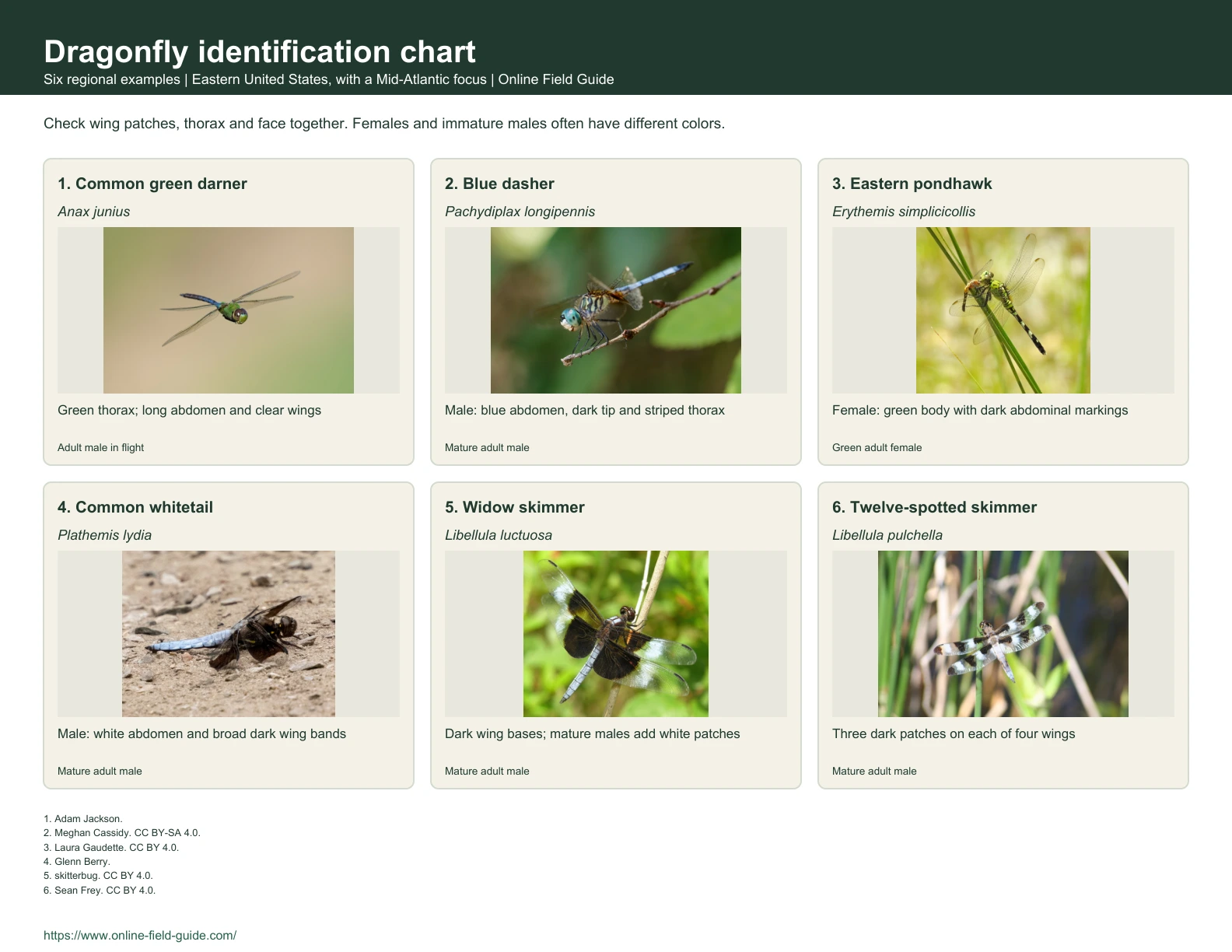
Identify a pond dragonfly by checking the wing patches, thorax, face and abdomen together. Three dark marks on each wing suggest a twelve-spotted skimmer. A white abdomen with one broad dark band across each wing suggests a mature male common whitetail. Blue body color alone is much less specific.
This chart covers six familiar dragonflies of eastern-US ponds and nearby open ground, with a Mid-Atlantic focus. Most pictured skimmers are mature males, whose colors differ from females and young males. It covers adults, not aquatic nymphs, and does not identify every blue or green dragonfly.
Select the chart to open a larger view. Original photo sources, creators and licenses appear in the cards below and in the printable PDF.
Dragonfly identification at a glance
The season column gives a broad adult activity window. Water type is a supporting clue, and adults may hunt away from their breeding pond. Read the photo label before comparing body color. On a small screen, scroll the table sideways.
Eastern-US dragonfly comparison: appearance, habitat and season
Open a photograph for a larger view. Read the photo label before comparing the markings.
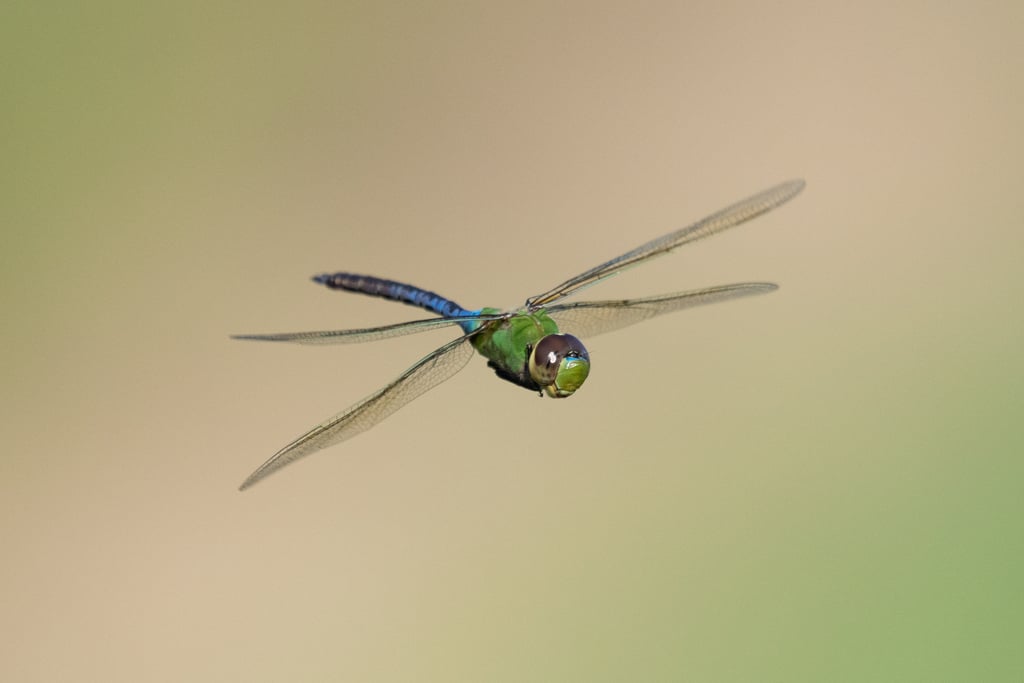
Adult male in flight
Species candidate
1. Common green darner
Anax junius
Broad green thorax without skimmer-style wing patches
Long abdomen; color differs with sex and maturity
A common green darner has a broad green thorax and a long, slender abdomen. Mature males usually have a blue abdomen, while females often show browner or purple tones. The wings lack the bold dark blocks seen on the patterned skimmers in this chart. Darners spend much time flying, so a settled individual offers the best opportunity to check the entire body.
Lookalikes: Other darners require closer comparison of head, thorax and abdominal markings. Green color by itself cannot confirm this species.
Where to look: Ponds, marshes and other still waters. Adult activity: Spring through fall.
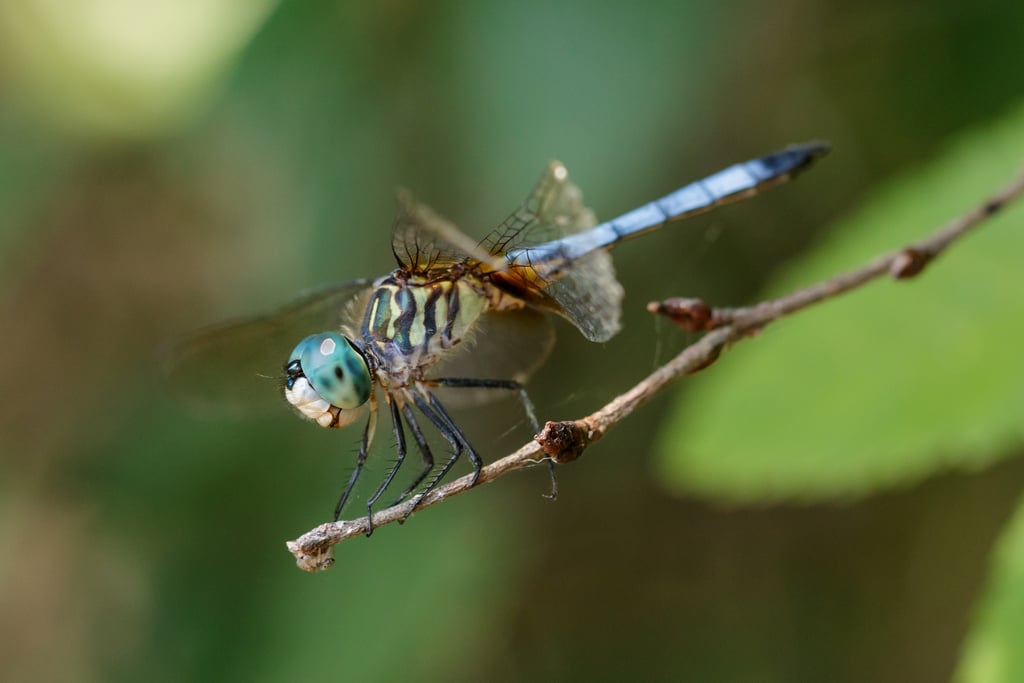
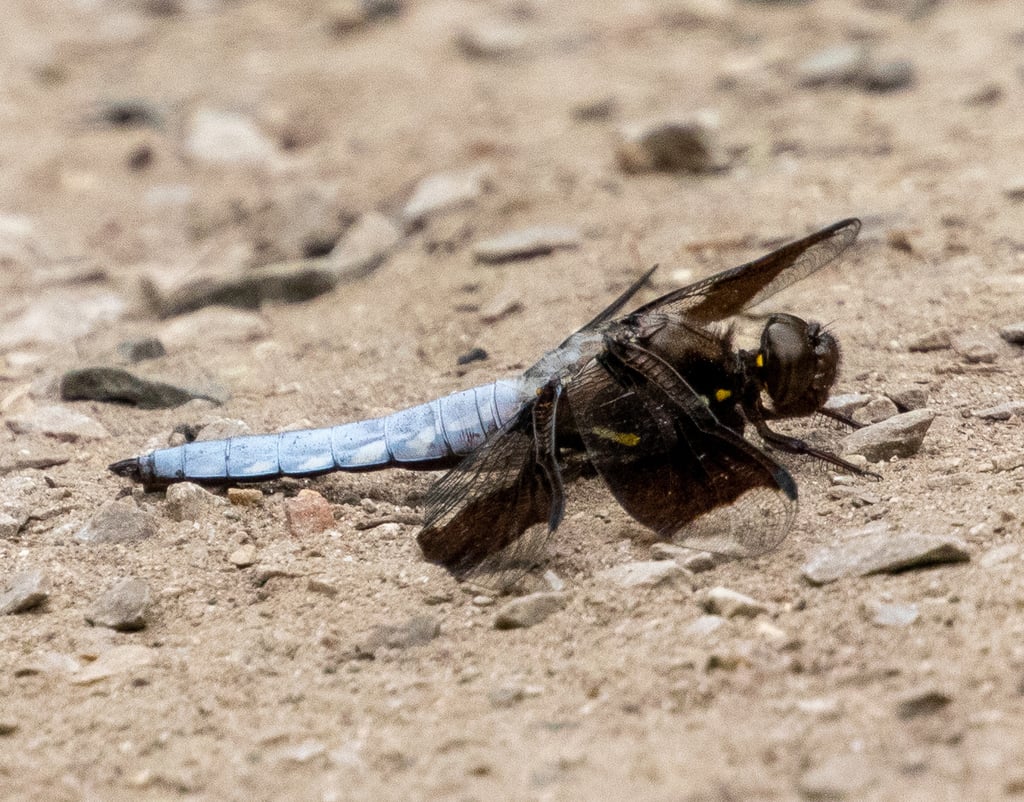
The mature male has a powdery blue abdomen ending in a dark tip. Check the slanted dark-and-yellow thorax stripes and pale face as well. Females and young males have dark-and-yellow abdominal markings rather than the full mature blue color. A side photograph of the thorax helps separate a blue dasher from a similarly colored pondhawk.
Lookalikes: Mature male eastern pondhawks have a green face and pale terminal appendages. Use those features alongside thorax markings, rather than comparing blue color alone.
Where to look: Vegetated ponds and slow water. Adult activity: Late spring through summer.
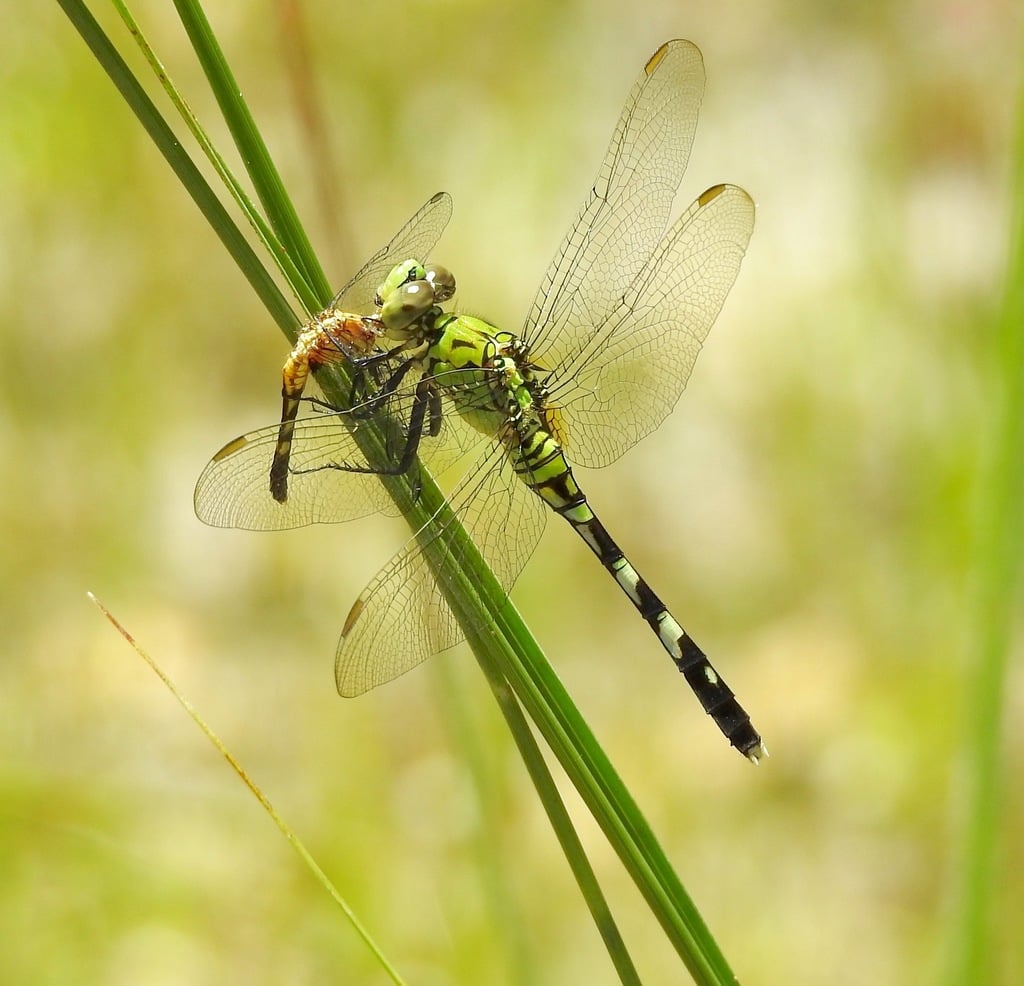
Mature male has a powdery blue body and green face
Females and immature males are bright green
A mature male eastern pondhawk is powdery blue, with a green face and pale appendages at the end of its abdomen. Females and young males are green with dark abdominal markings. A green individual beside a blue one can therefore be the same species. Photograph the face and tail end if you can do so without moving the dragonfly.
Lookalikes: Blue dashers have a pale face, a dark abdomen tip and a more obviously striped thorax. Other blue skimmers also need comparison.
Where to look: Ponds, lakes and nearby low vegetation. Adult activity: Late spring through summer.
A mature male common whitetail has a broad white abdomen and a broad dark band across each wing. The wings outside those bands are mostly clear. Females have brown abdomens with pale side markings and a different pattern of several dark wing marks. A female cannot be identified by looking for the male's white abdomen.
Lookalikes: Female twelve-spotted skimmers can resemble female whitetails. Compare the abdominal side markings and full wing pattern; do not apply the male photo pattern to every individual.
Where to look: Ponds, marshes and slow streams. Adult activity: Spring through summer.
Dark brown patches extend outward from all four wing bases
Mature males have white areas beyond the dark patches
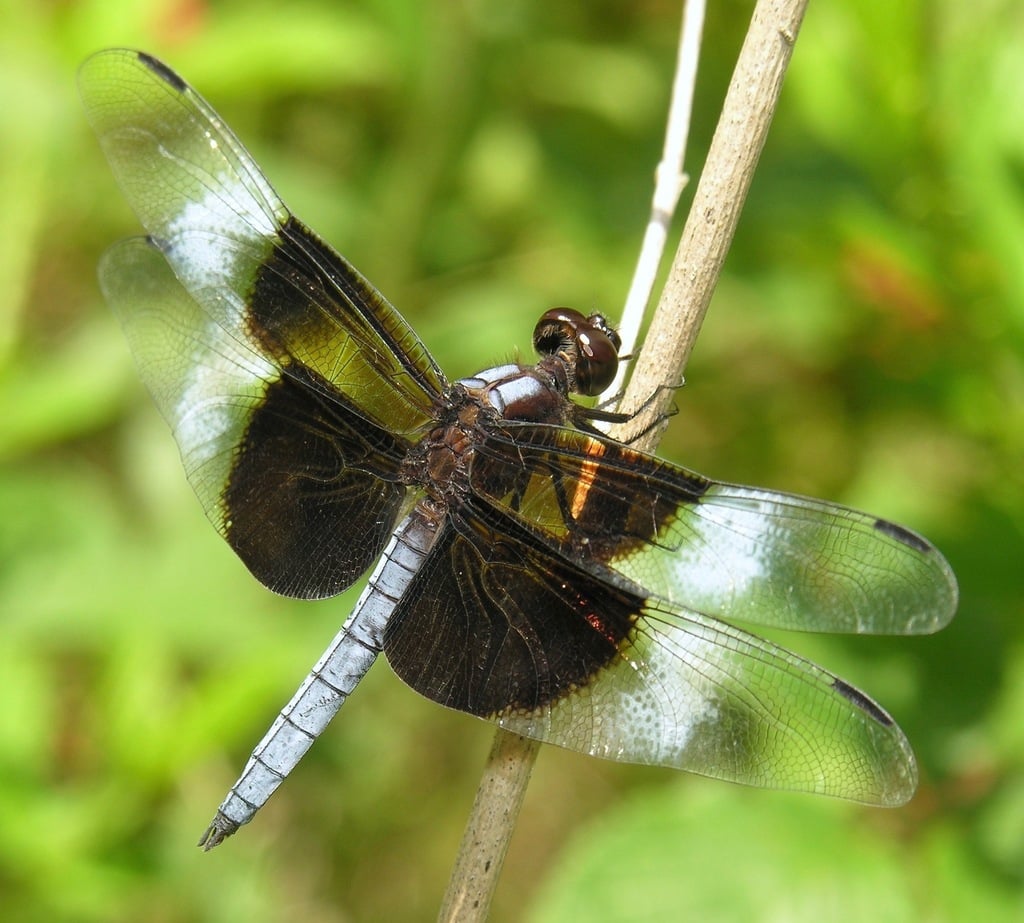
The widow skimmer has broad dark areas at the base of all four wings. Mature males add conspicuous white patches just beyond those dark areas. Females and young males lack the same white pattern and have browner bodies with yellow markings. Track where the dark patch begins: it reaches back to the body, unlike the isolated midwing band of a male whitetail.
Lookalikes: Twelve-spotted skimmers have separated dark marks rather than one broad dark basal area per wing. Check the position of each patch.
Where to look: Ponds, lakes and wetland edges. Adult activity: Late spring through summer.
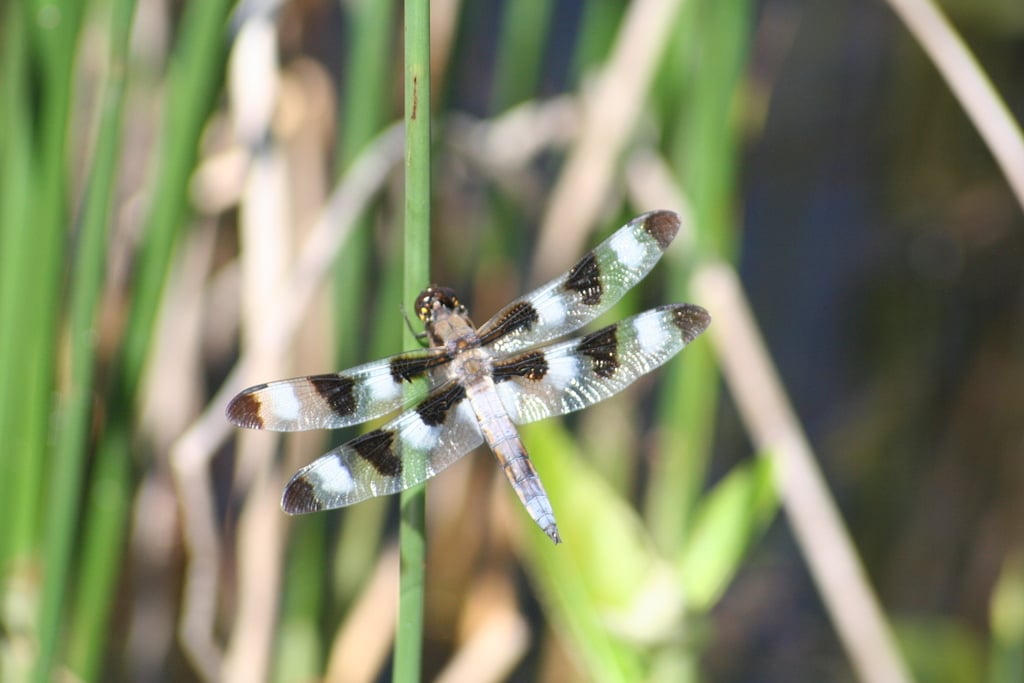
Count the dark wing marks by position: each of the four wings has three, for twelve in total. Mature males also have white spots between the dark ones. Females lack those conspicuous white areas, but retain the dark pattern. A sharp view from above makes the separated patches easier to compare than a side view with overlapping wings.
Lookalikes: Common whitetails and widow skimmers also have dark wing markings. Their broad bands or basal blocks differ from the twelve-spotted species' three-part arrangement.
Where to look: Ponds, lakes and marshy margins. Adult activity: Late spring through summer.
Look at the face, thorax and tip of the abdomen. A mature male blue dasher has a pale face, a striped thorax and a dark abdomen tip. A mature male eastern pondhawk has a green face and pale terminal appendages. A distant blue silhouette may not show enough detail to choose.
Why is my dragonfly green when the photo is blue?
Sex and maturity can change the color. Eastern pondhawk females and immature males are green, while mature males become powdery blue. Blue dasher females and young males show dark-and-yellow patterns. Match the wing and body markings before treating a color difference as a new species.
How to photograph a dragonfly
Start with a view from above that shows all four wings and the full abdomen. Add a side view for the thorax pattern and a closer face view if your camera can capture it from a distance. Note the water body, nearby habitat and date. Do not grab the wings to position the insect.
Dragonfly or damselfly?
Most dragonflies rest with their wings held out, while many damselflies hold them together over the body. That posture is a useful clue, but spreadwing damselflies are an exception. Eye spacing, body shape and wing structure add information; this chart compares dragonflies only.