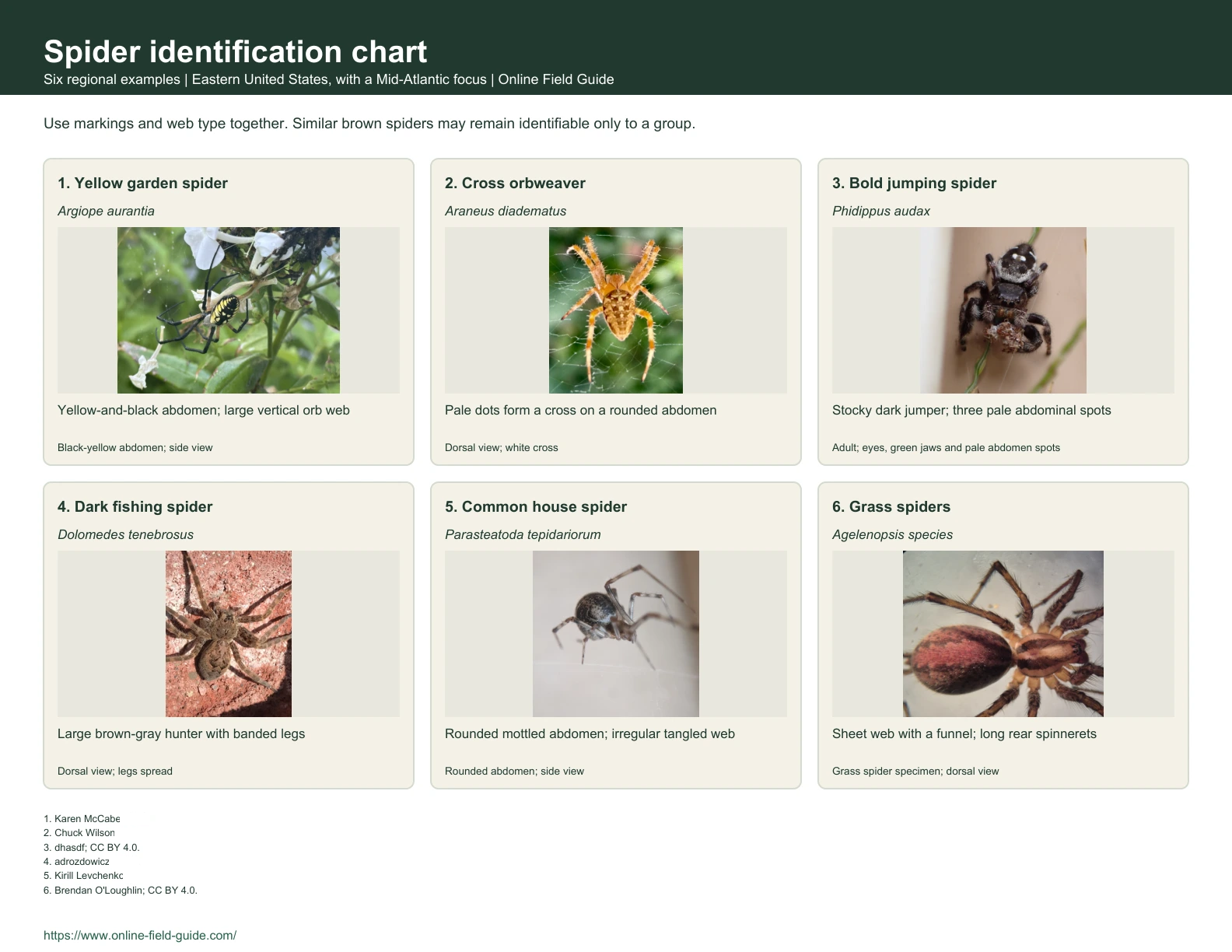
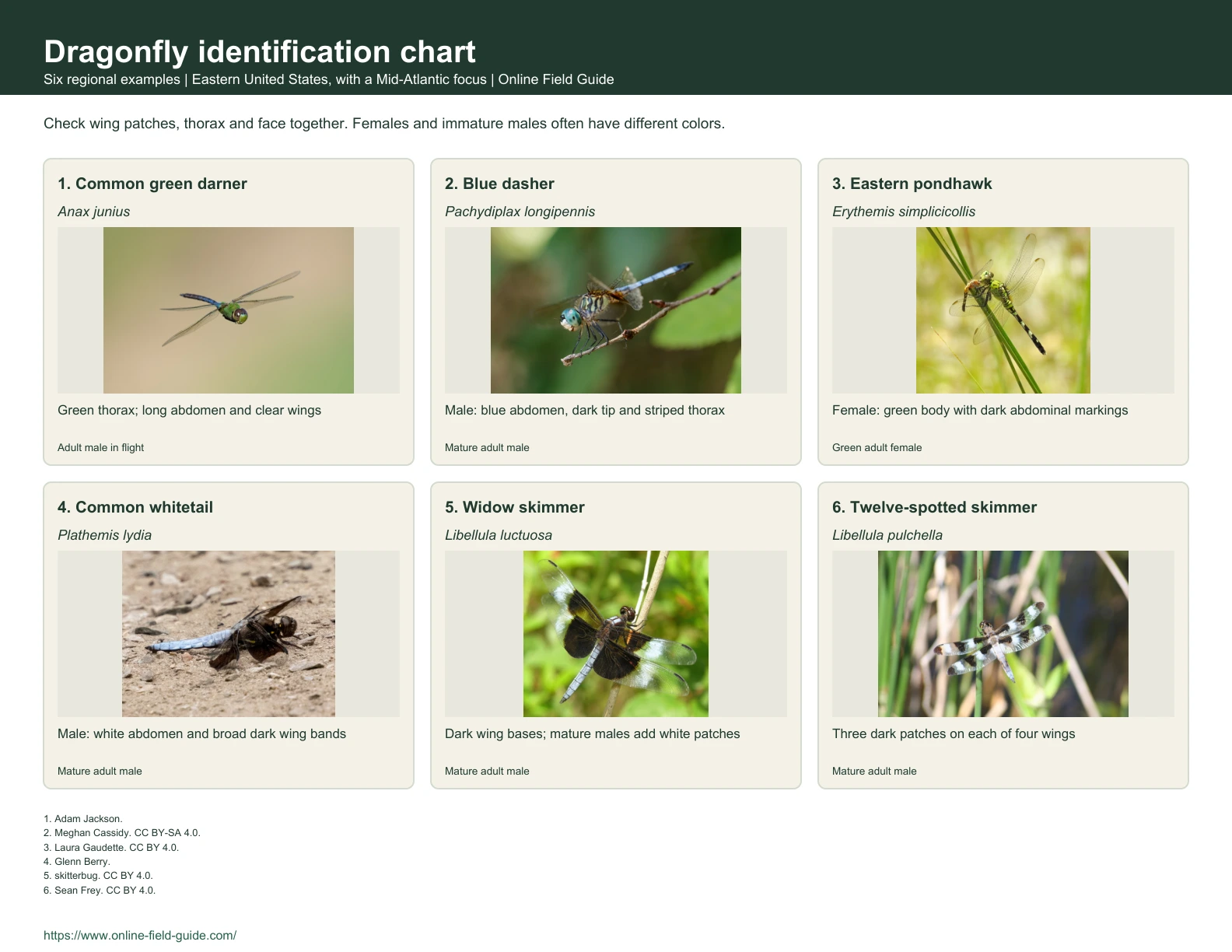
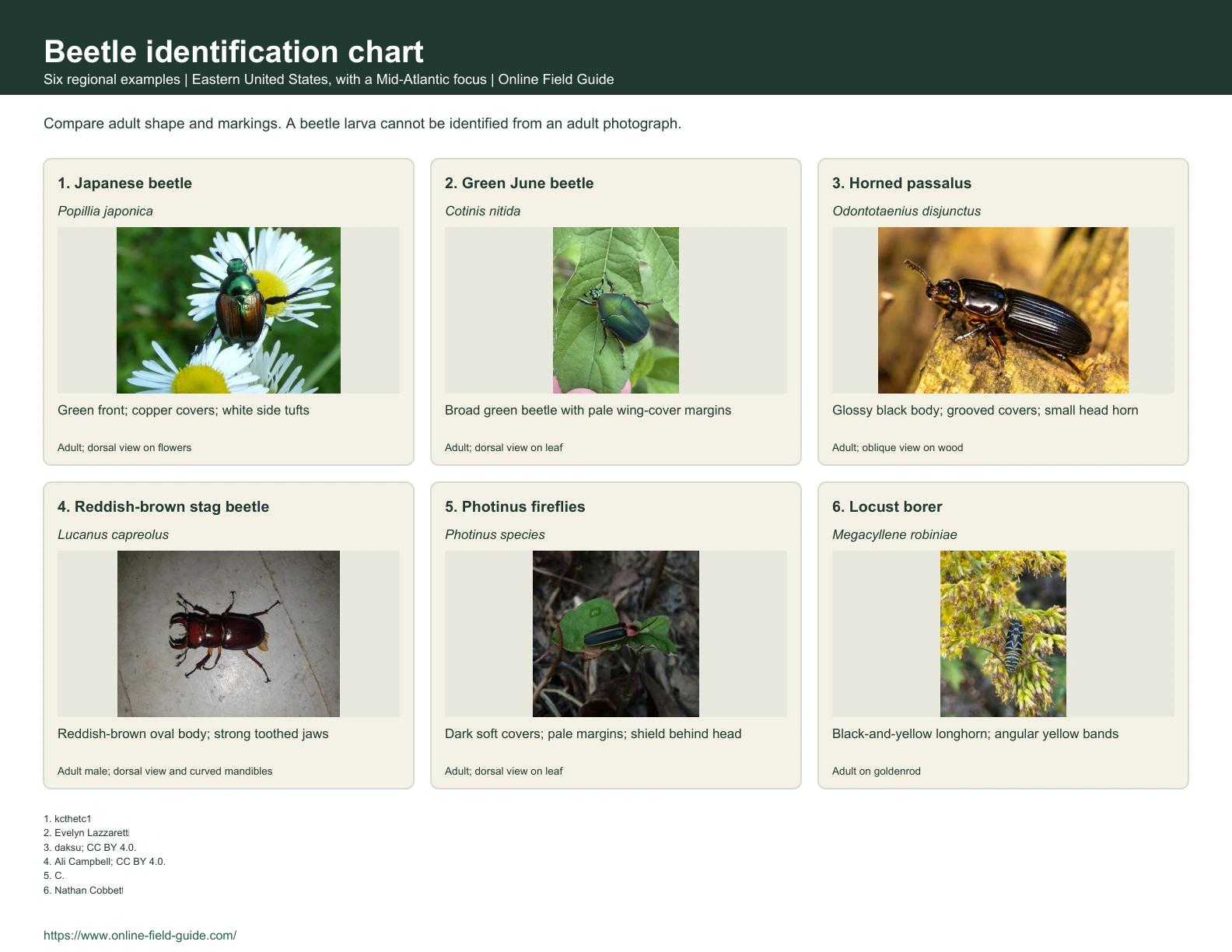
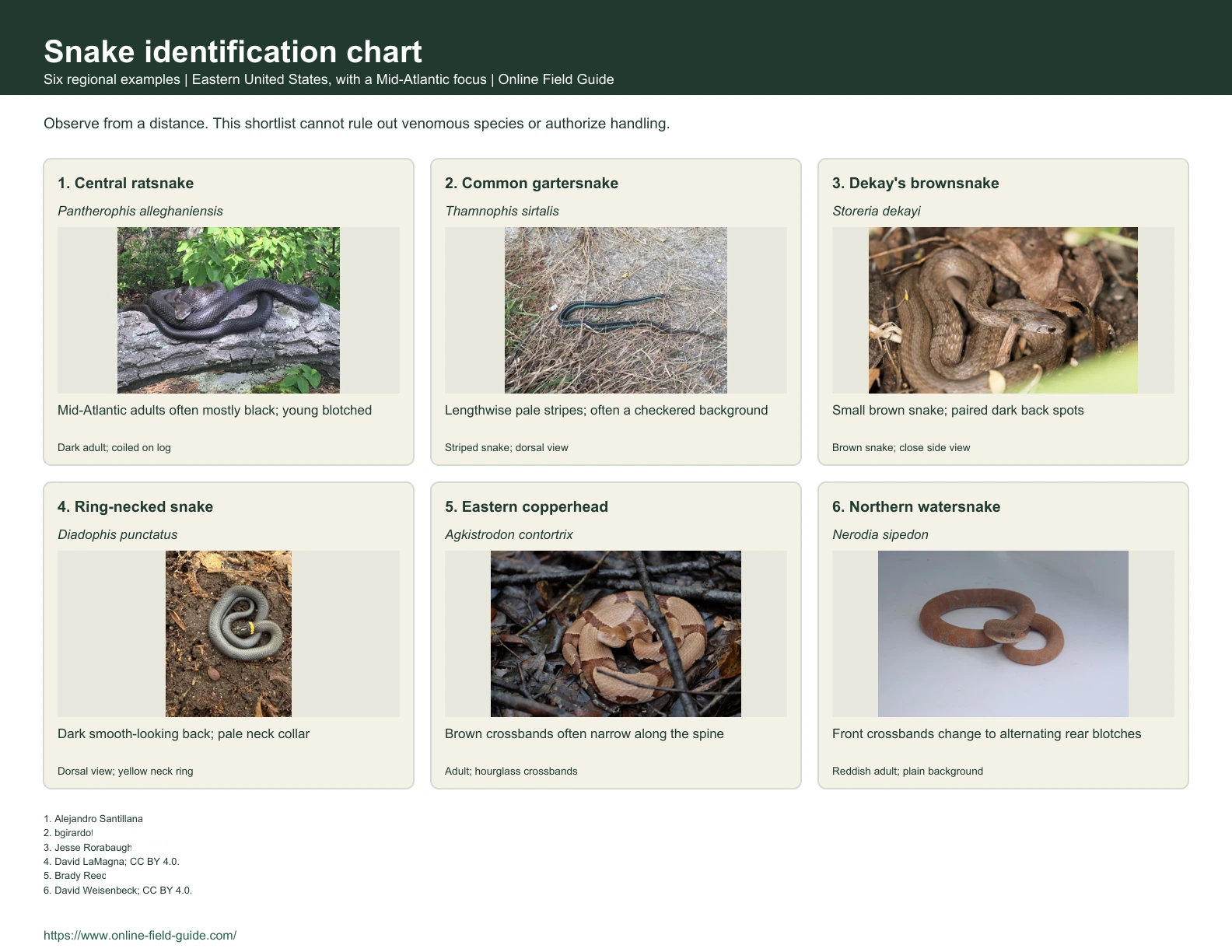
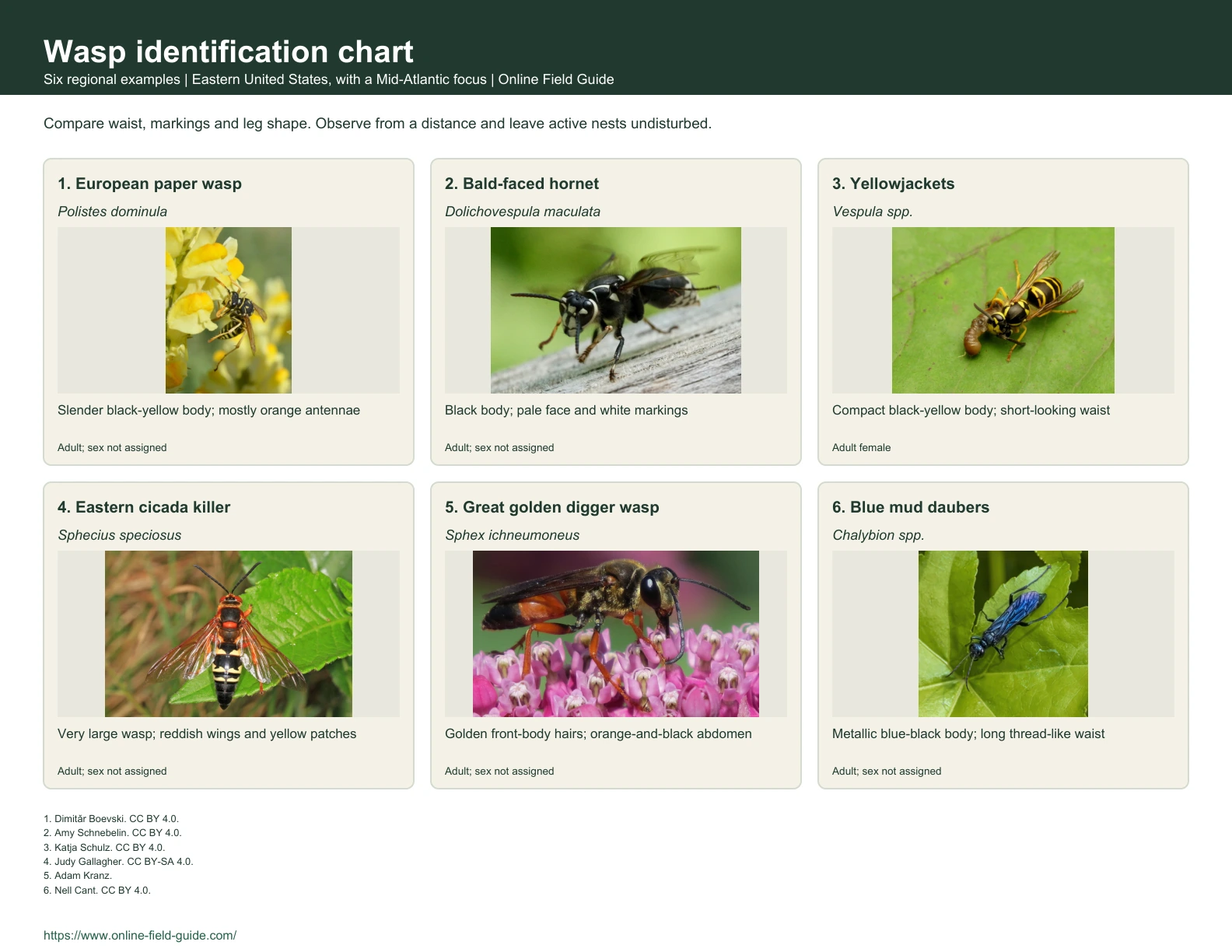
To narrow down a bee in the eastern United States, compare its body hair, abdominal pattern and pollen-carrying structures. A fuzzy abdomen points toward a bumble bee; a large, shiny black abdomen points toward a carpenter bee. Metallic green bees need a closer look.
This chart covers nine familiar bees and bee groups in eastern-US gardens, farms and woodland edges, with a focus on the Mid-Atlantic. It is a starting guide for places such as Pennsylvania, Maryland, Delaware, New Jersey and Virginia, rather than a list of every local species. Some entries name a species; the leafcutter and mining-bee entries cover whole groups and name the specimen shown.
Select the chart to open a larger view. Photo sources, creators and licenses appear in the cards below and in the printable PDF.
Bee identification at a glance
The season column is a broad eastern-US guide, not a fixed calendar for every state. The species-confidence column shows when a group label is the better field result. On a small screen, scroll the table sideways.
Eastern-US bee comparison: appearance, nesting and season
Tap a photograph to open a larger view. Each card identifies the sex of the specimen, which matters when checking pollen brushes, antennae and color patterns.
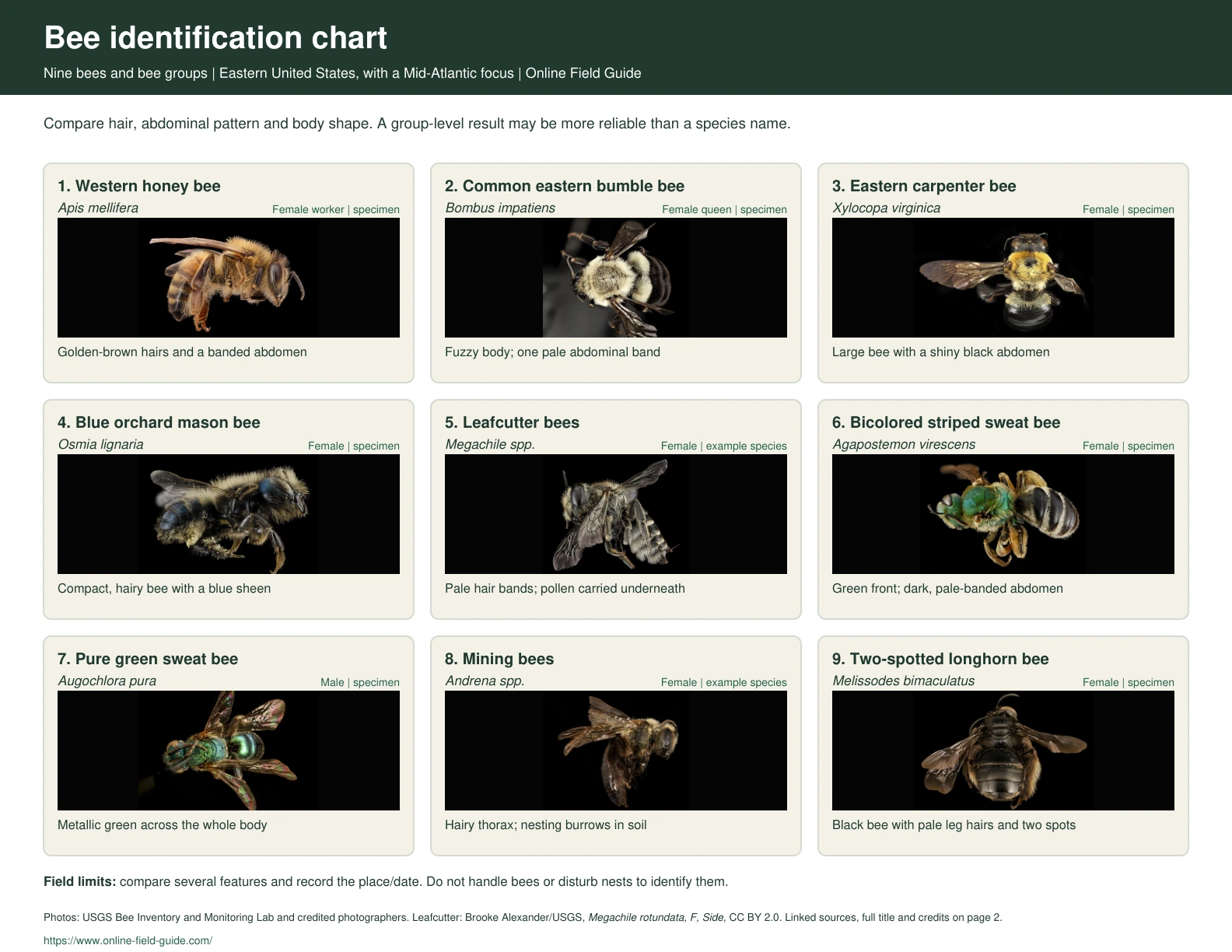
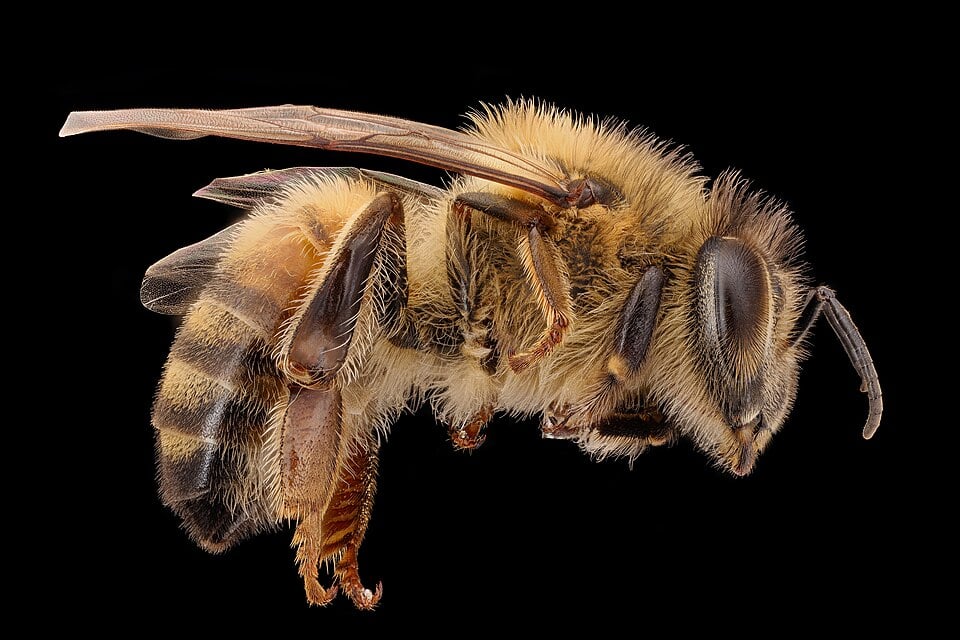
Female worker specimen · Maryland
Species
1. Western honey bee
Apis mellifera
Hairy golden-brown thorax
Banded abdomen; worker pollen baskets on hind legs
Honey bees have a hairy thorax and a banded abdomen, but their color varies. Foraging workers are females. They carry collected pollen in baskets on their hind legs, which can look like rounded yellow or orange loads. A worker without a pollen load is still a honey bee. Look at the combination of body shape, hairs and legs, rather than using yellow stripes alone.
Lookalikes: Some hoverflies mimic honey bees. A clear photograph of the antennae and wings is more useful than color alone.
Size cue: Medium; slimmer than a bumble bee. Regional status: Introduced to North America.
First abdominal segment pale; following segments black
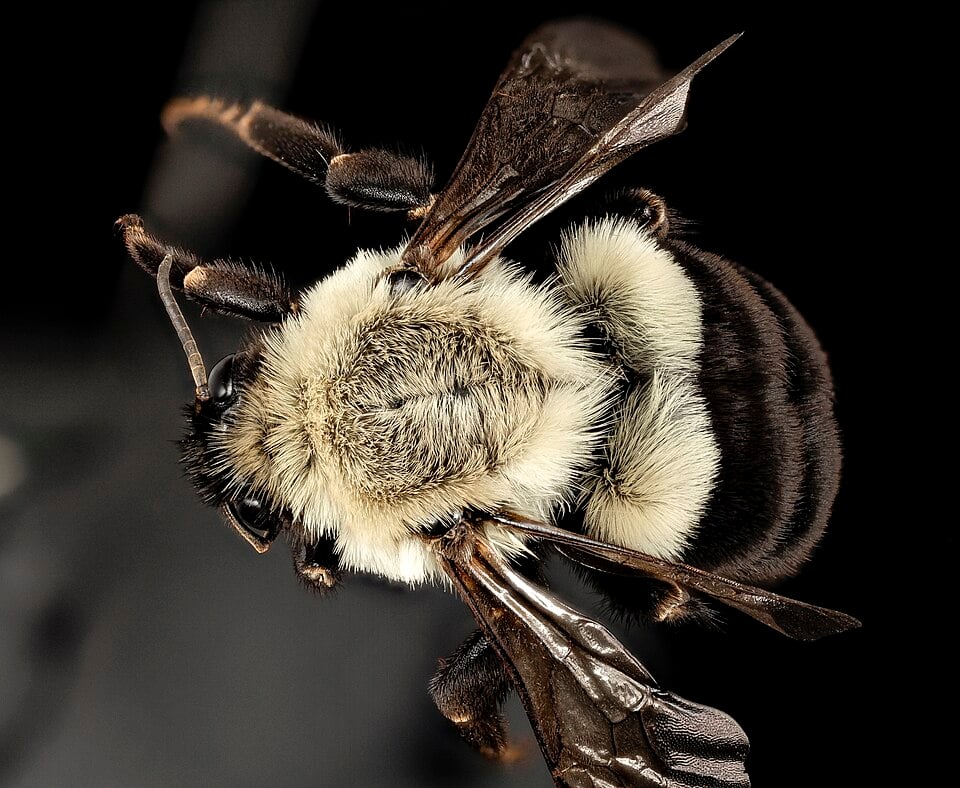
The common eastern bumble bee has a fuzzy body. Its first abdominal segment has pale yellow to whitish hairs; the following segments are black. The pictured queen shows the pale thorax and first abdominal band from above. Workers are smaller than queens, so a small bee with the same pattern may belong to the same species. Check the full pattern before choosing a species name.
Lookalikes: Other eastern bumble bees have similar markings. Carpenter bees have a mostly bare, shiny upper abdomen instead of this fuzzy one.
Size cue: Robust; queens are larger than workers. Regional status: Native.
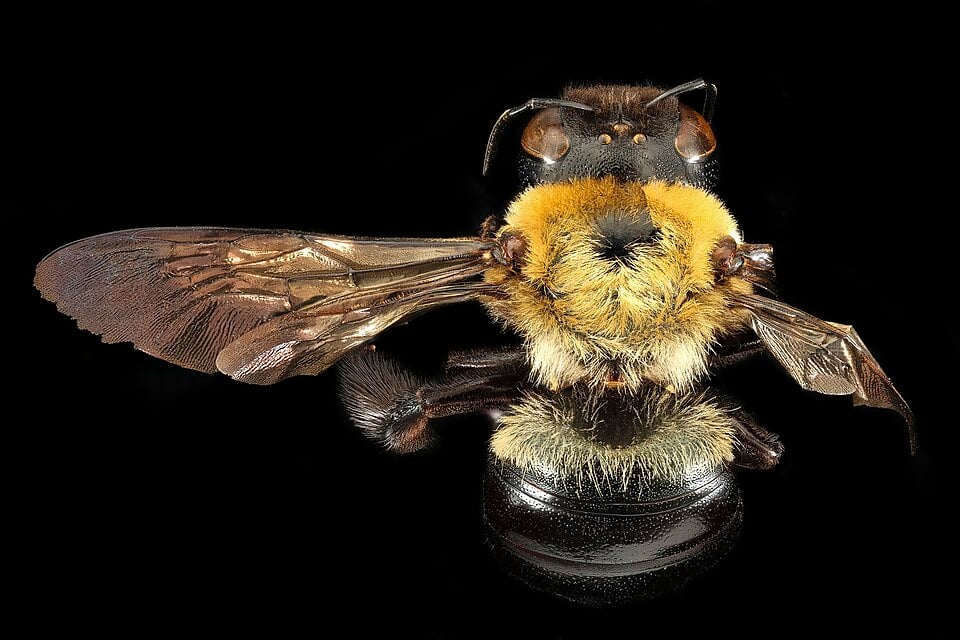
Start with the top of the abdomen: it is mostly bare and shiny black. The thorax has yellow hairs, so a carpenter bee can resemble a bumble bee until you look at the abdomen. The pictured female shows that glossy surface clearly. Nesting activity around wooden beams or siding can support the identification, although a bee seen at a flower may be far from its nest.
Lookalikes: Bumble bees have a fuzzy abdomen. Male carpenter bees can have a pale face, so the pictured female's dark face is not a rule for both sexes.
Size cue: Large; similar in bulk to a bumble bee. Regional status: Native.
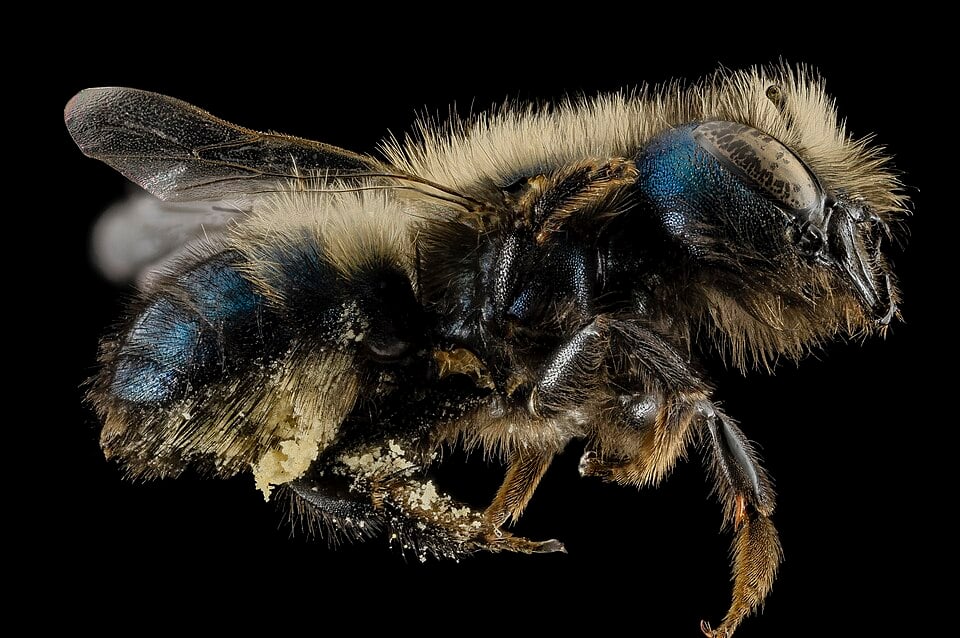
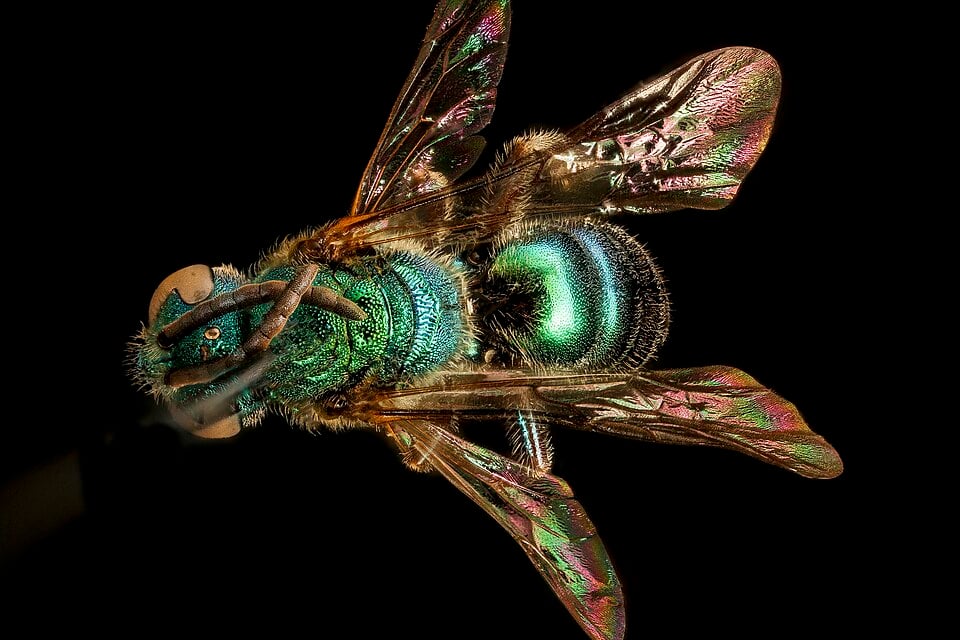
This native mason bee has a compact, metallic blue body partly covered by pale hairs. Females carry pollen in a brush beneath the abdomen. Blue orchard bees are spring-active cavity nesters that use mud to separate their brood cells. Metallic color is a clue to the group, but it does not separate this species from every other mason bee in the eastern United States.
Lookalikes: Other Osmia species can also look blue or green. Keep an uncertain field observation at 'mason bee' until finer features are checked.
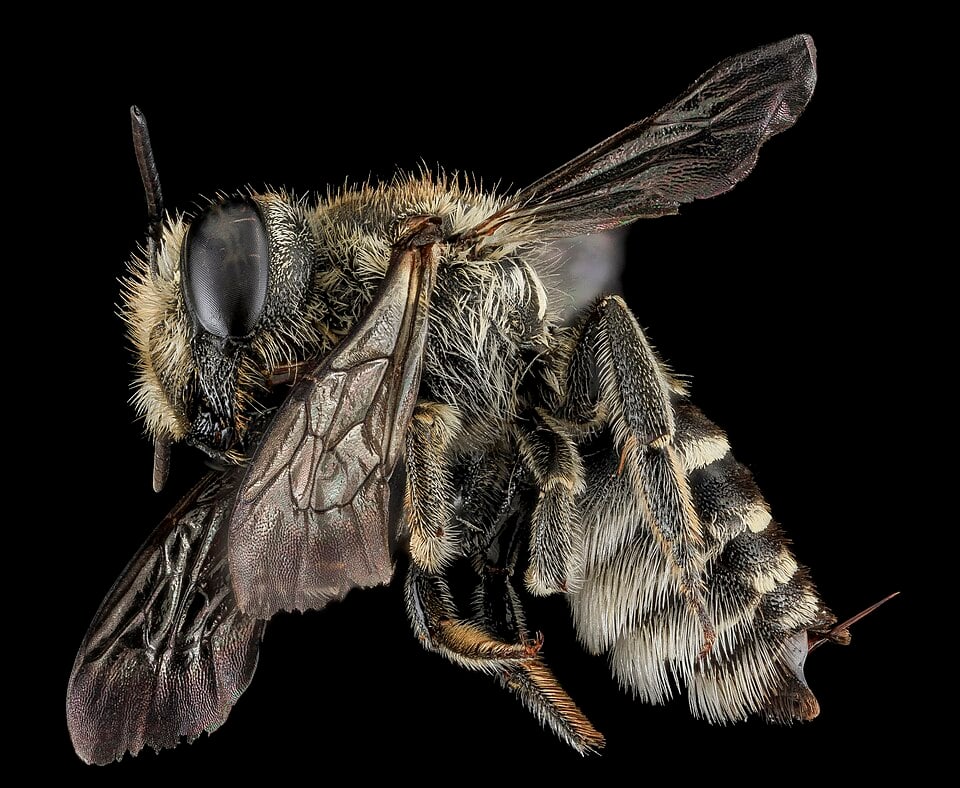
Many leafcutter bees are dark with pale hair bands across the abdomen. Females carry pollen underneath their abdomen, rather than in baskets on their hind legs. The photograph shows an alfalfa leafcutter bee, Megachile rotundata, an introduced species that is established in North America. Other Megachile species are native. Neat cutouts in leaves can be a nesting clue, but they do not identify the bee to species.
Lookalikes: Mason bees also carry pollen underneath. A clear side or underside view helps you find the pollen brush; species identification needs more detail.
Size cue: Varies by species; many near honey-bee size. Regional status: Group includes native and introduced species.
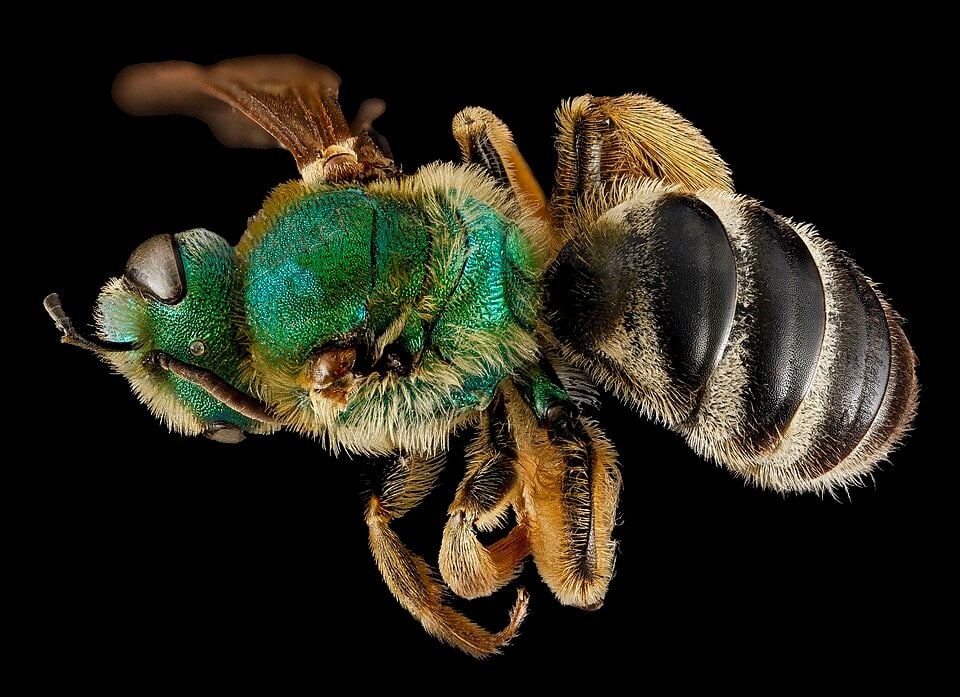
The pictured female has a metallic green head and thorax but a dark abdomen edged with pale hair bands. That two-color pattern helps separate it from the all-green bee in the next card. Males look different: their abdomen has yellow-and-black bands. Females may share a soil-nest entrance while each tends her own brood cells. Check the sex before applying the female color pattern.
Lookalikes: Other green sweat bees overlap in appearance. Use the whole body pattern, and avoid calling every metallic green bee this species.
Size cue: Small to medium. Regional status: Native.
Augochlora pura is a common bee of eastern forests and their edges. Its metallic sheen continues across the abdomen, unlike the dark abdomen of the female Agapostemon shown above. This species nests in decaying wood. The photograph is a male, so it does not show female pollen-collecting hairs. An all-green appearance is a useful starting clue, but it cannot confirm this species on its own.
Lookalikes: Augochlorella and Augochloropsis can also look green. Fine head and body features may be needed to distinguish the genera.
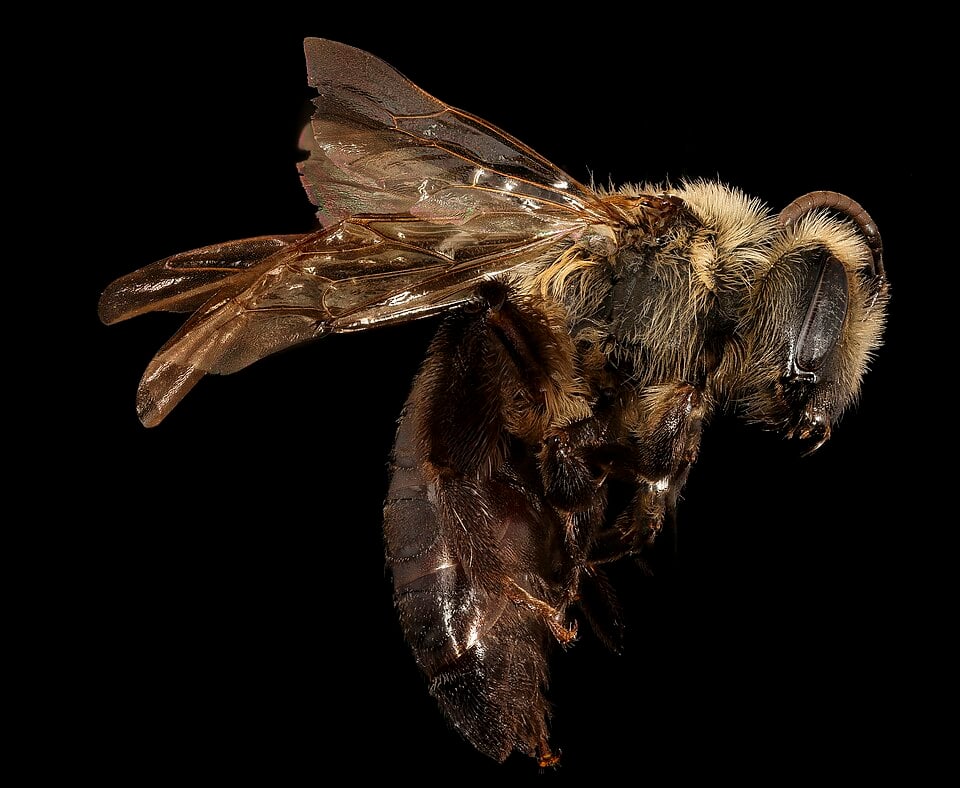
Mining bees dig nests in soil, and many eastern Andrena are among the first bees seen on spring flowers. Their appearance varies, so nesting behavior can be a helpful clue. A cluster of burrow entrances does not necessarily mean a social colony: separate females may nest near one another. The photo shows a female Andrena vicina. It illustrates the group, rather than a pattern shared by every mining-bee species.
Lookalikes: Some mining bees resemble honey bees or other ground-nesting bees. A body close-up and several views are usually needed for a species name.
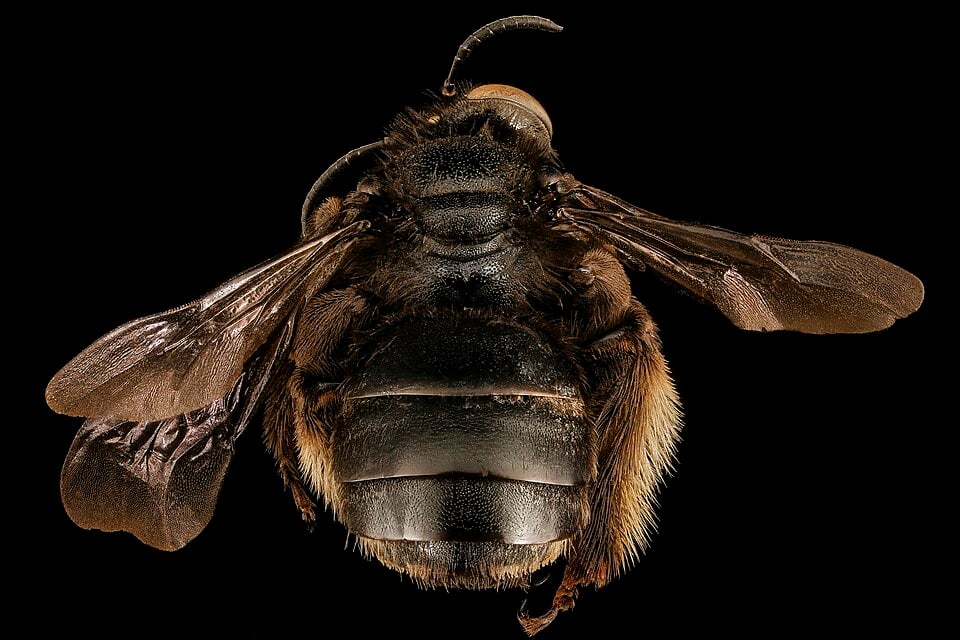
This garden visitor is mostly black, with pale hairs on its legs and two pale patches near the base of the abdomen. Males have the long antennae that give longhorn bees their name; the pictured bee is female. Females use their long hind-leg hairs to carry pollen. The species is widespread in the eastern United States and visits a range of flowers. Wings can cover the abdominal patches in some views.
Lookalikes: Other dark bees can have pale leg hairs. Check the abdominal patches and sex; long antennae are a male clue, not a requirement for females.
Size cue: Medium; near honey-bee size. Regional status: Native.
Get more than one view. Photograph the bee from above and from the side if it stays still. Include the head, antennae, legs and whole abdomen. Keep a little distance and let it move normally.
Find the abdomen. This is the rear body section behind the thorax, where the wings attach. Note whether it is fuzzy, glossy, banded or metallic. Wings can hide useful markings.
Look for pollen-carrying structures. Female honey and bumble bees have hind-leg pollen baskets. Female mason and leafcutter bees carry pollen underneath the abdomen. Males lack these collecting structures, and an empty brush or basket does not mean the insect is a wasp.
Record the place and date. Spring mason and mining bees do not have the same activity pattern as every summer bee. Nesting in soil, decaying wood or a cavity can add a useful clue. Do not open a nest to identify its occupant.
Keep the identification at the level the evidence supports. “Mining bee” or “green sweat bee” is a useful result. Species names may need close-ups of tiny features and a specialist’s check.
Bee, wasp or hoverfly?
Bees often have pollen-collecting hairs, although males and some parasitic bees do not. Many wasps look smoother, but hairiness alone is not a reliable test. Hoverflies can copy a bee’s stripes; flies have one pair of wings, while bees have two pairs. In a resting bee, the wings may overlap and look like a single pair. Look for several features rather than relying on a quick wing count.
A sharp head photograph can also help: many bee-mimicking hoverflies have short antennae and large eyes. A smooth yellow-and-black insect beside a flower is not automatically a honey bee. Compare its body, antennae and wings before choosing a name.
Questions about the chart
What is the large black bee with yellow hairs?
In the Mid-Atlantic, a large bee with a mostly bare, shiny black upper abdomen is a strong candidate for an eastern carpenter bee. A fuzzy abdomen points toward a bumble bee. A side view and a photograph from above make the comparison easier.
What is the small metallic green bee?
It may be a green sweat bee. The pictured female Agapostemon virescens has a green head and thorax with a dark, pale-banded abdomen. The pictured Augochlora pura is green across the body. Other genera can resemble both, so an uncertain photo should stay at group level.
Does this chart identify every bee in the USA?
No. It is an eastern-US introduction with a Mid-Atlantic focus. The Southwest, Pacific Coast and other regions have different combinations of bees. Even within this region, many small species are outside the chart. Color varies with sex, wear and lighting.
Are all the pictured bees native?
No. The western honey bee and pictured alfalfa leafcutter bee are introduced to North America. The leafcutter group also includes native species. The remaining named examples are native regional bees.

.jpg)
.jpg)
.jpg)
.jpg)

_-_USGS_Bee_Inventory_and_Monitoring_Laboratory.jpg)
.jpg)
.jpg)
.jpg)